AI SEO: How Artificial Intelligence Is Rewriting Search Rules in 2026
AI SEO: How Artificial Intelligence Is Rewriting Search Rules in 2026
Think about the last time you searched for something online. Did you click through ten results, or did an AI answer show up right at the top? If you are like most people in 2026, AI gave you the answer before you even clicked. That shift is what AI SEO is all about. AI SEO is the practice of optimizing content so it ranks in both traditional search results and AI-generated answers. And it is changing everything we know about getting found online.
Here is the thing. Search is not dead. It is just wearing a new outfit. The rules have changed, but the game is still about being visible when people look for answers. The difference now is that you are not just trying to impress Google. You are trying to impress AI models that read, understand, and summarize content for users. Let's break down what AI SEO means, why it matters, and how you can use it right now.
What AI SEO Really Means Today
AI SEO is not just about stuffing keywords into a blog post and hoping for the best. It is about making sure your content shows up when people ask questions to AI tools like ChatGPT, Perplexity, or Google's AI Overviews.
In the old days, you optimized for Google's crawler. You picked a keyword, wrote content around it, and built links to prove your page was important. Today, you also need to optimize for AI models that read your content and decide whether to cite it in their answers. That means your content needs to be clear, factual, and easy for both humans and machines to understand.
Think about it this way. Google's crawler scans your page for signals like keywords, links, and structure. AI models go further. They actually try to understand what you are saying. They pull key facts, summarize your points, and decide if your content is worth quoting. If your writing is vague or hard to follow, the AI moves on to someone else.
The Shift From Keywords to Intent
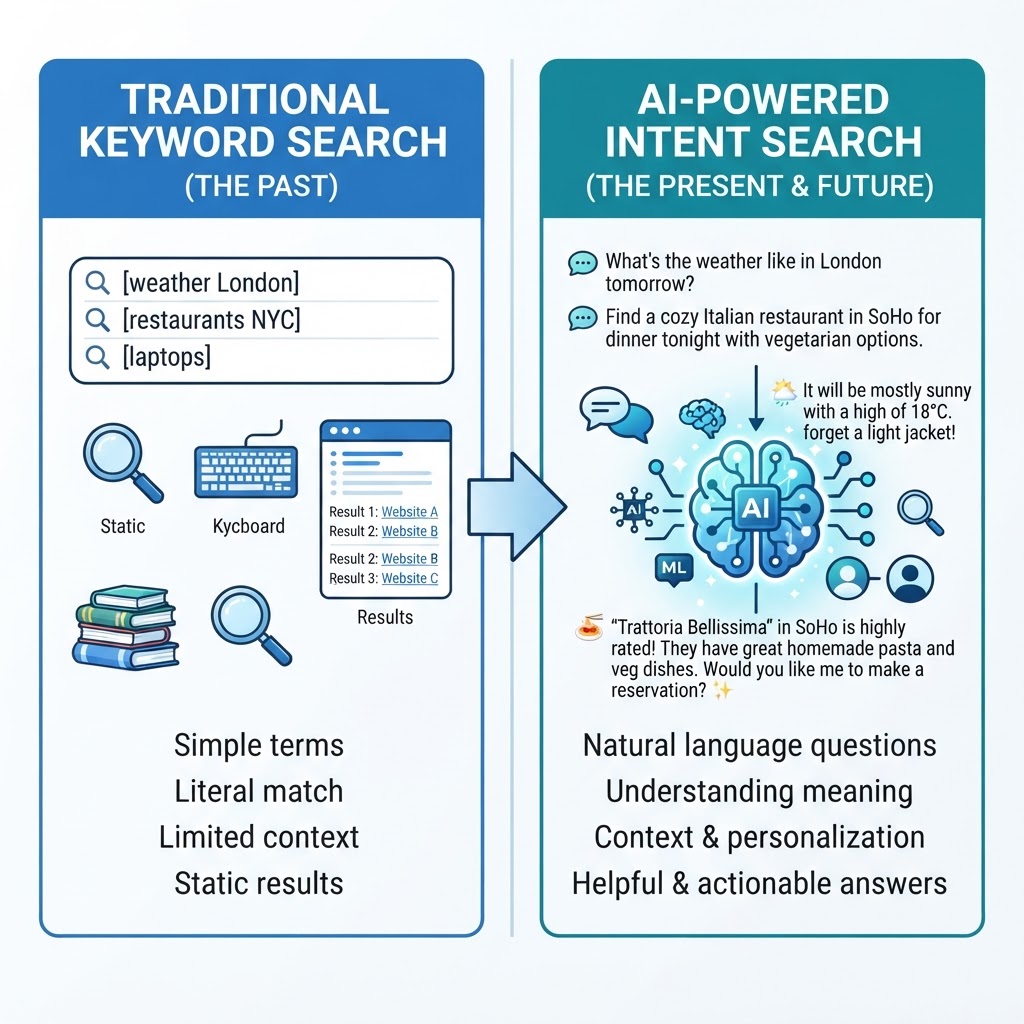
Here is what changed. Keywords still matter, but intent matters more. When someone types "best running shoes," they might want to buy, compare, or learn. AI tools try to figure out what the person really wants. Your job is to match that intent.
Think about it this way. If you write a product page but the person wanted a comparison guide, you lose. AI tools will skip your page and pick someone who answered the actual question. So AI SEO means writing content that matches what people actually want to know.
Let me give you an example. Say someone searches "how to start a podcast." If your page just sells podcasting equipment, the AI will probably pass. But if your page explains the steps, lists the tools you need, and gives real advice, the AI will likely cite you. The intent was to learn, not to shop. Match the intent, and you win.
Why Traditional SEO Alone Is Not Enough
Let me be honest with you. Traditional SEO still works. You still need good titles, clean code, and fast pages. But it is no longer the whole picture.
In 2026, about 58.5 percent of Google searches end without a single click. People get their answer from an AI summary and leave. That means even if you rank number one, you might not get traffic. You need to show up in the AI answer itself. That is where AI SEO comes in. It is about being the source the AI cites, not just the link people click.
There is another problem. Studies show only about 50 percent of traditional SEO rankings overlap with AI answer visibility. That means half the pages that rank well on Google do not show up in AI answers at all. You could be doing great on Google and completely invisible on ChatGPT. That gap is why AI SEO needs its own strategy.
How AI Is Changing Search Behaviors

Search behavior has shifted in a big way. People ask longer, more specific questions. They talk to AI like they talk to a friend. "What is the best laptop for video editing under $1000?" is now a normal search.
This change means content needs to answer specific questions clearly. AI models love content that directly answers questions. If your post rambles for three paragraphs before getting to the point, AI tools will pass you over.
Here is what is happening behind the scenes. When you ask an AI tool a question, it does not just match keywords. It reads multiple sources, pulls the most relevant facts, and writes a new answer. Your content needs to be the source that gives the AI what it needs. Clear facts, direct answers, and well-organized sections make it easy for AI to pick your content.
Zero-Click Searches Are the New Normal
Here is a number that might surprise you. Over 58.5 percent of all Google searches end without a click. People get what they need from the search page itself. AI Overviews, featured snippets, and knowledge panels give answers without sending anyone to a website.
For content creators, this is scary. But it is also an opportunity. If your content is the source that AI pulls from, you build brand trust even without the click. People see your name cited in the answer. That has value. It builds awareness and trust over time. When they are ready to buy or dig deeper, they will search for your brand by name.
AI Answer Engines vs Google Search
Google still handles billions of searches every day. But AI answer engines like ChatGPT, Perplexity, and Claude are growing fast. AI search traffic went up 527 percent in just one year. People are asking these tools questions they used to ask Google.
The key difference? These AI tools do not give you ten blue links. They give you one answer, pulled from multiple sources. If your content is not one of those sources, you are invisible. AI SEO means making sure you are.
Think about how this changes the game. On Google, ten websites can all get traffic from one search. On an AI answer engine, only the cited sources get any attention. That means the stakes are higher. You need to be in the top few sources the AI chooses, or you get nothing.
AI SEO Tools That Are Making Waves in 2026
Now let's talk about tools. You do not have to do AI SEO by hand. There are powerful tools that can help you optimize, research, and track your results.
The market for AI SEO tools has exploded. Searches for SEO AI agents are up 285 percent year over year. Marketers are spending more than ever on these tools. In fact, 98 percent of marketers plan to increase their AI SEO spending in 2026.
Content Optimization Tools
These tools analyze your content and tell you exactly what to fix. They check keyword density, readability, heading structure, and semantic relevance. Some even compare your content against top-ranking pages and show you the gaps.
Think of them as a smart editor. They do not write for you, but they guide you. They point out where you are missing topics, where your content is too complex, and where you can add more value. For AI SEO, this matters because AI models reward comprehensive, well-structured content.
Some tools go further. They analyze what AI models are looking for specifically. They check if your content has clear answers, factual statements, and proper structure that AI tools prefer. This goes beyond traditional SEO checks and focuses on what gets you cited by AI.
Keyword Research Gets Smart
Old keyword research meant looking at search volume and picking the highest number. AI keyword research is different. It looks at search intent, related topics, and question clusters.
In 2026, about 15 percent of daily searches are brand new. They have zero historical data. Traditional keyword tools cannot help with these. But AI tools can predict what topics will trend based on patterns and context. That gives you a head start on content that has no competition yet.
Here is an example. An AI keyword tool might notice that people are starting to ask about "AI podcast editing." No one has written about it yet. The tool flags it as an emerging topic. You write about it first. When the topic explodes, you are already ranking. That is the power of AI-driven keyword research.
AI SEO Agents
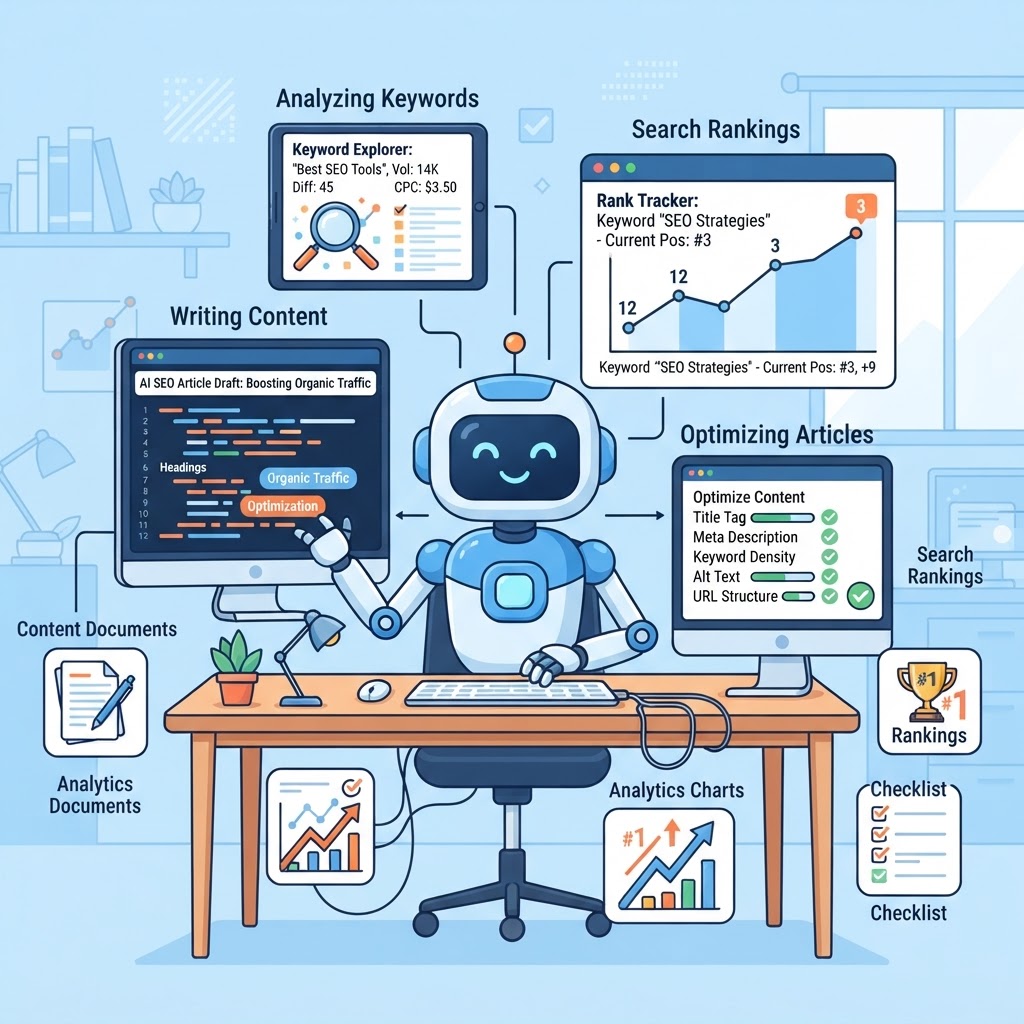
Here is where things get exciting. AI SEO agents can now handle full workflows. They research keywords, write content, optimize it, and even track rankings. Searches for these tools are up 285 percent.
Imagine having an assistant that writes a blog post, checks the readability, adds the right keywords, and suggests internal links. That is what AI SEO agents do. They do not replace human strategy, but they handle the heavy lifting so you can focus on big-picture decisions.
These agents can also monitor your competitors. They watch what others in your space are publishing and alert you to new opportunities. If a competitor writes about a topic you missed, the agent tells you. You can fill the gap before it hurts your rankings.
Practical Tips to Win at AI SEO
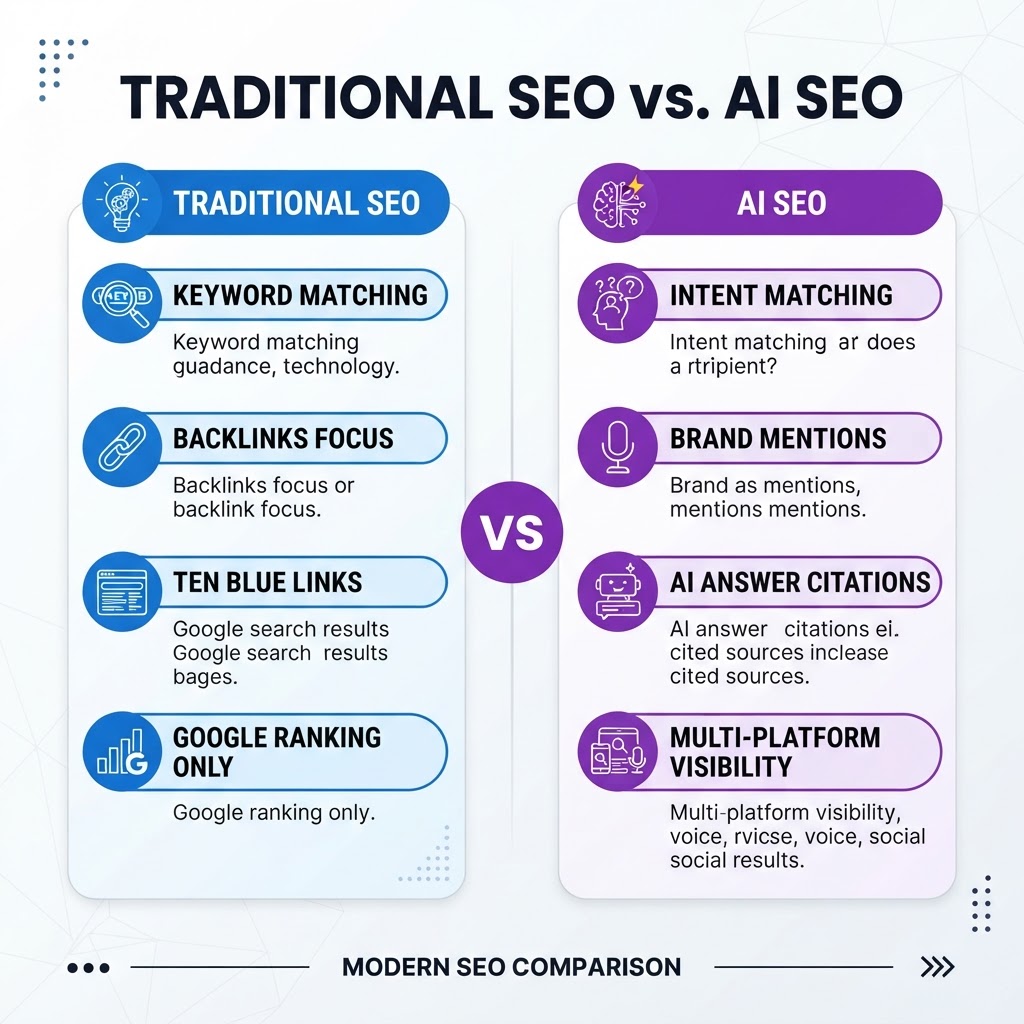
Let's get into the actionable stuff. Here is what you can do today to improve your AI SEO.
First, focus on brand mentions. AI tools look for brands that are talked about across the web. The more your brand appears in trusted sources, the more likely AI is to cite you. Get mentioned in news articles, industry blogs, and forums. When AI sees your name in many places, it treats you as an authority.
Second, write for humans and AI at the same time. Use clear language. Answer questions directly. Structure your content with proper headings. AI models love well-organized content with clear answers. But humans love it too. Short sentences, simple words, and real examples work for both audiences.
Third, track your AI visibility. Only 14 percent of marketers currently track how they appear in AI answers. That means 86 percent are flying blind. Use tools that show you whether ChatGPT, Perplexity, or Google AI cite your content. If you do not track it, you cannot improve it. Start by searching for your target keywords on AI tools and see if your brand shows up.
Fourth, build topic clusters. Instead of writing one post about a broad topic, write several posts that cover related subtopics. Link them together. This shows AI that you have deep expertise on the subject. When an AI model sees five linked posts from your site about the same topic, it thinks, "This site knows what it is talking about."
Fifth, use structured data. Schema markup helps AI understand what your content is about. Add FAQ schema, article schema, and organization schema to your pages. This makes it easier for AI tools to pull your content into their answers. Think of schema as a label that tells AI exactly what your page contains.
Sixth, answer questions clearly. AI tools love content that directly answers questions. Put the answer first, then explain. If someone asks "what is AI SEO," start with a clear definition. Do not build up to it. Give the answer, then add context. This format is called the inverted pyramid, and AI models love it.
Seventh, update old content. AI tools prefer fresh, accurate information. If your post from 2024 has outdated stats, AI will pass it over. Update your best posts with new data, new examples, and current information. This keeps your content relevant for both Google and AI tools.
The Numbers Behind AI SEO
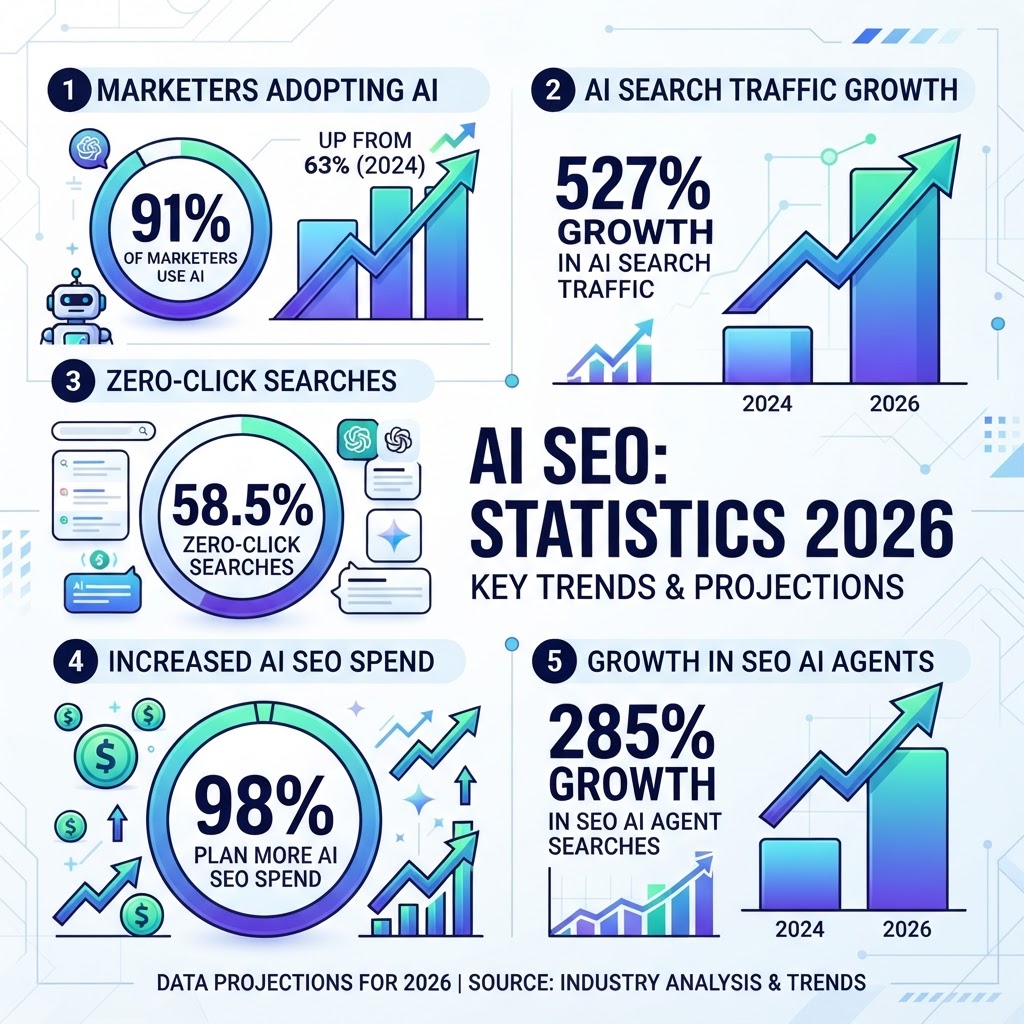
Let's look at the data. These numbers tell the story of why AI SEO matters right now.
91 percent of marketers now use AI in their work. That is up from 63 percent just a year ago. AI is not a trend anymore. It is the standard. If you are not using AI in your SEO, you are behind.
AI search traffic grew 527 percent in one year. People are asking AI tools questions they used to ask search engines. If your content is not optimized for AI, you are missing a growing channel. This number will only go up as more people adopt AI tools.
Only 50 percent of traditional SEO rankings overlap with AI answer visibility. That means ranking well on Google does not guarantee you will show up in AI answers. You need a separate strategy. What works for Google does not always work for ChatGPT.
98 percent of marketers plan to spend more on AI SEO in 2026. The money is flowing into this space. Companies that invest now will have a head start. Those that wait will struggle to catch up.
Gartner predicts search engine volume will drop 25 percent by 2026 due to AI chatbots. People are searching less on traditional engines and more on AI tools. The shift is real, and it is happening fast. If your traffic depends on Google, this number should get your attention.
83 percent of AI-generated answer queries end on the search results page. People get their answer and leave. They do not click through to any website. This means your content needs to be IN the answer, not just linked from it.
Only 14 percent of marketers track their AI visibility. That is a huge gap. The 14 percent who do track it have a massive advantage. They know where they stand and can improve. The rest are guessing.
What the Future of AI SEO Looks Like
So where is this all going? AI SEO will keep evolving, but the core idea stays the same. You need to create content that answers questions better than anyone else.
In the near future, AI will get better at understanding context. It will know when you are searching from your phone, in your car, or at your desk. It will give different answers based on where you are and what you are doing. Your content needs to be ready for that level of personalization. Think about how your content serves people in different situations and locations.
Voice search will also grow. More people will ask questions out loud instead of typing. That means content needs to sound natural when read aloud. Short sentences, clear answers, and simple language will win. If your content reads like a textbook, voice assistants will skip it.
AI tools will also get better at fact-checking. They will cross-reference claims across multiple sources. If your content has inaccurate information, AI will catch it and stop citing you. Accuracy will become a ranking factor in a whole new way. Make sure every claim you make is backed by real data.
The brands that win at AI SEO will be the ones that create genuinely helpful content. Not content stuffed with keywords. Not content written by a robot with no soul. Content that real people find useful. That is what AI tools are looking for. They want to cite the best answer, and the best answer is the one that helps the reader.
Here is my advice. Start small. Pick one topic. Write the best content you can about it. Structure it well. Answer real questions. Use clear language. Then track your results and adjust. AI SEO is not a sprint. It is a habit you build over time. The sooner you start, the bigger your advantage.
Frequently Asked Questions
What is AI SEO?
AI SEO is the practice of optimizing your content to appear in AI-generated answers, not just traditional search results. It involves creating clear, factual content that AI tools like ChatGPT and Google AI cite as sources. The goal is being the answer, not just a link.
How does AI change keyword research?
AI keyword research focuses on search intent and topic clusters rather than just search volume. It predicts trending topics with no historical data and identifies related questions people ask. About 15 percent of daily searches in 2026 are brand new, and AI tools can find these opportunities faster.
Can AI write content that ranks?
Yes, AI can write content that ranks, but it needs human guidance. AI tools work best when you give them a clear structure, facts, and your unique perspective. Raw AI content without human input often lacks depth and gets flagged. The best results come from human strategy plus AI execution.
What are the best AI SEO tools in 2026?
Popular AI SEO tools in 2026 include Semrush, Surfer SEO, and specialized AI visibility trackers. These tools help with content optimization, keyword research, and tracking how your brand appears in AI answers. The right tool depends on your budget and specific needs.
Is traditional SEO still relevant with AI?
Yes, traditional SEO is still relevant. About 50 percent of traditional SEO rankings overlap with AI answer visibility. You still need clean code, fast pages, good titles, and proper structure. But traditional SEO alone is no longer enough. You need both approaches working together.
How do I track AI visibility for my brand?
You can track AI visibility using tools that monitor how your brand appears in AI-generated answers from ChatGPT, Perplexity, and Google AI. Only 14 percent of marketers currently do this. Look for tools that show citation frequency, share of AI answers, and which queries trigger your brand mentions.


Comments
Post a Comment