
Teen Takeovers: How Viral Mobs Are Overwhelming U.S. Police and Communities
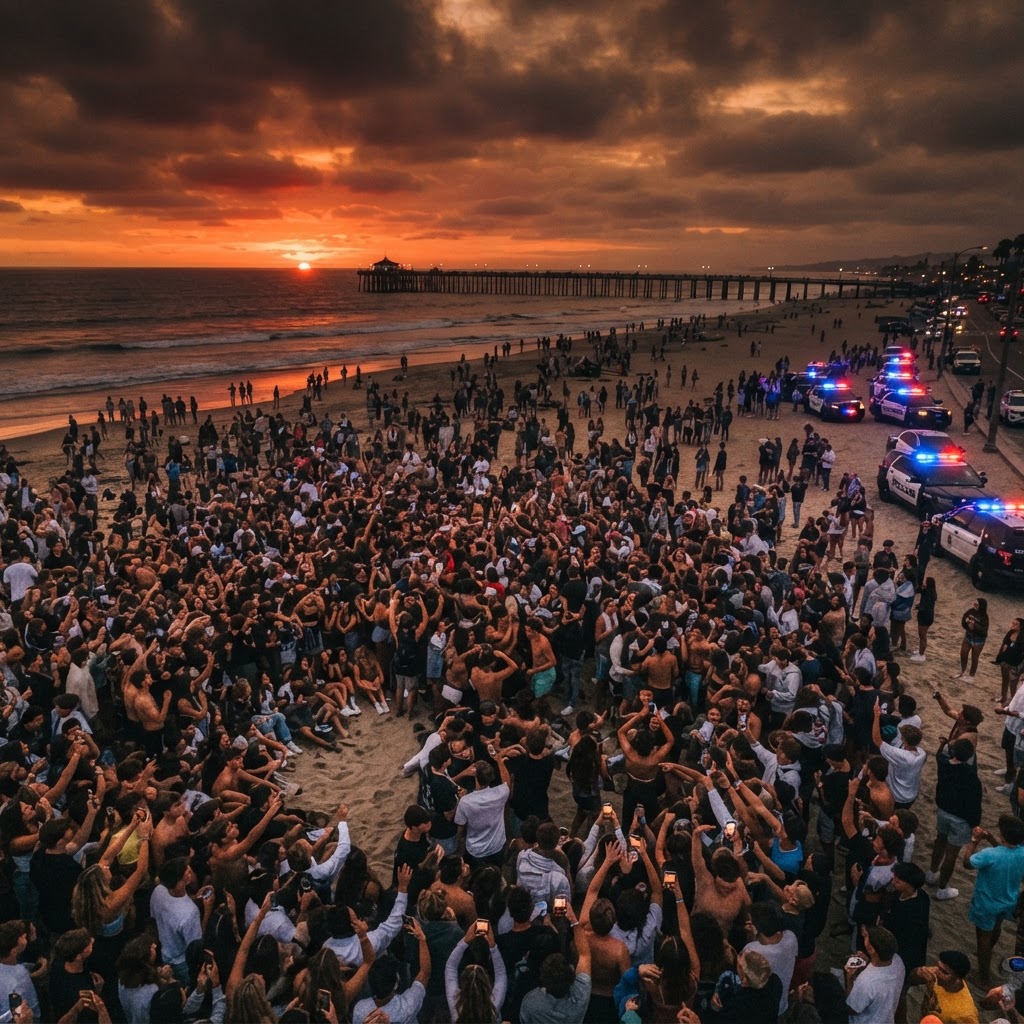
Teen takeovers—coordinated swarms of thousands of young people organized through TikTok, Instagram and private chat apps—are reshaping public safety across America. What started as spontaneous meetups have become orchestrated mob events that can overwhelm police resources, destroy property, and turn ordinary beach towns into scenes of chaos. The July 4, 2026 Newport Beach incident marked the tipping point: 402 arrests in 48 hours, the worst disruption the city has documented in years, and a stark reminder that social media has fundamentally changed how crowds form and behave.
Key Takeaways
- Teen takeovers—viral mob gatherings organized through social media and encrypted apps—have become a nationwide phenomenon affecting cities from Boston to Los Angeles, with incidents escalating dramatically since early 2026.
- The July 4, 2026 Newport Beach incident resulted in 402 arrests in 48 hours and represented the worst disruption the city has experienced, with coordinated attacks on police, widespread property damage, and participants traveling from multiple states.
- Police struggle to detect takeovers because coordination increasingly happens in private chat platforms (Signal, Discord, WhatsApp) that aren't publicly searchable or monitored, making early detection nearly impossible.
- Teens participate for connection, anonymity in crowds, and the appeal of creating viral content—social media has transformed mob participation from a shameful act into a status-building opportunity.
- Cities are responding with stricter curfews, parental liability laws, enhanced social media cooperation, and felony charges, while some communities are exploring prevention through youth engagement and legitimate social spaces.
What Are Teen Takeovers? The Definition Behind the Viral Trend
A teen takeover is a large, unannounced gathering of teens and young adults (typically ages 15–25) coordinated primarily through social media. Unlike traditional house parties or concerts with set venues, these gatherings materialize quickly through viral posts, private chat group invitations, and encrypted messaging apps like Signal, WhatsApp, and Discord.
The blueprint is simple: a social media post (often vague or cryptic to avoid police detection) names a location—a beach, a shopping center, a parking lot—and a time. Within hours, hundreds or thousands of young people descend on the spot. Law enforcement experts describe the scale as unprecedented. As Mike Parker, a retired Los Angeles County Sheriff's Department commander, told the Los Angeles Times: "It is like a high school party from 40 years ago on steroids and on an unparalleled scale with thousands, not hundreds."
The organizers rarely use their real names, and the structure of the invitation itself is part of the appeal: the secrecy, the speed, the sense of being part of something coordinated yet untraceable. A post might read simply: "Beach tonight, Newport Pier, 8pm, spread it" or just a location tag with an emoji. The vagueness is intentional—it confuses police monitoring while being perfectly clear to the target demographic already scrolling TikTok.
What distinguishes teen takeovers from other viral events is the speed and volume. In 2021, a birthday party TikTok post for an event called "Adrian's kickback" at Huntington Beach drew more than 2,000 people and resulted in 175 arrests. That was seen as shocking at the time. Five years later, Newport Beach saw 402 arrests in a single weekend—and multiple outlets described it as not unusual anymore, just particularly large.
Newport Beach: When a Holiday Became a Flashpoint
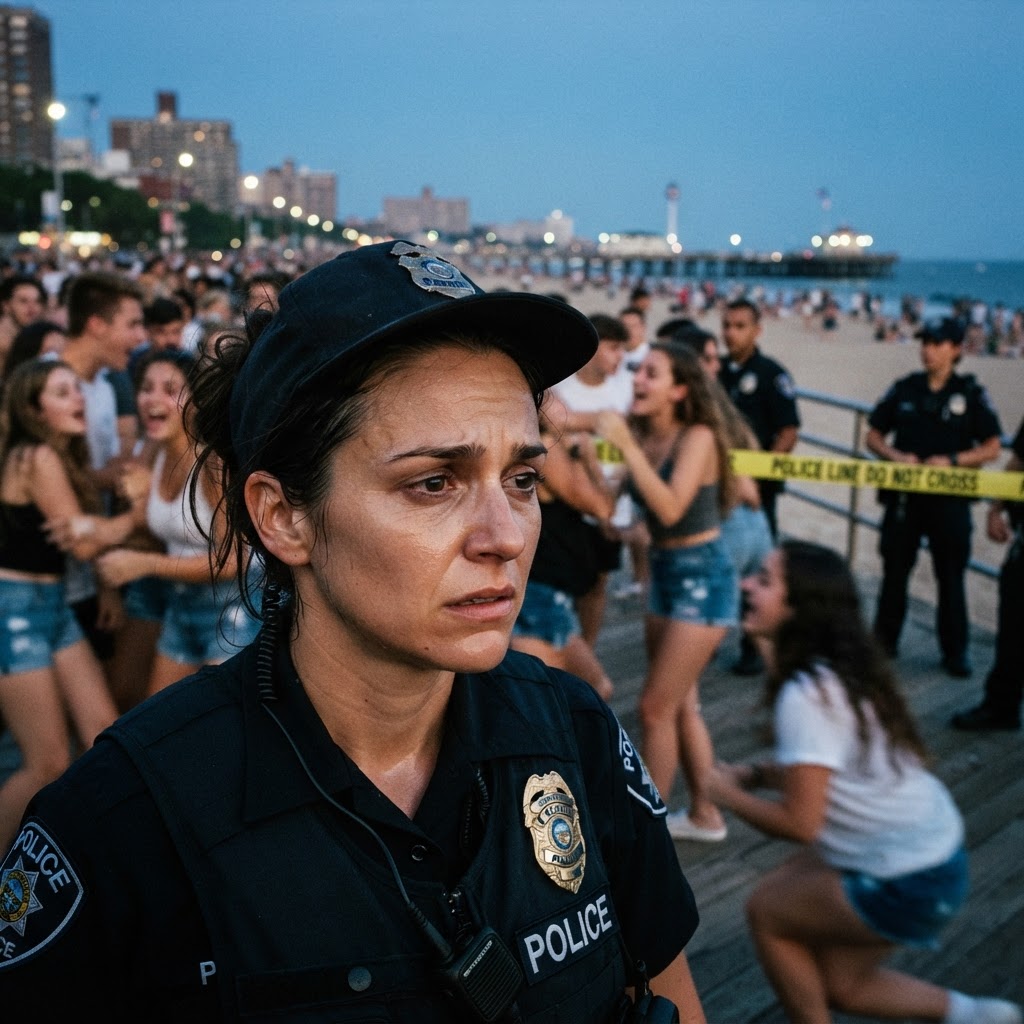
On July 4, 2026, Newport Beach, California—a wealthy, traditionally quiet beach community known for trying to distance itself from its old "Zooport" reputation—became a case study in how quickly a teen takeover can spiral. The holiday started normally, with families and visitors enjoying the beach under clear skies. Police Lt. Eric Little noted that by 9 a.m., the beach was crowded but visitors were celebrating peacefully. Then, around 8 p.m., everything changed.
Thousands of young people from out of town arrived in coordinated waves. Within hours, the Balboa Peninsula descended into what Little called "another level" of disruption—worse than anything the city had documented in years. Crowds packed the sand around Newport Pier, lighting mortars and fireworks that sent sparks into packed groups. A nearby shopping center on 32nd Street became a target: trash cans were emptied, merchandise from the Pavilions grocery store was thrown into parking lots, and watermelons, sodas, and chips littered the pavement.
Attackers threw bottles and explosive devices at police officers and beachgoers. Groups blocked roadways, attempted to damage cars, and yanked street signs out of the ground. According to police reports and social media videos, some wore masks and moved in coordinated clusters, suggesting pre-planning. Between midnight Friday and 6 a.m. Sunday, Newport Beach police arrested 402 people—a 570% spike compared to the same holiday weekend the year before. Most arrestees were not Newport Beach residents; they came from Arizona, Nevada, San Diego, Los Angeles, and throughout Orange County. The geographic spread itself suggests the event was advertised far beyond local social circles.
What made Newport Beach particularly striking was the mystery of coordination. Newport Beach Police Association blamed a viral "TikTok takeover," but the exact mechanics remain unclear. Police still aren't certain whether a single TikTok post sparked the influx or whether multiple posts and private group invitations created a cascade effect. The investigation is ongoing, but what's clear is this: the barrier to planning mass gatherings has collapsed. A teenager in Arizona can see a post, share it with friends, and be at a California beach in a car ride—all within hours.
Why Police Can't See It Coming
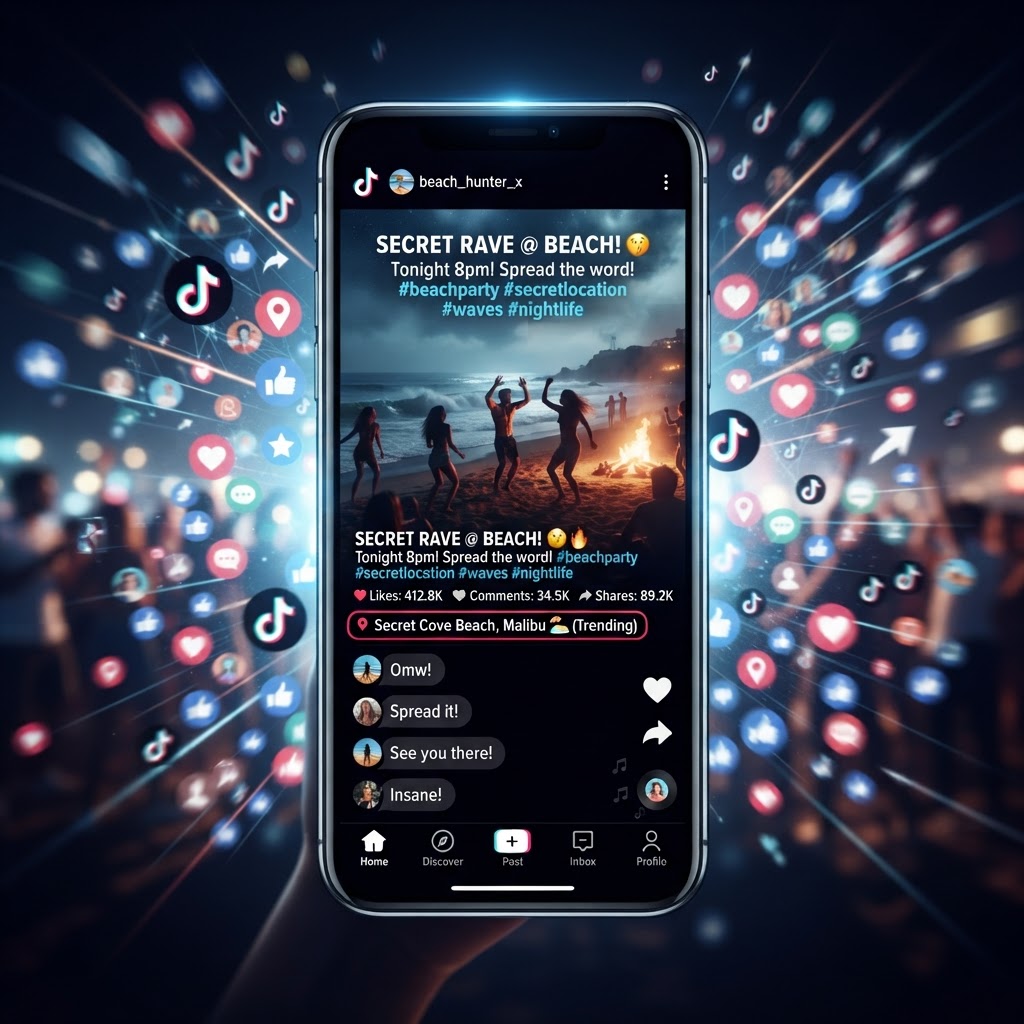
Newport Beach police routinely monitor social media, but they saw no early warning signs. And there's a reason: the coordination is increasingly invisible to law enforcement.
A decade ago, such gatherings would have been advertised on public platforms like Facebook or Instagram, where cops could spot trends and alert community members. But organizers have learned. Private chat platforms—Signal, Discord, WhatsApp—aren't searchable, aren't indexed by Google, and don't require membership approval the way closed Facebook groups do. Parents' networks, friend-of-friend recommendations, and encrypted group chats make it nearly impossible for police to infiltrate or even detect the planning stages.
"Monitoring takes time and cops have to find ways to become members and that is very hard," Parker explained. "So now you add into the equation that people are available that day and it sounds fun. People are hyping it up. Add in the hot weather and the beach would be a relief." In other words, even if police could detect a planned takeover, the appeal is so immediate and low-friction that enforcement becomes nearly impossible.
The problem is compounded by the speed of modern information. In the 1980s and 1990s, police could communicate faster than teens could spread word of a gathering. A house party rumor would take days to build. Now, a TikTok video gets 100,000 views in 90 minutes. By the time a police department's social media team flags it, thousands of people are already en route. The information advantage has flipped completely.
A National Pattern: From D.C. to Boston to Chicago
Newport Beach is not an anomaly—it's the latest high-profile chapter in a year-long trend that experts now recognize as a fundamental shift in crowd behavior. Teen takeovers have destabilized communities across America:
Washington, D.C. (May 2026): A masked group of teens organized a violent brawl at a Navy Yard Chipotle, a coordinated assault that shocked the nation's capital. The incident was caught on camera and spread across social media, which itself may have triggered copycat events.
Chicago (ongoing): Multiple teen takeover incidents have resulted in dangerous confrontations with police and destructive property damage. Police have been caught off-guard repeatedly, according to NBC News coverage.
Boston (recent): A Boston police officer was recently surrounded by a hostile crowd and pelted with drinks and debris during a dirt bike stop, with suspects escaping into the viral chaos. The incident was livestreamed, turning the officer's vulnerability into content.
Multiple unnamed cities: Georgetown Law experts note the phenomenon is "spreading" beyond the coasts, with incidents in malls, shopping centers, and restaurant chains nationwide. A May 2026 NPR report featured Georgetown Law professor Kristin Henning discussing whether "teen takeovers" represent a real threat—her answer was an emphatic yes.
The pattern is consistent: social media organizes the crowd, the crowd arrives faster than police can respond, chaos escalates as the event is livestreamed and becomes more viral in real time, drawing additional participants and onlookers who see the action unfolding live and want to be part of it.
Why Do Teens Participate? The Psychology of the Swarm
Understanding why thousands of young people are willing to travel hours, risk arrest, and participate in mob behavior requires looking beyond just "social media made them do it."
According to sociologists and criminologists, many teens involved in takeovers report a simple motivation: "They just want to matter." After years of isolation during the pandemic, virtual school, and digital-native lives, these gatherings offer something increasingly scarce: physical presence, peer connection, and a sense of being part of something momentous—even if that something is chaotic.
The anonymity of a massive crowd also removes individual accountability. A teen who would never throw a bottle at a storefront alone might do it as part of a crowd of 5,000 where their individual actions feel invisible. Psychologists call this "deindividuation"—the loss of self-awareness in a group setting that can lead to behavior individuals wouldn't normally engage in. When you're one of 402 arrested, the personal shame is diffused. When you're one of 5,000 throwing things, no one can prove it was you.
And then there's the thrill of the event itself becoming content. When the chaos is livestreamed, filmed, and shared across TikTok, Instagram, and Snapchat, participants aren't just attending an event—they're creating content that amplifies the event's reach and cachet. A violent altercation with police becomes a viral clip. A trash can being thrown becomes a moment of fame. The violence becomes a feature, not a bug. Some researchers now argue that "going viral" has replaced traditional status markers (grades, sports achievements, college admissions) as the primary motivator for young people to engage in coordinated action.
The Fallout: 402 Arrests, Legal Consequences, and Policy Changes
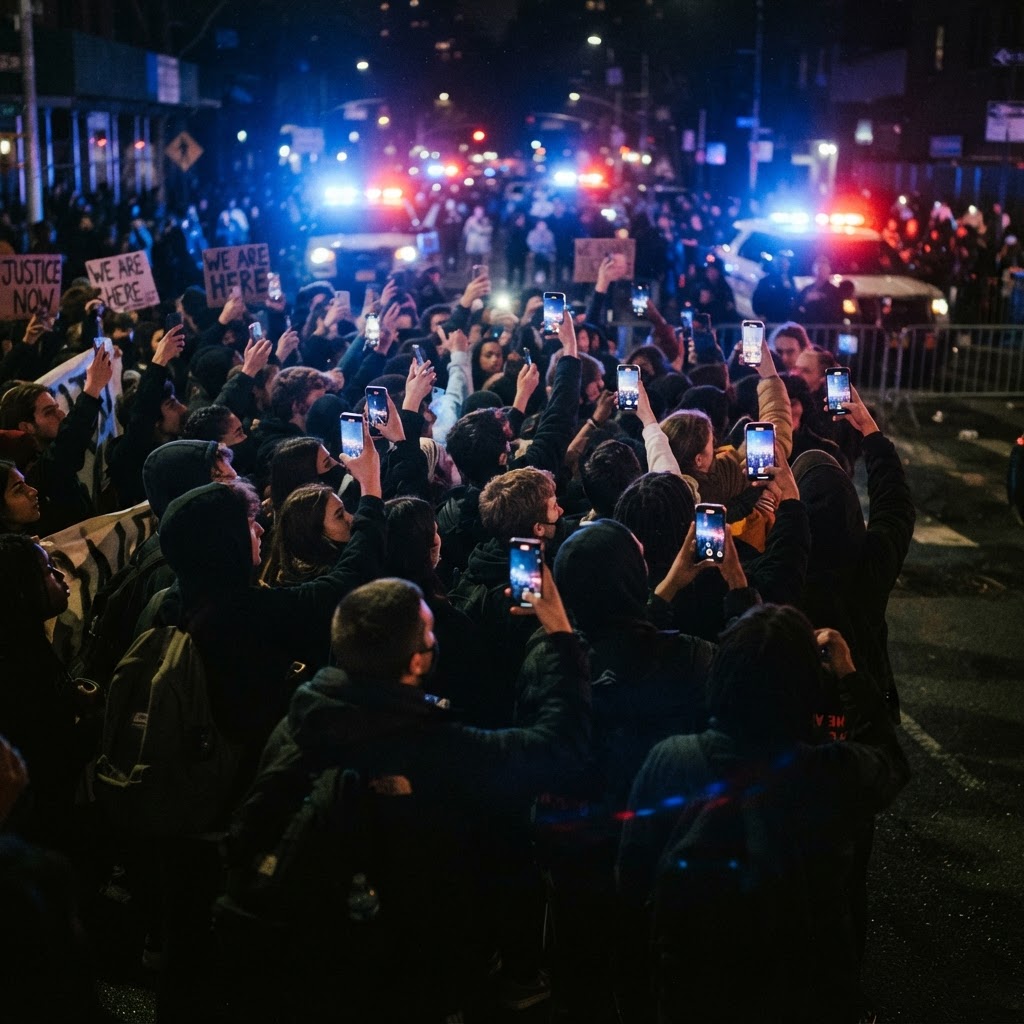
The immediate costs are staggering. The 402 arrests in Newport Beach created a jail bottleneck that rippled through Orange County law enforcement. Many young people now face misdemeanor and felony charges—disorderly conduct, vandalism, assault, fireworks violations. A single night can derail a young person's college prospects, job applications, and future earning potential.
But the city-level response is also intensifying rapidly. According to St. Louis news outlets, a violent July 4th weekend marked by teen takeovers has sparked a national push for emergency youth curfews and stricter juvenile laws. Cities from Los Angeles to Boston are actively discussing new legislation to deter such gatherings. The panic is real: if a beach town of Newport Beach's resources can't contain a teen takeover, what hope do smaller cities have?
Some proposals include:
• Charging parents for costs incurred (police response, medical services, property repair)—potentially thousands of dollars per family
• Enhanced social media monitoring and cooperation between platforms and law enforcement
• Emergency curfews tied to specific events or high-risk weekends
• Increased prosecution of organizers under conspiracy statutes
• Felony enhancement for coordinated takeovers (treating them like mob violence rather than disorderly conduct)
Some of these proposals are constitutional. Others face First Amendment and privacy challenges. But the desperation is driving experimentation—cities can't afford more Newport Beach weekends.
Can This Be Stopped? The Challenges Ahead
Police and community leaders face a genuine dilemma: how do you prevent gatherings that are organized through encrypted channels and announced minutes before they happen? Traditional enforcement models assume a threat can be identified, announced, and addressed. Teen takeovers skip the identification and announcement steps entirely.
One Georgia beach town has tried a different approach: instead of just enforcement, they've invested in youth programming, community engagement, and social connection. By giving young people legitimate spaces to gather and be heard, they've reduced the appeal of chaotic takeovers. But this requires resources, political will, and consistent funding that not every community has. It's also a slow solution in a world of fast virality—prevention takes months, but a teen takeover happens in hours.
TikTok itself has been largely silent on the issue, though the platform has faced pressure before from coordinated activist campaigns, showing it is possible to mobilize its users for collective action—whether the goal is political or chaotic. The company has removed some content related to takeovers, but the underlying tool—rapid, mass coordination through a platform with a billion users—remains essentially unchanged.
The Bottom Line: A New Era of Mob Dynamics
Teen takeovers represent something unprecedented in American public safety: the ability to summon thousands of people to a physical location with minimal warning, minimal coordination overhead, and minimal individual risk. The playbook—social media seeding, private group amplification, encrypted final coordination—is now proven to work at scale. It works across socioeconomic lines, geographic regions, and demographic groups.
For police departments, the lesson is clear: the old playbook of monitoring public social media and deploying based on visible threats is obsolete. Resources need to shift toward real-time incident response, de-escalation, and intelligence sharing between departments. For communities, the question is harder: How do you balance public safety with the genuine need for connection and belonging that seems to drive so many teens to these events?
For now, Newport Beach is cleaning up watermelon rinds and replacing street signs, while 402 young people work through the legal system. City officials are drafting curfew ordinances and eyeing parental liability laws. And somewhere in a private Discord or WhatsApp group, the next location is probably already being planned. The genie of coordinated mob dynamics is out of the bottle. Getting it back in will require more than just arrests.
Frequently Asked Questions: Teen Takeovers
What exactly is a teen takeover?
A teen takeover is a large gathering of teens and young adults (typically ages 15–25) organized primarily through social media platforms like TikTok, Instagram, and private encrypted messaging apps. Participants converge on a specific location at a set time, often resulting in property damage, vandalism, or violent confrontations with police. The key distinction from other crowd events is the speed of organization and the anonymity of participants.
How common are teen takeovers in 2026?
Teen takeovers have escalated dramatically since early 2026. Major incidents have occurred in Washington D.C., Chicago, Boston, Newport Beach, and numerous other U.S. cities. Police departments nationwide now recognize it as an emerging public safety challenge requiring new response strategies. What was considered an isolated incident a year ago is now treated as a recurring pattern that could happen to any city at any time.
Can police stop teen takeovers before they happen?
It's increasingly difficult because coordination happens on encrypted platforms that aren't publicly accessible or searchable. By the time police detect a takeover plan (if they detect it at all), thousands of people may already be in transit. Retired law enforcement commanders note that detecting and infiltrating private chat groups is time-intensive and often ineffective, especially when the actual event announcement comes minutes before the gathering is supposed to occur.
What legal consequences do teen takeover participants face?
Participants can be charged with disorderly conduct, vandalism, assault, fireworks violations, and other misdemeanors or felonies depending on their actions. Convictions can affect college admissions, employment opportunities, and create a permanent criminal record. Some jurisdictions are also beginning to pursue parental liability charges for the costs of police response and property repair, potentially adding thousands of dollars in fines per family.

No comments:
Post a Comment