Cuba's Blackout Crisis: How Trump's Oil Blockade Plunged an Island into Darkness
Cuba's Blackout Crisis: How Trump's Oil Blockade Plunged an Island into Darkness
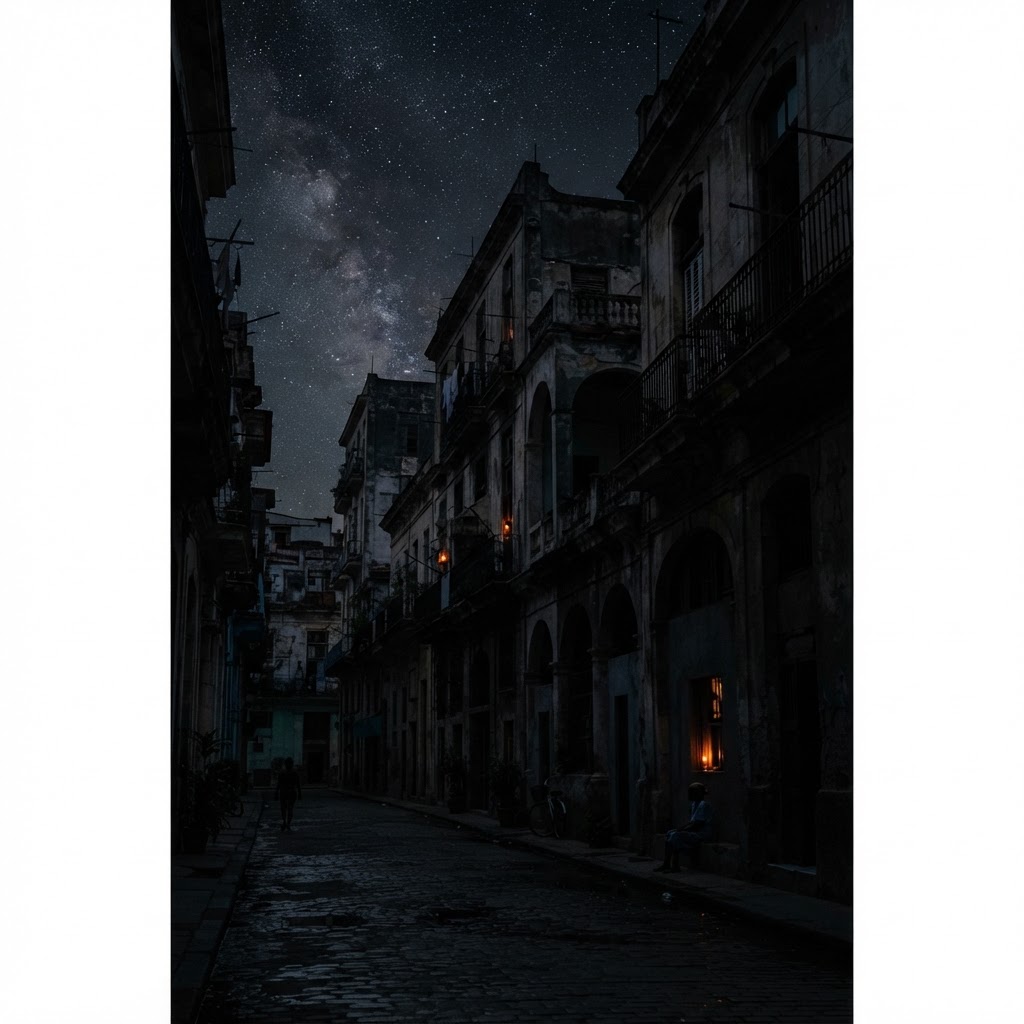
Cuba has suffered its fourth nationwide blackout since 2026 began, with two successive outages striking in a single week—a humanitarian crisis unfolding in real time as the Trump administration's fuel embargo leaves millions without power, water, or essential services. The Caribbean island, already reeling from decades of economic hardship, now faces a compounding catastrophe: an aging electrical grid designed in the Cold War era colliding with a modern-day blockade that has cut off virtually all foreign oil supplies. What started as Trump's strategy to force regime change has become a public health emergency affecting 11 million civilians.
Key Takeaways
- Cuba suffered its second island-wide blackout in less than a week on July 10, 2026, bringing the total to four nationwide outages since January—a frequency and severity unprecedented in recent history.
- The Trump administration's January 2026 fuel blockade has strangled Cuba's oil imports; only a single Russian tanker has docked since March, despite the island producing just 40% of the oil it consumes.
- The UN reports infant mortality has nearly doubled in recent months directly caused by fuel restrictions that prevent doctors from accessing medicines, medical equipment, and vaccine refrigeration.
- Cuba's power infrastructure dates to the Cold War era, with renewable energy accounting for just 18% of generation—a structural mismatch that makes the grid dangerously fragile without fuel imports.
The Blockade: From Policy to Weapon
Cuba's blackout crisis did not emerge from mismanagement alone. It emerged from a deliberate policy decision made at the start of 2026. When Trump assumed office for a second term, he moved quickly to escalate pressure on the Castro regime—but the pressure was not diplomatic. It was infrastructural.
On January 3, 2026, Trump authorized a military operation against Venezuelan President Nicolás Maduro, Cuba's closest economic partner and primary oil supplier. Maduro was abducted and transported to New York, where he remains imprisoned on drug and weapons-related charges. The immediate consequence was predictable: Venezuela, under US control, ceased sending oil or subsidies to Cuba.
But Trump did not stop there. On January 29, 2026, he issued an executive order declaring Cuba an "unusual and extraordinary threat" to the United States. More significantly, he threatened any nation or company that supplied fuel to Cuba with steep tariffs—a direct attempt to weaponize trade policy against a single commodity shipment to a single island.
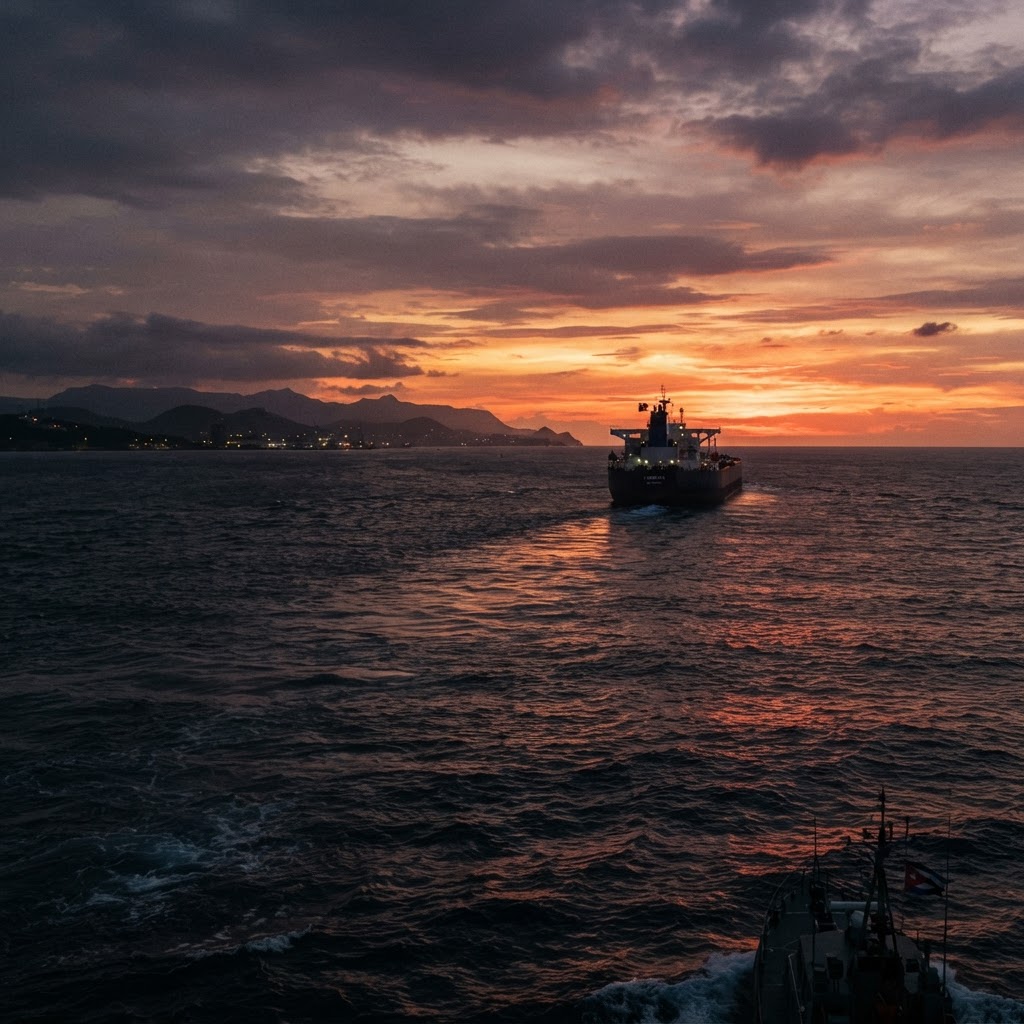
The result was a blockade more effective than traditional sanctions. Since January, only a single Russian oil tanker has successfully reached Cuban soil, arriving in March. Every other potential supplier—nations that might have sold fuel to Cuba for profit—has been deterred by the threat of US tariffs. It is an extraterritorial blockade: the US is not just refusing to trade with Cuba, but preventing other nations from doing so as well.
The Energy Math: Why Cuba Cannot Survive Without Imports
To understand why this blockade is so immediately catastrophic, you need to understand Cuba's energy dependency. According to the International Energy Agency, as of 2023, Cuba produces only 40% of the oil it consumes. The remaining 60% has always come from abroad—historically from the Soviet Union during the Cold War, then from Venezuela after the USSR collapsed.
For decades, Cuba managed this dependency by cultivating one reliable partner. The relationship with Venezuela was not just economic; it was survival infrastructure. Venezuela's oil powered Cuba's electricity grid, its transportation system, and its economy. Cuba trained Venezuela's military and security forces in exchange. It was a mutual dependency, but fundamentally, Cuba needed that oil more than Venezuela needed Cuba's expertise.
When Trump removed Maduro and ended Venezuelan oil shipments in January 2026, he did not remove 10% of Cuba's oil. He removed the vast majority of its foreign supply in a single geopolitical stroke. Cuba's domestic production—40% of consumption—suddenly had to power 100% of essential services. The math is impossible. Hospitals, water treatment plants, electrical generation itself (which requires fuel to generate electricity), food distribution networks—all compete for a shrinking pool of fuel. Something had to fail. Everything started to fail simultaneously.
The Cascading Blackouts: July 6 and July 10
On Monday, July 6, 2026, Cuba's electrical grid suffered a total collapse. Reuters reported that the Union Eléctrica de Cuba, the state-owned utility, cited unclear reasons for the outage, but the mechanics were straightforward: insufficient fuel to maintain generation across the island's interconnected grid. When one region shut down, the load shifted to others. When those became overloaded, they shut down. The cascade triggered a complete blackout—all 11 million people without electricity simultaneously.
Power was restored over the following days, but restoration was fragile. The grid was operating at critical margins, with generators running on fumes. Fuel shipments had been delayed. Maintenance had been deferred. By Friday, July 10, less than four days later, the grid collapsed again. The Union Eléctrica announced the second outage at 4:30pm local time, offering no formal explanation—but the pattern was unmistakable. The grid could not sustain itself. It could no longer even pretend to normal operations.
These were not localized outages affecting provinces or regions. These were island-wide blackouts. Reports from Havana described families sleeping on floors without fans, hospitals unable to refrigerate medicines, and water systems shut down because they depend on electrical pumps. In tropical July heat, with temperatures around 30°C (86°F) and humidity near 100%, a blackout is not an inconvenience. It becomes a survival emergency.
Infrastructure Built for a Dead World
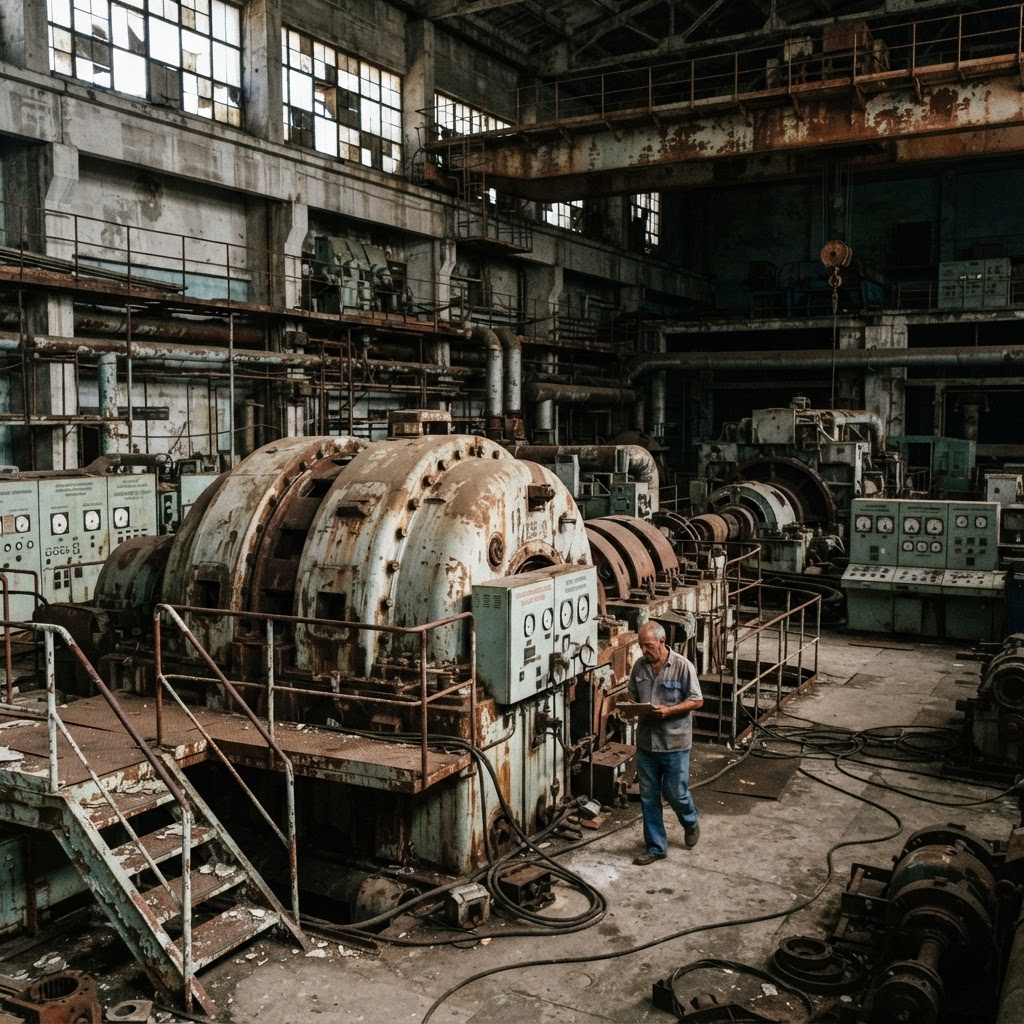
Cuba's electrical grid is not merely old. It is a technological artifact from a world that no longer exists. Much of the system dates to the Cold War period, between 1960 and 1980. When it was built, Cuba had guaranteed Soviet subsidies, a different population size, and a different energy footprint. The island's post-Soviet leadership never fully modernized the grid. Instead, they extended it, patched it, and asked more of obsolete equipment with every passing year.
The result is a system that was fragile even in good times. With steady fuel supplies and careful maintenance, it could limp along. But it was not designed for independence. It was designed for a superpower proxy state with unlimited subsidies. Cuba has spent the last 30 years trying to operate a Soviet-era grid in an era of economic embargo and isolation. The grid has held up through sheer ingenuity and the willingness of engineers to coax performance from equipment running far beyond its intended lifespan.
But you cannot maintain infrastructure you cannot replace. When a generator breaks, you cannot import a new one—the embargo prevents that. When a transformer fails, you improvise with older, less efficient equipment. Every year, the grid becomes more fragile, more dependent on remaining fuel for baseload power, more vulnerable to any external shock. The Trump blockade was that shock. It was a shock the grid could not withstand.
The Renewable Energy Problem: Too Late and Too Slow
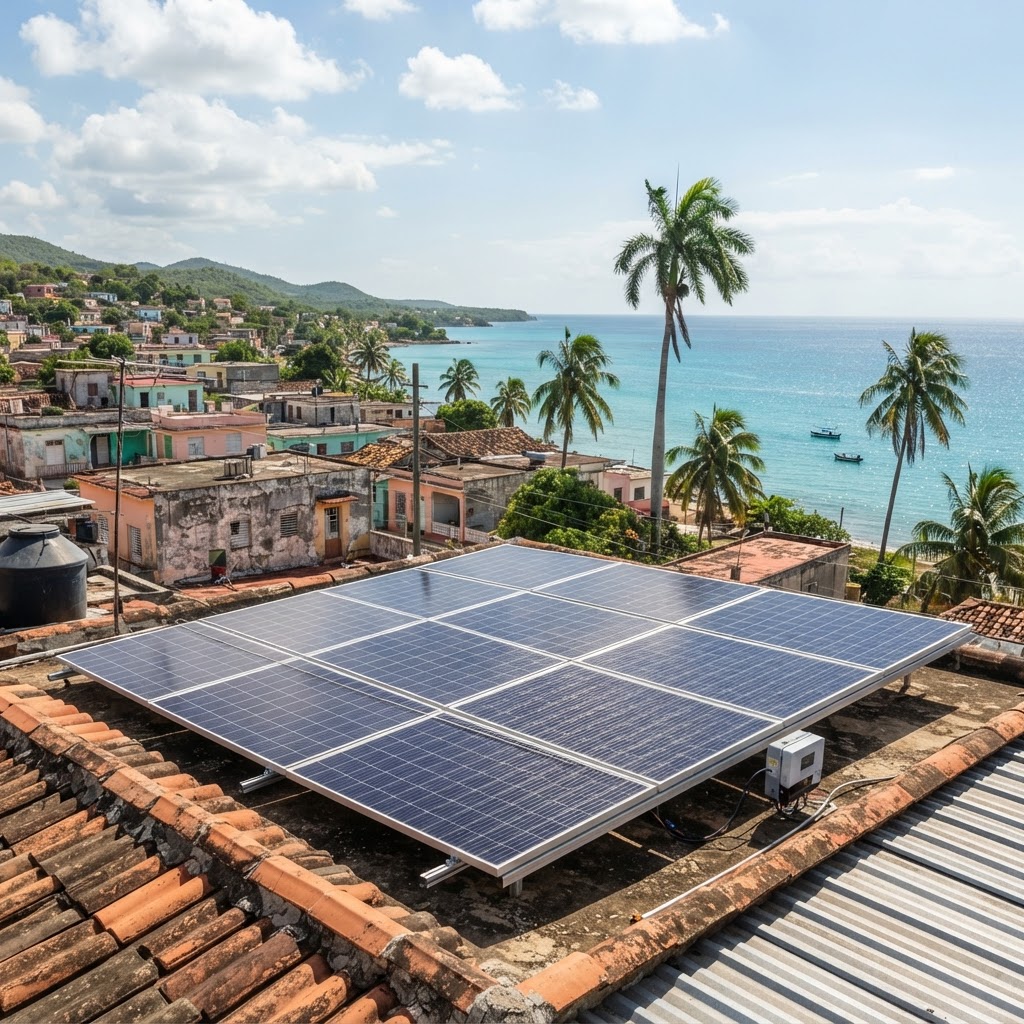
Before the blockade, Cuba had begun a planned transition to renewable energy. It was not a choice driven by ideology; it was driven by necessity. Cuba recognized that it could not import fuel forever, and it could not modernize its grid overnight. So it began installing solar panels, with help from China.
The plan was modest but real: increase renewable energy from around 5-10% of total generation in the early 2020s to 25% by 2030. It was a 10-year transition. But renewable energy still accounts for just 18% of Cuba's total power consumption as of 2022—and that was before the blockade accelerated depletion of fuel reserves. The island needs to produce 25% of its power from renewables just to replace the loss of imports, and it still needs baseload fuel for the remaining 75%.
The blockade has made this transition infinitely harder. Solar panels have to be imported—from China, primarily. But trade restrictions and financing limitations make even that difficult. The capital investment required to expand solar capacity to meaningful levels is beyond Cuba's current economic reach. The island faces a catch-22: it needs fuel to power the grid while transitioning to renewables, but the blockade prevents it from importing the fuel that would allow time for a gradual transition. The result is not a planned shift to clean energy; it is a sudden, chaotic collapse of electrical services.
The Human Cost: A Public Health Emergency
The blackouts are not merely inconvenient. They are deadly. In June 2026, Volker Turk, the UN's high commissioner for human rights, issued a statement citing statistics showing infant mortality had nearly doubled in recent months. He directly attributed the deaths to the fuel restrictions:
"The fuel restrictions imposed since early 2026 and recent tightening of extraterritorial sanctions, taken together, are directly harming Cubans, especially the most vulnerable. Children are dying because doctors lack access to essential medical supplies and medicines. This is unacceptable."
Think about what that statement means. Infants—the most vulnerable population—are dying at roughly twice the rate they were dying six months ago. Not from a new disease. Not from war or famine. From lack of electricity to refrigerate vaccines, insulin, and antibiotics. From lack of power to run incubators in neonatal intensive care units. From lack of fuel to transport medicines from storage facilities to hospitals.
Cuba's healthcare system, once a regional point of pride, is deteriorating by the day. Hospitals are rationing medicines. Surgical theaters operate by candlelight or generator power when available. Blood banks cannot maintain refrigeration. Dialysis patients cannot access treatment. The healthcare system is not collapsing gradually; it is collapsing in real time, and the doubling of infant mortality is the most visible and tragic marker of that collapse.
The Official Narrative vs. The Timeline
The Trump administration's official position is that the blockade is not responsible for Cuba's blackouts. In March 2026, US Secretary of State Marco Rubio told Al Jazeera: "We've done nothing punitive against the Cuban regime." The blackouts, this framing suggests, are entirely a function of Cuban government mismanagement, corruption, and incompetence. Cuba's leaders have failed their people. The US is merely refusing to subsidize that failure.
But the timeline contradicts this narrative with uncomfortable clarity. Cuba has faced electrical challenges for years. But the February 2026 and March 2026 blackouts—two of the island-wide outages this year—and especially the July 6 and July 10 collapses are directly correlated with the moment Trump cut off fuel supplies. The grid did not become more mismanaged in January 2026. The fuel supply became unavailable. The correlation is not circumstantial; it is causal.
The Cuban government certainly bears responsibility for inefficiencies and for infrastructure that should have been modernized decades ago. But a grid can be inefficient and still function if it has access to fuel. A grid cannot function without fuel, no matter how efficiently it is managed. The blockade removed a necessary input. The grid failed.
Regime Change Strategy at the Level of Electricity
What is happening in Cuba is not an unintended consequence of sanctions. It is the intended consequence of regime change strategy. Trump has stated clearly that his goal is to remove the Castro government and establish a different regime in Havana. The blockade is a tool toward that goal, predicated on a calculation that enough suffering will force the government to collapse or capitulate.
The assumption is that Cubans will eventually blame their government for the blackouts, the food shortages, and the healthcare collapse, and demand change. Perhaps they will overthrow the regime. Perhaps they will negotiate a surrender. Either way, pressure from daily suffering should produce a political outcome favorable to the US.
What actually happens, historically, is different. Blockades and embargoes tend to rally populations around their government—an effect called the "rally around the flag" phenomenon. Cubans may be frustrated with their government, but they understand that the US is inflicting the blackouts. They understand that the suffering is not a function of local mismanagement but of external strangulation. The blockade does not weaken the regime; it legitimizes it. It transforms the regime's narrative from "our failures" to "foreign aggression against our nation."
The Question of Intent and Responsibility
Whether Trump's administration calls the blockade punitive or not, the effect is indistinguishable from a humanitarian siege. When you cut off a nation's fuel supply knowing that power plants cannot operate without it, you know that blackouts will follow. When you know blackouts will follow and you maintain the blockade anyway, you are choosing to accept blackouts as a cost of the policy. You are choosing the suffering.
The administration disputes the label "punitive," arguing instead that it is simply refusing to subsidize a regime it opposes. That is a philosophical distinction, not a factual one. The facts are clear: fuel is blocked, power plants cannot run, people are in darkness, and children are dying from lack of access to electricity-dependent medicines. Whether that is called "punitive" or "necessary pressure" changes nothing about what is actually happening on the ground.
What Comes Next
Cuba's blackout crisis will likely worsen before it improves, if it improves. The island faces three potential futures: capitulation, adaptation, or collapse. Capitulation would mean the government negotiating an end to the blockade, likely in exchange for political concessions. Adaptation would mean accelerating the renewable energy transition and accepting a severe but stable reduction in living standards. Collapse would mean the breakdown of essential services, migration, and humanitarian crisis.
The blockade, if maintained, will not be resolved by domestic policy. Cuba cannot solve this alone. It requires a change in US policy—either a negotiation with the Trump administration, or a change in administration. Until then, the blackouts will return. The grid, operating at the margin of function, will fail again and again. Hospitals will ration medicines. Infants will die from lack of refrigeration. Millions will live in darkness.
FAQ
Why does Cuba have so many blackouts right now?
Cuba's electrical grid, built in the Cold War era, requires fuel imports for 60% of its power generation. The Trump administration's January 2026 blockade cut off nearly all foreign oil supplies, forcing the grid to operate at critical fuel levels. When fuel runs low, the grid collapses. This has happened four times since January 2026.
How many people are affected by the blackouts?
All 11 million people in Cuba were affected by the July 6 and July 10 island-wide blackouts. While the government attempts to prioritize restoration in critical areas like hospitals, much of the island remains without reliable electricity. Exact real-time figures are difficult to pin down due to limited information coming out of Cuba, but the scale is total.
Can Cuba switch to renewable energy to solve this problem?
Partially, but not immediately. Renewable energy currently provides 18% of Cuba's electricity generation. The pre-blockade plan was to reach 25% by 2030. But that still leaves 75% of the island's power dependent on fuel imports. Expanding renewable capacity also requires capital investment and imported equipment, both difficult under blockade conditions. A full renewable transition would take years.
Is the US blockade of Cuba legal?
The US embargo on Cuba, in place since the 1960s, was authorized under US law. Trump's January 2026 orders threatening tariffs against nations supplying fuel to Cuba operate within executive authority. However, UN human rights experts have argued that the blockade violates international humanitarian law by directly harming civilians through deprivation of essential services. The legal and ethical questions remain contested.


Comments
Post a Comment