Trump's Escalation Breaks Iran Ceasefire as Khamenei Buried
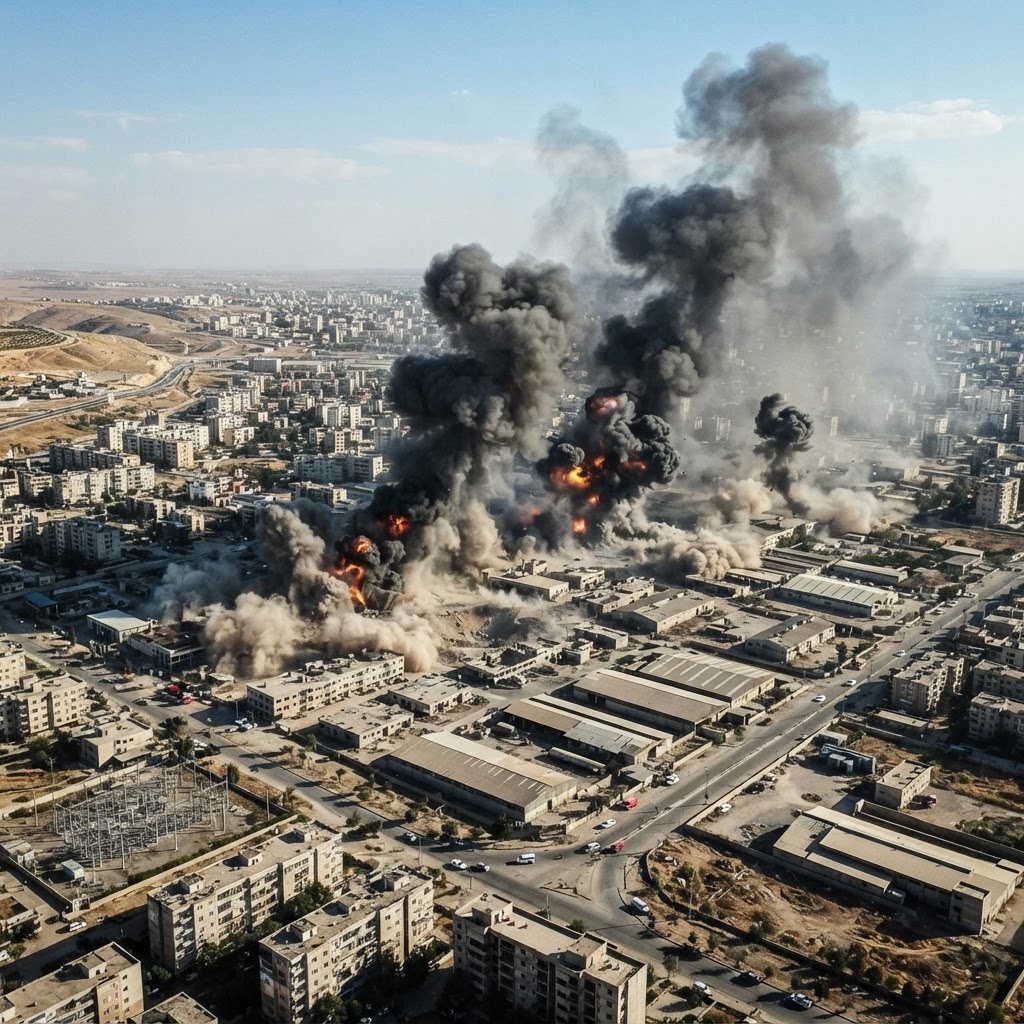
Trump's Escalation Breaks Iran Ceasefire as Khamenei Buried — After burying Supreme Leader Ali Khamenei on July 9, 2026, the US resumed bombing Iranian targets for a third day, declaring a month-old ceasefire "over" and targeting everything from bridges to the nuclear plant perimeter. The tit-for-tat exchange marks the largest fighting since June's peace deal, pushing the Strait of Hormuz—controlling 20% of global oil—back toward the brink of conflict.
Key Takeaways
- Trump declared the June 17 ceasefire "over" on July 8, resuming strikes on 90+ Iranian targets including bridges and infrastructure near Mashhad
- Iran buried assassinated Supreme Leader Khamenei with crowds chanting "We Will Kill Trump," then retaliated with missiles on US-allied bases
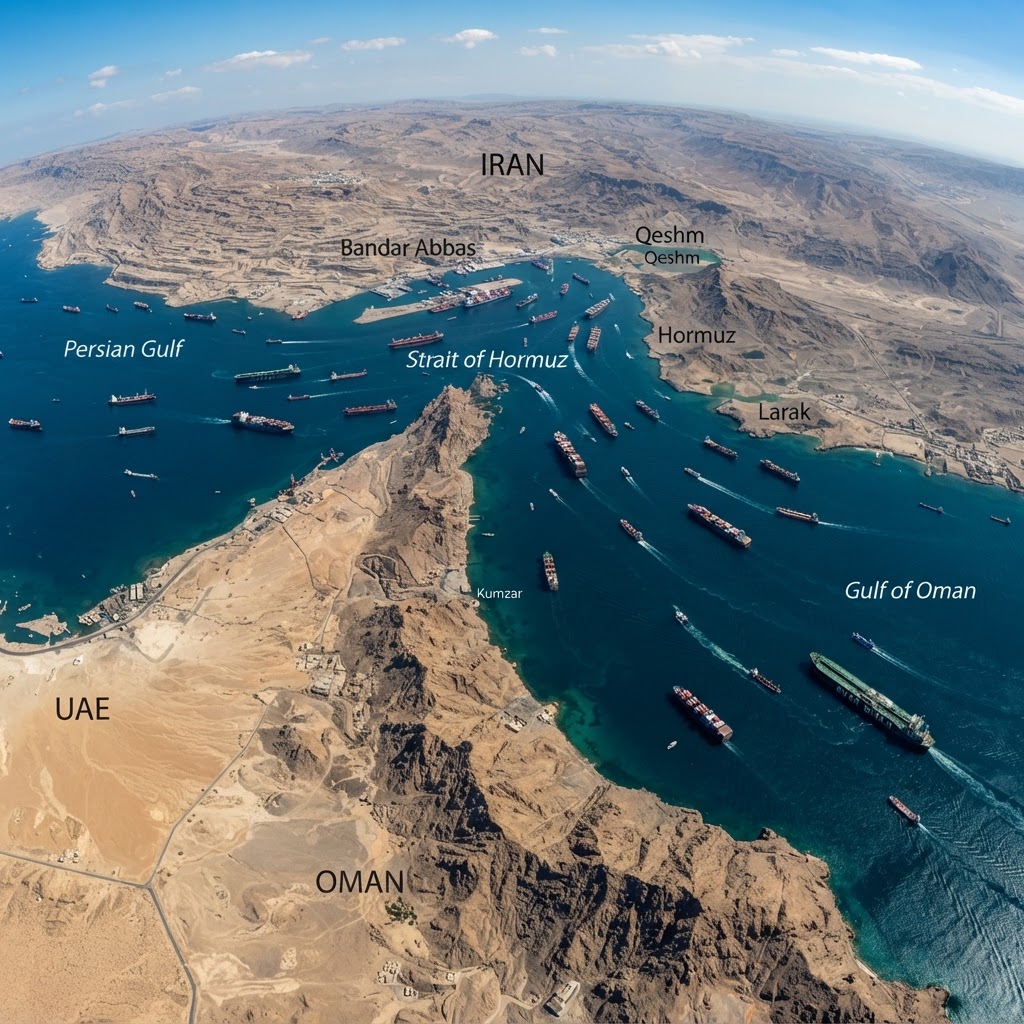
- Oil prices spiked 5% as the Strait of Hormuz—a chokepoint for 6,000 sailors and 20% of global trade—returned to high-risk status
- The ceasefire's core dispute: Iran wants control over the strait with transit tolls; the US insists it remains an international waterway
Trump Breaks the Peace, Bombs for the Third Day
On Wednesday, July 8, President Donald Trump stood at the NATO summit in Ankara and announced what he'd been threatening since negotiations began: "To me, I think it's over." The ceasefire signed just three weeks earlier on June 17 was, in his view, finished. Within hours, US warplanes struck more than 80 targets across Iran, followed by roughly 90 more on Wednesday night alone.
The trigger was straightforward by the administration's accounting: on Monday, three commercial ships near the Strait of Hormuz reported attacks. A Qatari gas carrier, a Saudi oil tanker, and a third vessel were targeted. The US military blamed Iranian forces, though Tehran has not claimed responsibility. But the Trump administration's response suggested this was less about proportionality and more about a decision already made to break the agreement. The president called Iran's leaders "scum," "sick people," and "evil people," then promised to seize Kharg Island (Iran's oil export hub) and bomb power plants and desalination infrastructure if attacks continued. "Let's just finish the job," he said to reporters, language that signaled not containment or deterrence, but total strategic defeat of the Iranian regime.
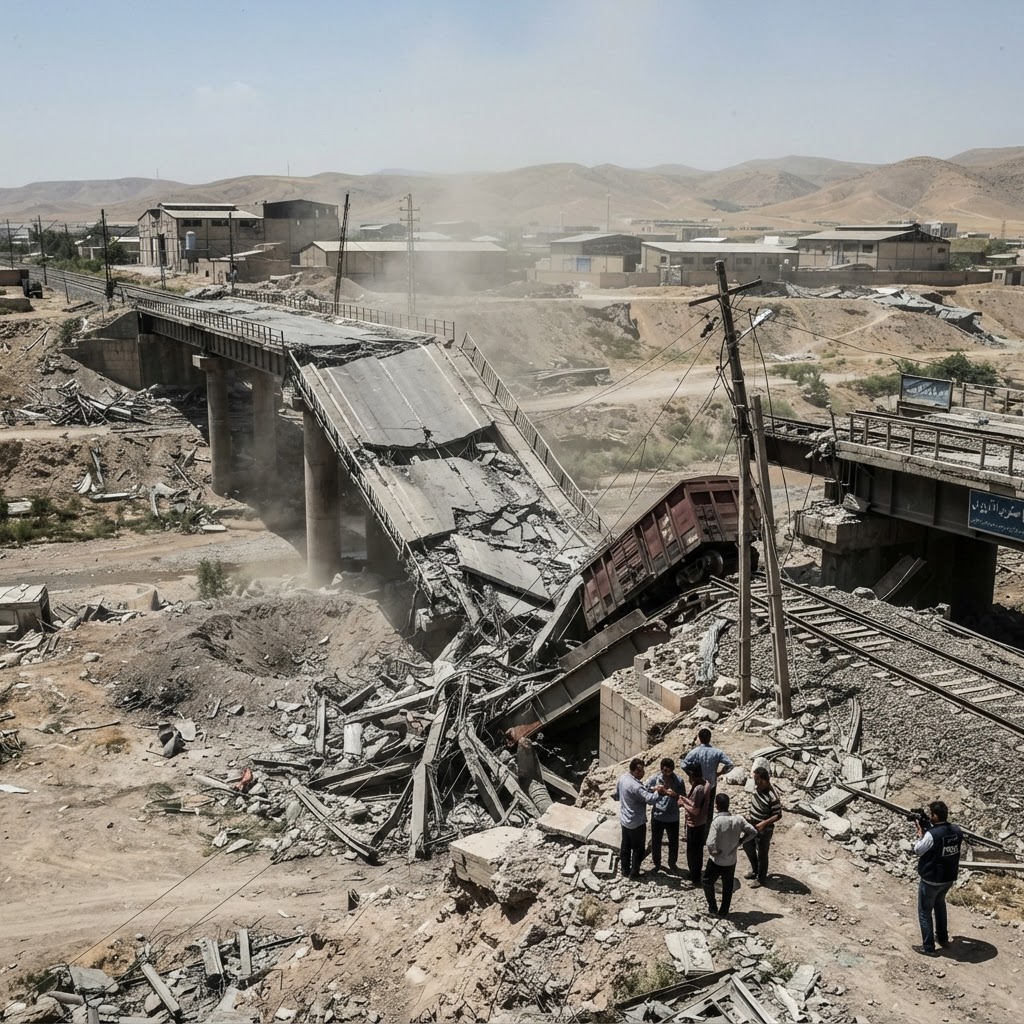
On Thursday, July 9, as crowds of Iranians buried Khamenei in Mashhad—the city where he was born—Trump's planes struck the rail lines connecting Mashhad to Tehran, delaying the funeral by eight hours. The rails carry critical overland trade between Iran and both Russia and China, making the choice of target unmistakable: Washington was signaling it would hit Iran's backbone infrastructure, not just military sites. This was not surgical strikes on military bases. This was economic warfare on the nation's capacity to function as a state connected to its allies.
The scale of the campaign became clearer as reporting consolidated. The US military said it hit about 90 targets in Iran, showing footage of strikes on missile launchers, air defenses, coastal radar, and a runway. The stated justification was degrading Iran's capacity to "threaten freedom of navigation" in the Strait of Hormuz. But the targeting also included ports (Bandar Abbas, Chabahar, Konarak, Sirik), Revolutionary Guard boats, and civilian infrastructure. By Thursday night, additional strikes were underway. The Financial Times reported these were the first attacks on Iranian infrastructure in months—a major shift from the tactical, more limited strikes of earlier weeks.
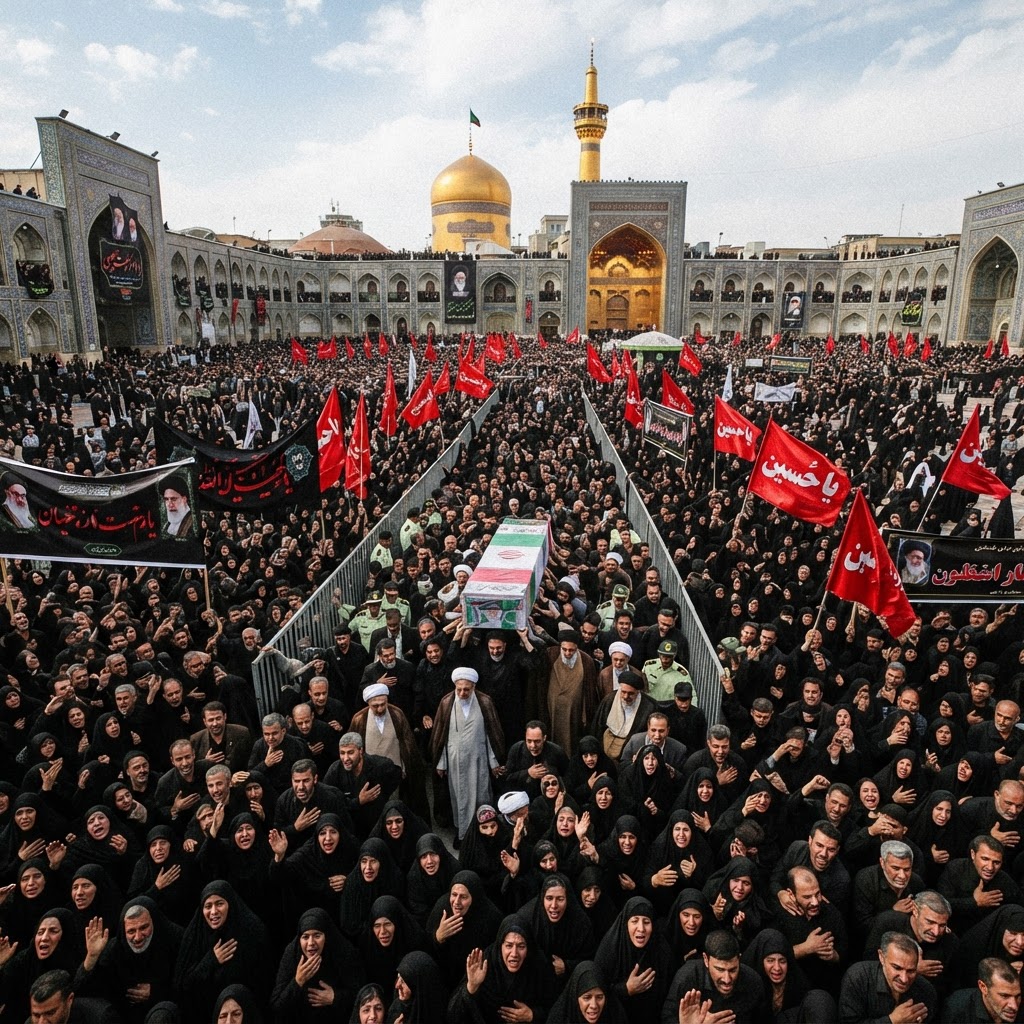
Khamenei's Funeral: A Moment of National Grief, Rage, and Succession Questions
Ali Khamenei, who had led Iran as Supreme Leader since 1989, was killed on February 28 alongside his daughter, daughter-in-law, son-in-law and a 14-month-old granddaughter in a US-Israeli airstrike during ongoing ceasefire negotiations. The assassination happened two days after US and Iranian diplomats had held nuclear talks in Geneva—a move that violated the laws of war which prohibit killing an adversary under cover of negotiations. For nearly six months, Iran's government delayed the funeral—a political choice that allowed time for the war to simmer, the ceasefire to form, and the moment to become, in effect, a referendum on whether Trump would honor the deal.
He did not. On Thursday morning, Khamenei's body was laid to rest at the Imam Reza Shrine, Islam's holiest site. The crowds were staggering—Iranian state media reported up to 43 million people attended funeral processions across Iran and Iraq over six days. Mourners carried red flags (a symbol of revenge), wore black, and carried banners that read, bluntly: "We Will Kill Trump." The funeral itself became an act of political theater: here was Iran's response to assassination, here was continuity despite loss, and here was a message that the nation remained defiant. The timing of American bombs falling on rail lines while millions prayed for Khamenei was not coincidental. Trump was making his own statement.
Khamenei's son and successor, Mojtaba Khamenei, was wounded in the same February strikes that killed his father and did not appear at the ceremony. Since then, he has communicated only through written statements, raising immediate questions about the depth of continuity in Iranian decision-making at a moment when the regime faces both internal pressure (succession, war management, economic strain) and external conflict. A wounded supreme leader managing the largest regional conflict in decades is not a situation that inspires confidence in stability, either in Tehran or in global markets.
The funeral also revealed fractures. While official rhetoric centered on revenge and resistance, some Iranian analysts noted signs of internal division—questions about whether the war was worth its costs, whether the new leadership would chart a different course. Those fissures matter. If Iran's government is internally divided about strategy, its negotiating position weakens. If it is unified in defiance, the war has further to run.
The Ceasefire That Was Always Fragile: How Trust Collapsed in Three Weeks
The June 17 memorandum of understanding (MoU) was never intended to be permanent. It aimed to extend an existing ceasefire and create space for negotiations toward a lasting deal. The terms seemed workable on the surface: the US would lift the naval blockade it had imposed on Iran's ports in April; Iran would reopen the Strait of Hormuz toll-free for 60 days; both sides would return to the negotiating table for permanent resolution. This was supposed to be a step toward peace, not a prelude to larger war.
But beneath that agreement lay a chasm that neither side could bridge. Iran wanted control over the strait—not just free passage, but the right to charge transit fees as leverage in future bargaining. Iran's negotiators saw toll rights as compensation for the blockade and as a tool to prevent future US pressure. The US insisted the Strait of Hormuz is an international waterway that cannot be tollgated, that allowing Iran to control it sets a catastrophic precedent for global commerce and US power projection. That is not a technicality. The strait moves roughly 20% of the world's oil and gas. Control over it is control over leverage. Control over leverage is control over whether future conflicts escalate or resolve.
On June 23, the Senate voted to end the war—a non-binding resolution. On June 3, the House had already passed similar language. Congress had, in effect, told Trump: no more war without our say-so. But Trump, when asked what these votes taught him about limits on his power, answered simply: "There are no limits." That statement signaled everything: the ceasefire was, from Trump's perspective, temporary—a chance to regroup, resupply, and prepare a larger blow.
On Tuesday, July 8, the US Treasury revoked the waiver that had allowed Iranian oil exports—the ceasefire's central economic benefit for Tehran. That single act signaled that Washington had already decided the deal was finished. The attacks followed within hours. For Iran, the message was unmistakable: the US was not negotiating in good faith. It was buying time to prepare a larger offensive. Under those circumstances, Iran's incentive to continue restraint evaporated.
What Went Wrong: Nuclear Inspections, War Crimes, and Why the Goals Keep Shifting
When the US began military operations against Iran in February 2026, the stated justification centered on Iran's nuclear enrichment program. The International Atomic Energy Agency had estimated Iran had 440.9 kilograms of uranium enriched up to 60% purity—technically short of weapons-grade but far beyond civilian needs. If further enriched, IAEA officials said, that stockpile could provide enough material for multiple nuclear weapons. That was the rationale for military action: stop Iranian nuclear breakout before it happens.
But as the war has unfolded, the goals have visibly broadened. Trump has explicitly threatened regime change. He has talked about bombing civilian infrastructure—power plants, desalination plants. "We can knock down their bridges in one hour, we can knock out their energy supply," he told NATO. These are not statements about nuclear containment. These are statements about forcing Iran to surrender. When Iranian officials complained that US strikes had hit the perimeter of the Bushehr nuclear power plant, they invoked earlier UN warnings that attacks on nuclear facilities pose real danger to nuclear safety. Bushehr is a civilian facility. Striking it is not counterproliferation. It is economic sabotage.
The targeting of bridges and rail lines on Thursday added another dimension. These are civilian infrastructure. Under international law, striking civilian infrastructure that is not a direct military objective can constitute a war crime. Trump himself has promised it: "We can knock down their bridges in one hour, we can knock out their energy supply." That is a statement of intent about civilian targeting. Combined with the actual strikes on the rail lines to Mashhad and the bridges to China and Russia, the pattern is clear: Washington intends to degrade Iran's ability to function as a nation-state, not simply to prevent nuclear weapons.
For Iran, each of these moves has signaled the same message: the US is not interested in a permanent settlement. It is interested in degrading Iran's power, breaking its deterrent capacity, and possibly forcing regime change. Under those circumstances, why would Tehran accept less leverage—like toll-free passage of the strait—when it could keep asserting control and force an even costlier conflict for Washington? The logical answer is: it wouldn't. And it hasn't. The ceasefire collapse was not accidental. It was the inevitable result of two sides with fundamentally incompatible war aims trying to pretend, for three weeks, that they could coexist.
Oil Shocks, Global Spillover, and the Economic Domino Effect
The resumption of strikes sent oil markets into an immediate spike. Brent crude jumped more than 5% to $78 a barrel on Wednesday—not a crash, but a sharp signal that traders now price in sustained conflict. The United Nations shipping agency warned all vessel operators to stay out of the strait, citing danger to nearly 6,000 sailors in the region. Insurance companies began repricing coverage for tankers and commercial vessels, adding cost to every shipment that had to transit the waterway.
When the strait tightens, the ripple spreads globally. Oil and gas prices rise. Insurance costs on tankers climb. Shipping routes reroute, lengthening transit times and adding cost to everything from electronics to food. Every consumer economy with exposure to fuel—that is, most of them—begins to feel pressure. Over weeks and months, that pressure translates into inflation, political pressure on governments to end the war, and cascading economic effects that no major power can fully isolate itself from. Europe's already-fragile recovery from recession could be set back. India and Japan, which import most of their oil, face energy cost shocks. Even China, with strategic reserves, would see its import costs rise sharply.
For Iran, that is its most powerful asymmetric tool. The country does not need to defeat the US military outright; it only needs to make the conflict too expensive, politically and economically, for Washington and its partners to sustain comfortably. Three days of escalation has already pushed oil prices higher and shipping confidence lower. If the fighting persists for weeks, the cost will compound exponentially. A sustained conflict that drives oil to $100+ per barrel will create pressure on every government, every central bank, and every consumer.
In parallel, Congress voted twice to end the war—the House on June 3, the Senate on June 23—yet Trump resumed bombing without authorization, claiming he has no limits on his executive power. That legal standoff will matter if the war deepens and domestic opinion turns against it. If gas prices at the pump spike and Americans blame Trump, the political cost accelerates. That is Iran's other advantage: time and cost alignment. The longer the war lasts, the more expensive it becomes globally, and the more pressure mounts on the US administration to negotiate or withdraw.
What Mediators Are Trying (and Why They Are Failing)
Qatar's prime minister spoke to Iran's foreign minister on Thursday, condemning Iran's attacks but also trying to salvage the negotiation. The US officially told Reuters that "technical talks continue," even as Trump declared the ceasefire over. That gap—between official messaging and actual strategy—shows just how fractured the diplomatic landscape has become. When the president declares a deal "over" in public but diplomats say talks continue in private, it is a sign that no one is in control of the escalation process anymore.
For negotiations to restart, both sides would need to narrow the gaps on three core issues: Iran's nuclear program (how much enrichment is allowed, what inspections look like), Iran's control over the Strait of Hormuz (whether it gets to charge tolls), and the broader question of regime survival (whether the US will accept a powerful, independent Iran or insist on fundamental change). On all three, the positions have hardened, not softened. Iran now sees any acceptance of US demands as capitulation. The US sees any concession to Iran as weakness that will invite future challenges.
And each day of escalation adds new variables and new grievances. More bombs mean more deaths (at least four killed in one day, nine Revolutionary Guard troops in another), more destroyed infrastructure, and more internal pressure within Iran—both to avenge losses and to stabilize a country managing the death of its supreme leader and a succession in the midst of war. It also means more political cost in Washington if the fighting drags on without resolution, more dead Americans if ground operations expand, and a spreading conflict that could pull Israel, Hezbollah, Saudi Arabia, and the Gulf states into direct fighting.
FAQ: Understanding the Ceasefire Collapse
Q: Did Iran actually attack those three ships on Monday, or is this a US pretext?
A: Iran has not claimed responsibility, and the evidence remains disputed. What is clear is that the attacks gave Trump the moment he was waiting for to break the ceasefire, regardless of whether Iran ordered them or whether proxy groups acted independently. The administration had already decided to escalate; the ship attacks provided political cover.
Q: Why is the Strait of Hormuz so critical?
A: About 20% of the world's oil and nearly 6,000 sailors pass through the strait daily. If Iran threatens it or the US must defend it militarily, global oil and gas prices spike within hours. That makes the strait the single most valuable bargaining chip either side has. Control over it means leverage over global energy markets and therefore over the politics and economics of every major economy.
Q: Could this turn into a wider regional war?
A: Yes. Israel's defense minister said his country is prepared to resume operations if needed. Hezbollah, Iraqi militias, and the Houthis remain active on Iran's side. Any major escalation or Israeli strikes could pull multiple actors into direct conflict, turning what is now a bilateral US-Iran war into a regional conflagration.
Q: What happens if Trump seizes Kharg Island or bombs Iran's energy infrastructure?
A: Either move would be a massive escalation with potential humanitarian cost (power and water failures) and strategic consequence (oil shocks, insurance crises, economic disruption globally). It would also make any future negotiation much harder, as it would represent naked regime-change warfare. At that point, Iran would have no incentive to settle short of forcing the US to withdraw.


Comments
Post a Comment