Messi's Last World Cup Meets Egypt's 91-Year Miracle: Inside the Argentina vs Egypt Round of 16 Showdown
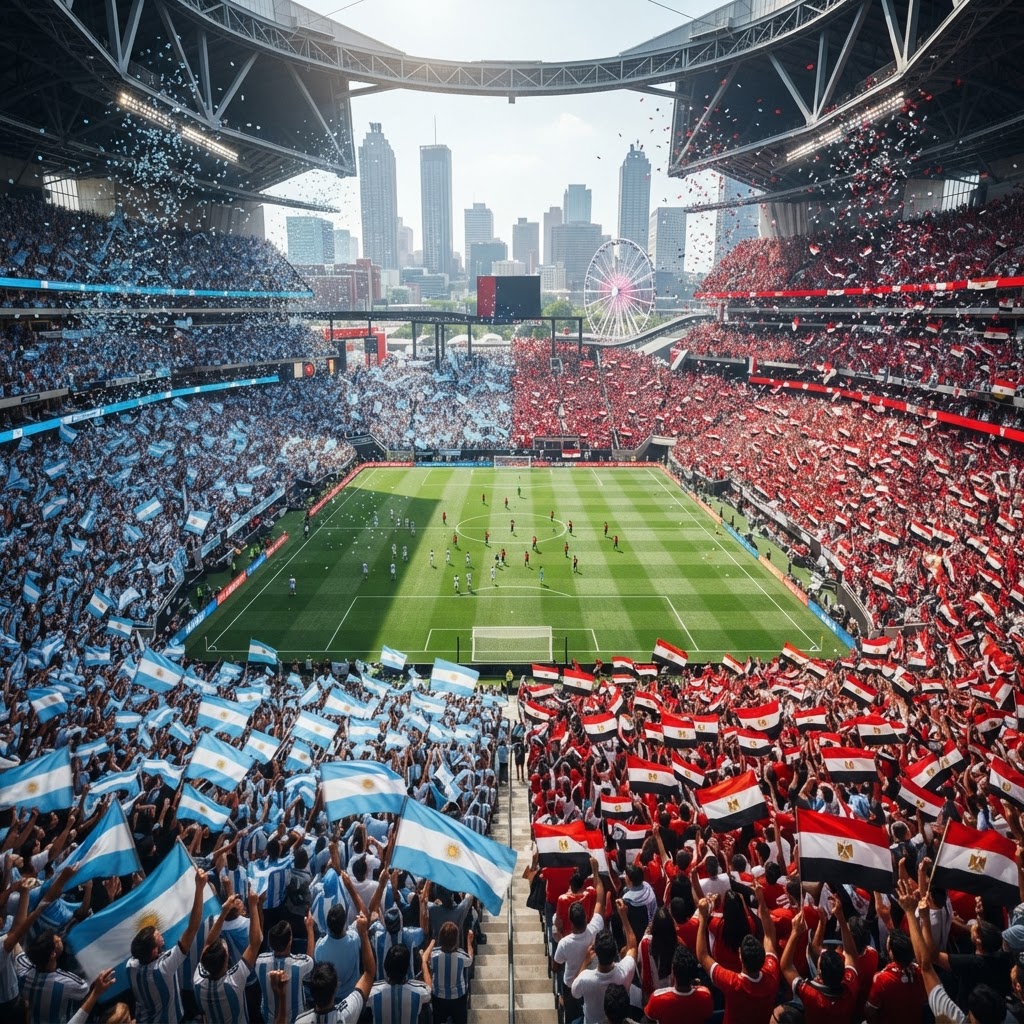
At noon on a sticky Atlanta Tuesday, two teams that have almost nothing in common will walk out of the same tunnel. One is chasing history it has never touched in ninety-one years of trying. The other is trying to hang on to history it made just four years ago, with a 39-year-old carrying it on his back for what is almost certainly the last time. Argentina versus Egypt in the Round of 16 of the 2026 FIFA World Cup shouldn't be a classic on paper. It might end up being the most emotionally lopsided game of the entire tournament — and that's exactly why it's worth paying attention to.
A Tournament Engineered to Produce Chaos
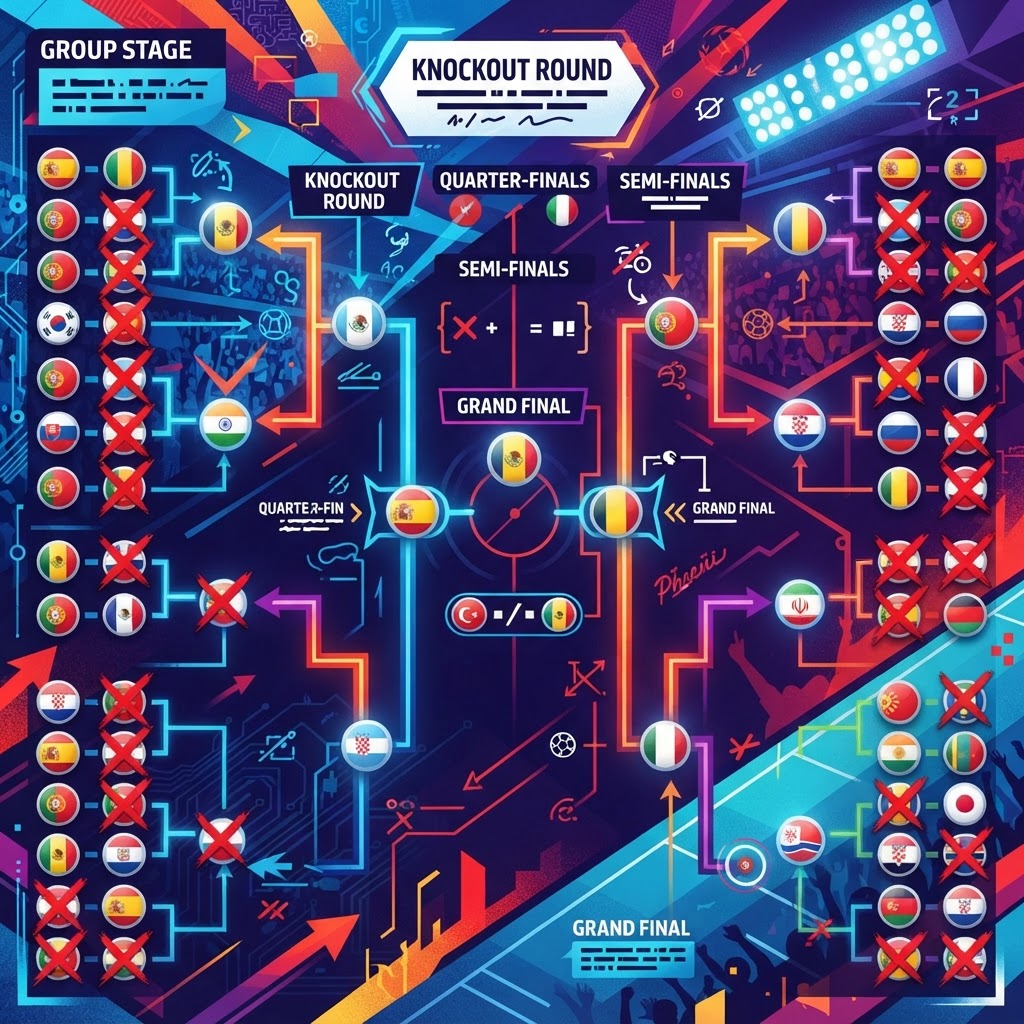
This is the first World Cup with 48 teams, and it shows. FIFA's expansion added a brand-new Round of 32 before the traditional knockout bracket even begins, which means teams that used to go home after three group games now get an extra life — and an extra chance to cause an upset. Reuters' tournament analysis put it plainly: the bigger bracket has made "giant-killings significantly more likely," even if the traditional heavyweights are still winning more often than not, on balance. The proof is already sitting in the discard pile. Germany, Morocco, and the Netherlands — three sides that would have been considered near-locks for the quarterfinals in the old 32-team format — are all home already, eliminated in a Round of 32 that one wire report called "dramatic" almost as an understatement.
Not everyone is thrilled about the new format. Ghana's veteran coach Carlos Queiroz, who has now led six different countries into World Cups across a decades-long career, didn't hold back, calling the 48-team expansion "vulgar and ordinary" — a pointed jab at what he sees as a dilution of the tournament's prestige for the sake of more matches and more broadcast revenue. He's not entirely wrong that the group stage felt bloated at times, stretched across weeks of fixtures involving nations that were never realistically competing for the trophy. But he's also coaching in a tournament that just watched one of the classic underdogs of world football claim its first-ever World Cup win off the back of the exact format he's criticizing. Context is everything, and Egypt's story is the best argument the expansion has produced so far.
Ninety-One Years of Nothing, Then Everything at Once
Here's a stat that's almost hard to believe until you check it: heading into this tournament, Egypt's entire World Cup history — spanning appearances in 1934, 1990, and 2018 — had produced zero wins. Egypt was actually the first Middle Eastern and African nation ever to play at a World Cup, back in 1934, a genuine piece of football history. And yet for nine decades afterward, the results simply refused to arrive: a heartbreaking 2018 campaign in Russia summed it up perfectly, when Mohamed Salah's Egypt lost to Uruguay, Russia, and Saudi Arabia in the group stage despite carrying one of the best individual players on the planet. Egypt is one of African football's most storied programs, a seven-time Africa Cup of Nations champion, and yet the World Cup had simply refused to cooperate for generation after generation of players who never got to feel what winning at this level was like.
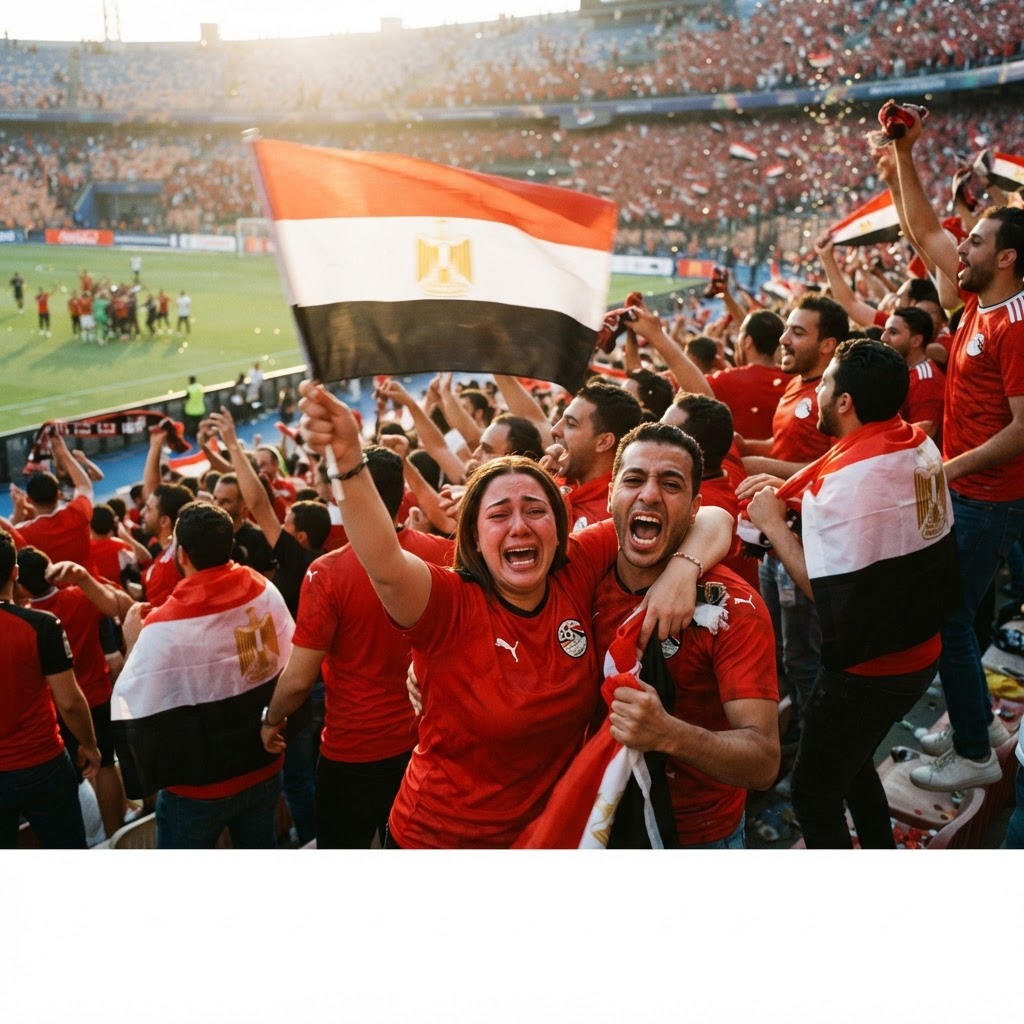
That changed twice in the space of a few weeks. Egypt beat New Zealand in the group stage, then went on to knock out Australia in the newly created Round of 32 — a moment a fan community on Reddit correctly flagged as historic in real time: Egypt's first-ever World Cup knockout victory since the country first showed up at the tournament back in 1934. Two wins. Both in 2026. Both against opponents Egypt was expected to handle on paper, which somehow makes the ninety-one years of near-misses before them even more painful in hindsight, and this breakthrough even sweeter.
It isn't a fluke run built on luck, either. According to FIFA's own team profile, Egypt went through World Cup qualifying unbeaten for the first time in 91 years — meaning the foundation for this breakthrough was being laid long before a ball was kicked in North America. A team that finally stopped losing in qualifying is a team that finally started believing something different was possible, and that belief has carried straight through into the group stage and beyond. For a country whose football identity has long been built around Salah's individual brilliance rather than collective tournament success, arriving at a World Cup Round of 16 as a genuinely cohesive team — not just a vehicle for one superstar — is arguably the bigger story here than any single result.
Which is what makes Tuesday so cruel. Egypt's reward for breaking a 91-year curse is a date with the defending world champions, in front of a crowd that will almost certainly be split down the middle in Atlanta.
There's another layer worth noting: this is the first time Argentina and Egypt have ever met at a World Cup. No history, no grudges, no tactical film from a previous meeting to lean on — just two federations with wildly different recent trajectories sharing a pitch for the first time when the stakes could not possibly be higher. For neutrals, that blank slate is part of the appeal. There's no script to follow here, no rivalry narrative being replayed; whatever happens in Atlanta becomes the entire history of Argentina versus Egypt in one afternoon.
The Manager Who Finally Got It Right
Part of Egypt's transformation traces directly back to the touchline. Hossam Hassan, one of Egyptian football's own legends as a player before he became a manager, took over the national team in 2024, and the timeline matters: the unbeaten qualifying campaign, the group-stage breakthrough against New Zealand, and the historic knockout win over Australia have all happened on his watch. Hassan inherited a squad that had underachieved relative to its talent for years, built around Salah but never quite built around a system that made the most of him, and the results since his appointment suggest something finally clicked. Alongside Salah in attack, Egypt has also leaned on a younger generation — forwards like Omar Marmoush, now a regular for a major European club, giving Hassan a strike partnership that doesn't rely on one player carrying the entire nation's hopes for ninety minutes at a time.
That balance matters against an Argentina side that will, at some point in this match, simply have more of the ball and more moments of individual quality than Egypt is used to facing. Teams that lean on a single superstar tend to get isolated and shut down by the sport's best defenses. A team with two or three genuine attacking threats is far harder to game-plan against, and that's exactly the kind of squad Hassan has quietly assembled heading into the biggest match of his managerial career.
Messi's Sixth World Cup, and Almost Certainly His Last
Lionel Scaloni didn't reinvent Argentina's squad for this tournament. He barely touched it. The 26-man roster he named leaned so heavily on continuity from the side that won it all in Qatar that ESPN's own coverage framed it as a deliberate bet on chemistry over change — "Scaloni opts for continuity" — built around a spine of players who already know exactly what winning a World Cup together feels like. Rodrigo De Paul, Messi's teammate at Inter Miami, made the cut again. So did most of the core that beat France on penalties in Doha back in December 2022.
That continuity showed up immediately in the group stage. Argentina topped Group J with nine points, a clean sweep, before opening their knockout campaign against Cape Verde in Miami in the Round of 32 — itself a small underdog story, given Cape Verde had never appeared at a men's World Cup before this tournament and were making their debut as one of the smallest nations, by population, ever to qualify. Argentina got through, setting up Tuesday's meeting with Egypt and, on paper, another step toward the deep knockout run everyone expected from the defending champions.
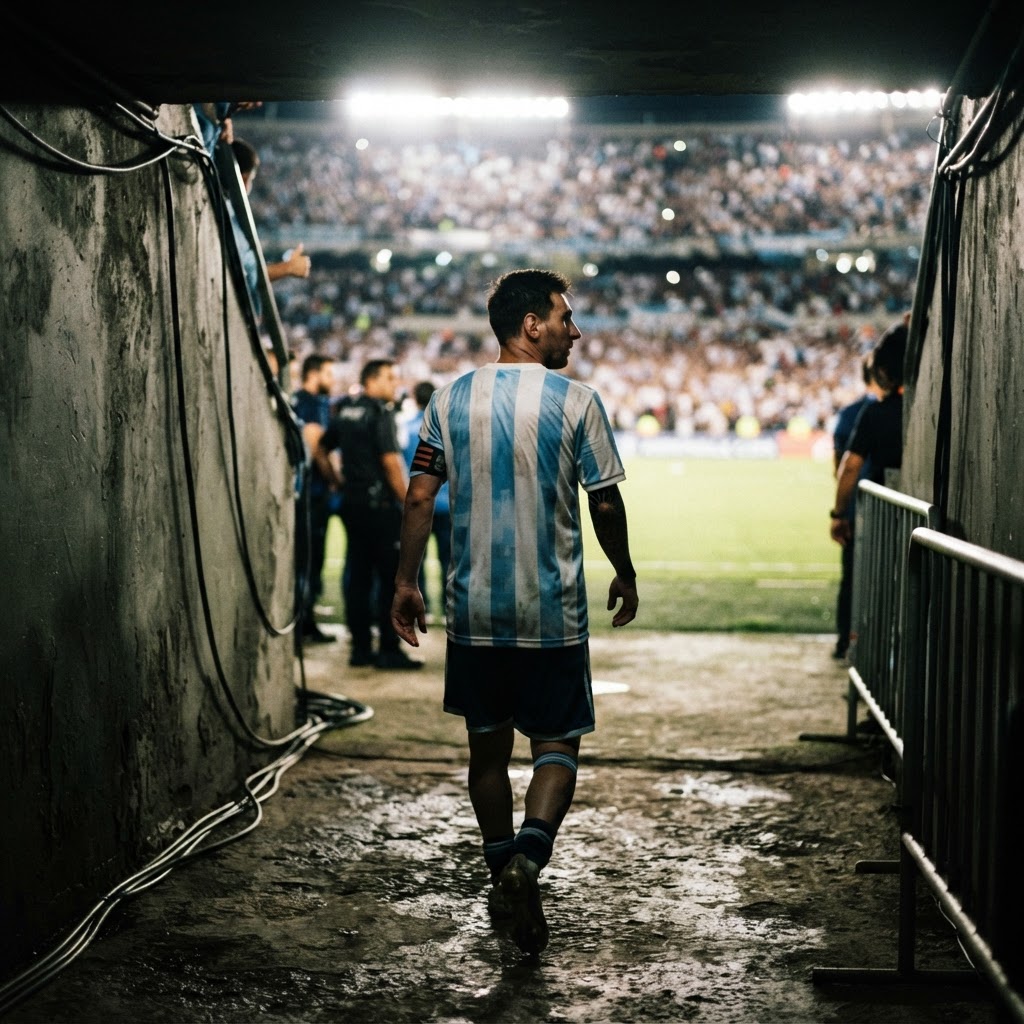
And at the center of it, still, is Lionel Messi, playing in his sixth World Cup. FIFA's own squad announcement led with his name for a reason: at an age when almost every other outfield superstar in the sport's history has already stepped away from international football, Messi is here, based at Inter Miami, trying to help Argentina do something no team has managed since Brazil in 1962 — win back-to-back World Cups. There is no realistic scenario where he plays a seventh. Whatever happens across the rest of this tournament, Atlanta on Tuesday is one of a finite, shrinking number of times the sport will get to watch him play a World Cup knockout match at all.
That context changes how you should watch this match. Argentina isn't just defending a trophy. Scaloni's continuity strategy was always a bet that experience beats reinvention, that a group of players who trust each other completely can grind through an expanded, more chaotic 48-team bracket better than teams still figuring out their identity on the fly. Egypt, ironically, is proving the opposite theory can also work — that a team playing with house money and nothing to lose can be just as dangerous as one playing with the weight of history and expectation on its shoulders.
The Rest of a Loaded Round of 16
Argentina-Egypt isn't happening in a vacuum. This is arguably the single best stretch of matches the expanded tournament has produced so far. Portugal and Spain — two European heavyweights who have history against each other on the biggest stages — met in Dallas in a Round of 16 tie the New York Times previewed as a genuine "mega" match between neighbours and rivals. Around the same window, the United States faced Belgium, a matchup with its own weight given the tournament is being co-hosted on American soil for the first time since 1994. Layer in Argentina-Egypt, and you get a single stretch of matches that reads like a greatest-hits tournament preview: European royalty, a host nation with something to prove, and the defending champions against the biggest underdog story left in the draw.
It's worth pausing on that. A 48-team World Cup was always going to produce more matches, more group-stage noise, and — per Carlos Queiroz — more diluted moments along the way. But when the bracket compresses down to sixteen teams, what's left is almost always worth watching, regardless of the format that got everyone there. This particular slate is the clearest evidence yet that the expansion's critics and its defenders might both be a little bit right.
What Atlanta Actually Decides
Strip away the narratives and the mechanics of Tuesday's match are simple: win, and you're in the quarterfinals of the first 48-team World Cup in history, with a date against the winner of Switzerland and Colombia waiting in Kansas City. Lose, and the story ends — for one side, a heartbreaking but genuinely proud exit; for the other, an unthinkable, tournament-defining collapse.
For Argentina, anything less than advancing would be the biggest shock of a tournament that has already produced Germany, Morocco, and the Netherlands crashing out early. Scaloni's team came into this as one of the favorites precisely because of that continuity, and the further this expanded format gets into its knockout rounds, the more that experience should, in theory, matter — fresher legs and surprise factor only carry an underdog so far against a team that has literally already won the biggest possible game together. But "in theory" is doing a lot of work in a sentence about a format that has already eaten several favorites alive.
For Egypt, there is functionally no pressure at all, and that might be their biggest advantage. Every single minute from here is uncharted territory for the program — nobody in an Egyptian shirt has ever played a World Cup quarterfinal, so there's no historical baggage, no ghosts of past collapses to fight off, unlike the ghosts of 2018 that hung over this squad before the tournament even started. A team that spent 91 years being told the World Cup wasn't for them has already rewritten the story once this summer, under a manager who finally figured out how to build a real team around his best player instead of just handing him the ball and hoping. Doing it again, against the actual defending champions, would turn Tuesday into one of the great underdog afternoons in the tournament's history — the kind of result that gets replayed in World Cup retrospectives for decades.
Realistically, class and squad depth still favor Argentina, and most neutral predictions have Scaloni's side advancing to face the Switzerland-Colombia winner. But this tournament has already demonstrated, repeatedly, that the bigger bracket rewards nerve as much as talent, and Egypt has shown more of that in the last two weeks than almost anyone expected them to have.
Tactically, expect the shape of the match to look familiar to anyone who has watched Argentina's knockout runs before: patient possession, width from the full-backs, and a willingness to wait for the one moment of individual quality that turns a stalemate into a lead. Egypt, meanwhile, has generally set up defensively compact under Hassan, absorbing pressure and looking to spring forward quickly through Salah or Marmoush on the counter — exactly the kind of approach that worked against Australia and could, in theory, work again against a back line that occasionally leaves gaps in transition. Set pieces could matter more than either side would like to admit; expanded-format knockout games have repeatedly been decided by moments of chaos rather than sustained brilliance, and neither of these teams has been shy about scoring from a dead ball this tournament.
Why This Game Matters Beyond the Scoreline
Sports occasionally hand you a matchup that works as a clean metaphor without anyone trying to force it, and this is one of them. On one side: an aging superstar and a battle-tested champion trying to close the book on an era on his own terms, backed by a manager who bet everything on keeping the band together one more time. On the other: a nation that spent nearly a century being an afterthought at its sport's biggest event, suddenly discovering, twice in two weeks, that it belongs, under a coach who used to be the guy scoring the goals himself. Whatever the final score says when the whistle blows in Atlanta, both storylines are already true, and both will keep being told long after this particular Round of 16 bracket is forgotten and the rest of the 2026 World Cup has moved on to its final rounds.
If you're only going to watch one knockout match this week that isn't Portugal-Spain, make it this one. Not because the result is unpredictable — most of the numbers still point toward Argentina advancing to Kansas City — but because so rarely does a World Cup match carry this much weight on both ends of the pitch at once. Who do you think finds a way through: the champions closing out Messi's last dance, or the team that just spent ninety-one years waiting for a moment exactly like this one? Let it play out, and don't be shocked if Atlanta ends up giving this entire tournament its defining image.


Comments
Post a Comment