Heat Dome Crisis: 100M Americans Face Record Temperatures
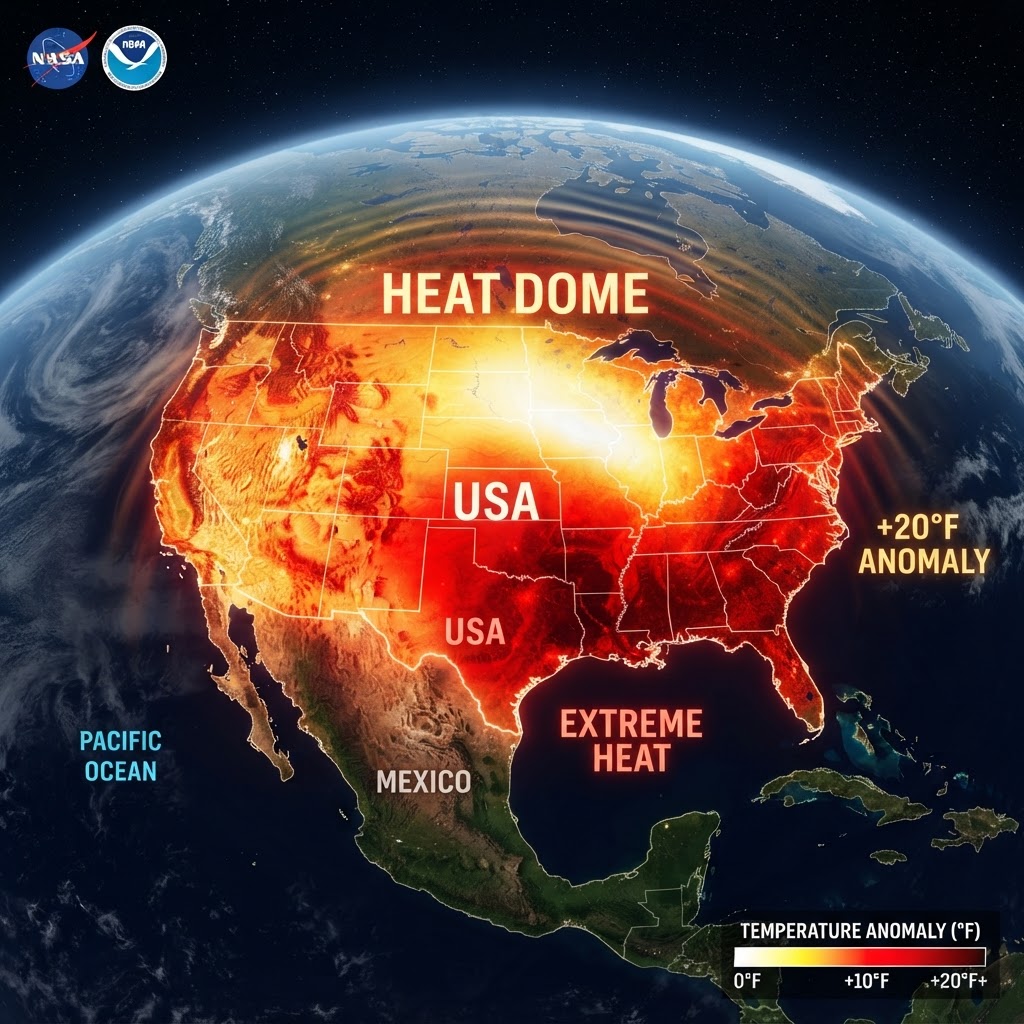
A heat dome is anchoring over the northern United States this week, subjecting more than 100 million Americans to dangerous heat and record-breaking temperatures. From Salt Lake City to Boston, cities are shattering all-time temperature records, breaking records set in the 1800s, while meteorologists warn this is just the beginning of an extended extreme heat event linked to atmospheric blocking patterns and climate change.
Key Takeaways
- 100+ million Americans face extreme heat warnings; Salt Lake City, Billings, and Miles City all broke all-time temperature records over the weekend.
- A "heat dome"—a stationary high-pressure system—is trapping hot air over the Northern Plains and moving east toward the Northeast, where cities like NYC and Boston face dangerous heat indices near 100-105°F.
- Heat emergencies trigger spikes in hospitalizations for heat exhaustion, heatstroke, and mental health crises, with vulnerable populations (elderly, low-income) bearing the heaviest toll.
- The pattern is driven by atmospheric blocking and high-pressure ridging, mechanisms strengthened by climate change, making such events increasingly common.
The Heat Dome Explained: How a Weather System Traps an Entire Continent
A heat dome is not just extreme heat—it's a specific meteorological phenomenon that arises when a stationary high-pressure system becomes "stuck" over a region for days or weeks. These ridges of high pressure, sitting at altitudes of 3,000-7,600 meters, push warm air downward and compress it. As air descends, it warms at a rate of approximately 1 degree Celsius per 100 meters of descent—a mechanism called adiabatic compression.
Once the hot air is forced down toward the surface, the high pressure prevents vertical mixing and cloud formation. Without clouds, solar radiation beats down on the ground unobstructed, heating it further. The surface then radiates heat back into the atmosphere, creating a feedback loop that sustains the heat for extended periods. This is why heat domes can persist for weeks, and why they're so dangerous.
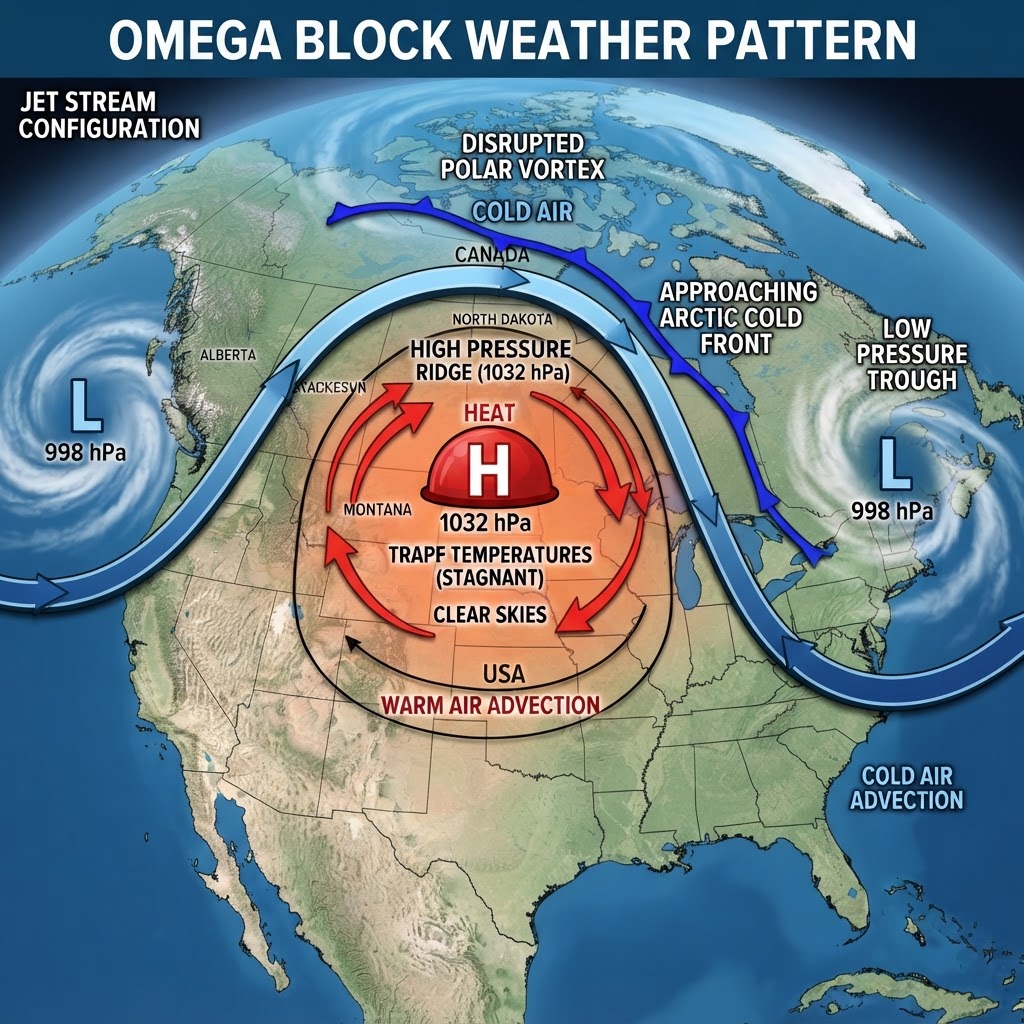
The current pattern is driven by what meteorologists call a "blocking" or "omega block"—named for its resemblance to the Greek letter Ω. This happens when the jet stream—the river of air that normally steers weather systems across the continent—becomes wavy and stalls. Instead of moving weather systems through, the jet stream meanders, allowing high-pressure ridges to sit in place for extended periods. This is exactly what happened in Europe earlier this year, producing record heat across France, Germany, and the Mediterranean.
Record-Breaking Temperatures Across the West: How Hot Is Too Hot?
The numbers tell the story. According to ABC News, Salt Lake City reached 109°F on Sunday, July 13—breaking the all-time record of 107°F that had stood since 1960. But that's not even the hottest part of the country. Billings, Montana hit 111°F, shattering its previous all-time high of 108°F. In Miles City, Montana, temperatures climbed to a preliminary 115°F, obliterating its former record of 111°F set in 2012.
For context, the hottest temperature ever reliably recorded in Montana is 117°F, set on July 5, 1937, in Medicine Lake. We're dangerously close to that nearly 90-year-old record with a week still to go.
These aren't just incremental increases—they're historic. When a city breaks its all-time record by 2-4 degrees Fahrenheit, it signals a profound shift in the climate baseline. Salt Lake City's record had stood for 66 years. Billings', for 24 years. Each new record represents a climate milestone that, when broken, confirms that heat extremes are becoming more intense and more frequent.

The Heat Spreads East: Northeast Faces Dangerous Heat Indices by Week's End
The heat dome is not confined to the West. A second heat wave is building across the Midwest and Northeast. Heat dome research from the Deseret News confirms that Minneapolis is under an extreme heat warning with daily heat indices as high as 100°F through Thursday. Fargo, North Dakota faces heat indices reaching 110°F. Detroit will experience heat indices near 107°F by Tuesday.
By midweek, the heat spreads further east. New York City, Philadelphia, and Washington D.C. are all forecast to face three or more consecutive days of temperatures exceeding 90°F—the technical definition of a heat wave—with heat indices near or above 100°F. The upper Northeast (Boston, Rochester, Albany) will be hottest on Tuesday, with heat indices of 100-104°F. D.C. will peak on Wednesday with heat indices possibly reaching 105°F.
A secondary threat emerges from this heat and humidity: severe storms over northern New England on Tuesday afternoon and evening. When a cold front collides with a heat dome, the temperature contrast can fuel explosive storm development. The National Weather Service has issued a level 3 of 5 risk (a "significant" risk) for the region from northeast New York through northern Vermont, New Hampshire, and Maine. Damaging winds exceeding 70 mph, hail larger than ping pong balls, and one or two strong tornadoes are possible after 5 p.m. ET.
The Health Crisis: Heat Emergencies Are Medical Emergencies
Heat is not just uncomfortable—it kills. According to TechTimes reporting on UK heatwave mortality, the UK recorded an estimated 2,700 deaths during May and June 2026 alone due to back-to-back record heatwaves. Globally, heat stress contributes to approximately 489,000 deaths annually—more deaths than from tropical hurricanes, floods, and tornadoes combined.
The current U.S. heat dome is already triggering a surge in heat-related hospital admissions. Conditions like heat exhaustion, heatstroke, exacerbation of cardiovascular and respiratory disease, and acute kidney injury spike during heat events. Emergency rooms in cities like Salt Lake City and Phoenix are experiencing overcrowding as people present with dangerously elevated core body temperatures, some above 103°F.

Vulnerable populations bear the heaviest burden. The elderly (65+) face dramatically increased mortality risk—deaths from heat for this age group have surged 85% between 2000-2004 and 2017-2021. People with chronic conditions like hypertension, diabetes, and asthma face heightened risk when heat stress forces the body to divert blood to the skin for cooling, reducing blood flow to vital organs. Low-income communities and communities of color experience an additional 1°C of heat due to urban heat island effects, where darker pavements, fewer trees, and denser building patterns trap and radiate heat.
A new concern emerging from recent research: mental health impacts. Medical Xpress reported in July 2026 that hospitalizations for mental health issues—including anxiety, depression, and delirium—spike during and following heat waves. Heat stress impairs cognitive function, increases irritability, and can trigger or exacerbate psychiatric conditions. Preliminary data suggests the most recent U.S. heat dome may trigger a measurable increase in mental health-related emergency department visits in the coming weeks.
Why Heat Domes Are Getting Stronger: The Climate Connection
Extreme heat events have always existed. But the frequency, intensity, and duration of heat domes have changed dramatically due to human-caused climate change. Chosun Ilbo's analysis of global heatwaves confirms that Europe's omega heat dome and the U.S. blocking pattern are part of a broader global trend. Climate change has warmed the oceans, and warmer ocean surfaces provide more energy to the atmosphere. This energy can amplify the amplitude of the jet stream waves, making high-pressure ridges (and low-pressure troughs) deeper and more persistent.
Additionally, the temperature contrast between the Arctic and mid-latitudes—which normally drives jet stream variability—is narrowing as Arctic ice melts and the poles warm faster than the equator. This reduced temperature gradient can paradoxically slow the jet stream, allowing high-pressure systems to remain stationary longer.
The result: what used to be a rare, extreme event—a heat dome lasting two weeks—is becoming commonplace. Ohio University's climate explainer notes that heat domes and omega blocks have increased sixfold over the past 40 years, and the trend is accelerating. Without aggressive reductions in greenhouse gas emissions, heat domes of this magnitude—or worse—will occur multiple times per decade by mid-century.
Preparing for a Hotter Future: Why This Week Matters
This heat dome is more than just a week of uncomfortable weather. It's a preview of the climate baseline we're rapidly shifting toward. Harvard's School of Public Health has compiled recent research showing that as heat waves intensify, the health, economic, and social impacts compound. Power grids fail under demand spikes. Wastewater treatment systems fail when rivers warm. Wildfires explode across millions of acres. Crop yields decline. Labor productivity collapses in heat-exposed sectors.
Related to the broader climate crisis we've reported on, like the record heat waves affecting 30 countries simultaneously, this U.S. heat dome fits into a pattern of compounding extremes. This is the new normal, and it's accelerating.
FAQ: Understanding Heat Domes and Extreme Heat
What is the difference between a heat wave and a heat dome?
A heat wave is a period of 3+ consecutive days with temperatures above a region's 90th percentile. A heat dome is the specific meteorological mechanism that causes or sustains a heat wave—a stationary, stubborn high-pressure system that traps hot air and prevents cloud formation. All heat domes produce heat waves, but not all heat waves are caused by heat domes.
Why are temperature records being broken so quickly?
Climate change has warmed the baseline temperature globally by about 1.1°C since pre-industrial times. This means heat extremes that occurred once every 50 years now occur multiple times per decade. When record-breaking heat occurs on top of this warmed baseline, previous records—some set decades ago in much cooler climates—fall quickly.
Who is most vulnerable to heat-related illness?
The elderly (65+), very young children, people with chronic diseases (heart disease, diabetes, asthma, kidney disease), people taking certain medications, outdoor and manual laborers, homeless populations, and low-income communities without reliable air conditioning are most vulnerable. People of color and low-income populations also experience compounded heat stress from urban heat island effects.
Can we predict heat domes in advance?
Modern meteorology can predict extreme heat 5-10 days in advance with reasonable accuracy. However, predicting the exact evolution of atmospheric blocking patterns remains challenging beyond 7-10 days. Real-time forecasts are issued by the National Weather Service when dangerous heat is expected, and heat alerts are distributed through weather apps, local news, and emergency management systems.


Comments
Post a Comment