Passive Radiative Cooling: How Zero-Electricity Technology Is Cooling Buildings in 2026
Passive Radiative Cooling: How Zero-Electricity Technology Is Cooling Buildings in 2026
Passive radiative cooling might sound like science fiction. But it is very real. Think about cooling a building without plugging anything in. No power. No machines. No pollution. Just smart stuff that sends heat to space. In July 2026, Europe faces another bad heatwave. This tech is getting the notice it needs.
The World Economic Forum just put passive radiative cooling on its Top 10 Emerging Technologies of 2026 list. The timing is great. Air conditioning uses about 20% of all power in buildings around the world. That is what the IEA says. As it gets hotter, we need ways to cool down that do not make things worse.
So what is passive radiative cooling? How does it work? Could it replace your AC? Let us break it down in plain words.
What Is Passive Radiative Cooling?
Here is the simple version. Every object gives off heat. You cannot see this heat. But you can feel it. Stand near a hot stove. That warm feeling is heat moving through the air. Now, the sky has a special gap. Heat at certain sizes — between 8 and 13 micrometers — goes right through the air and out to space. It does not get trapped.
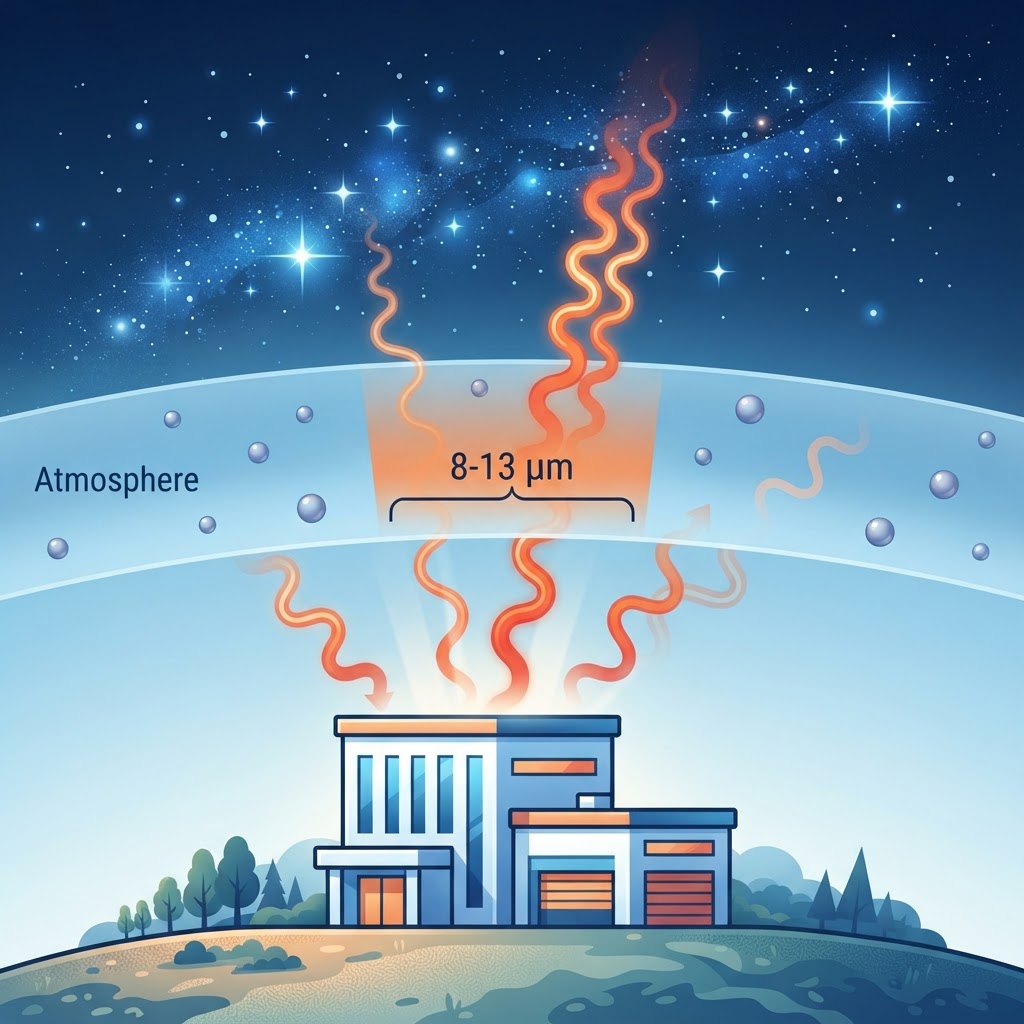
Passive radiative cooling uses this gap. Special stuff gives off heat at just the right size. So instead of heat bouncing back from the air, it shoots straight to space. The surface gets cooler than the air around it. And it uses zero power to do this.
Think of it this way. Space is very cold — about -270°C. That is a giant cold spot right above us. These cooling stuffs act like mirrors. They bounce sun away and send heat up to that cold space. It is the same thing that makes frost on your car when the air is above freezing. The glass sends heat to the sky. It gets colder than the air. Water freezes on it.
This is not a new idea. People have known about it for a long time. Old Persians used it to make ice in the desert. They put water in shallow pools on clear nights. The air was warm enough. But the water froze. Why? The surface lost heat to the cold sky. What is new in 2026 is the stuff we use. We now have things that do this during the day, in full sun, very well.
Daytime vs Nighttime Cooling
For years, this only worked at night. No sun means it is easy to lose heat faster than you gain it. But daytime cooling was the big goal. And scientists did it.
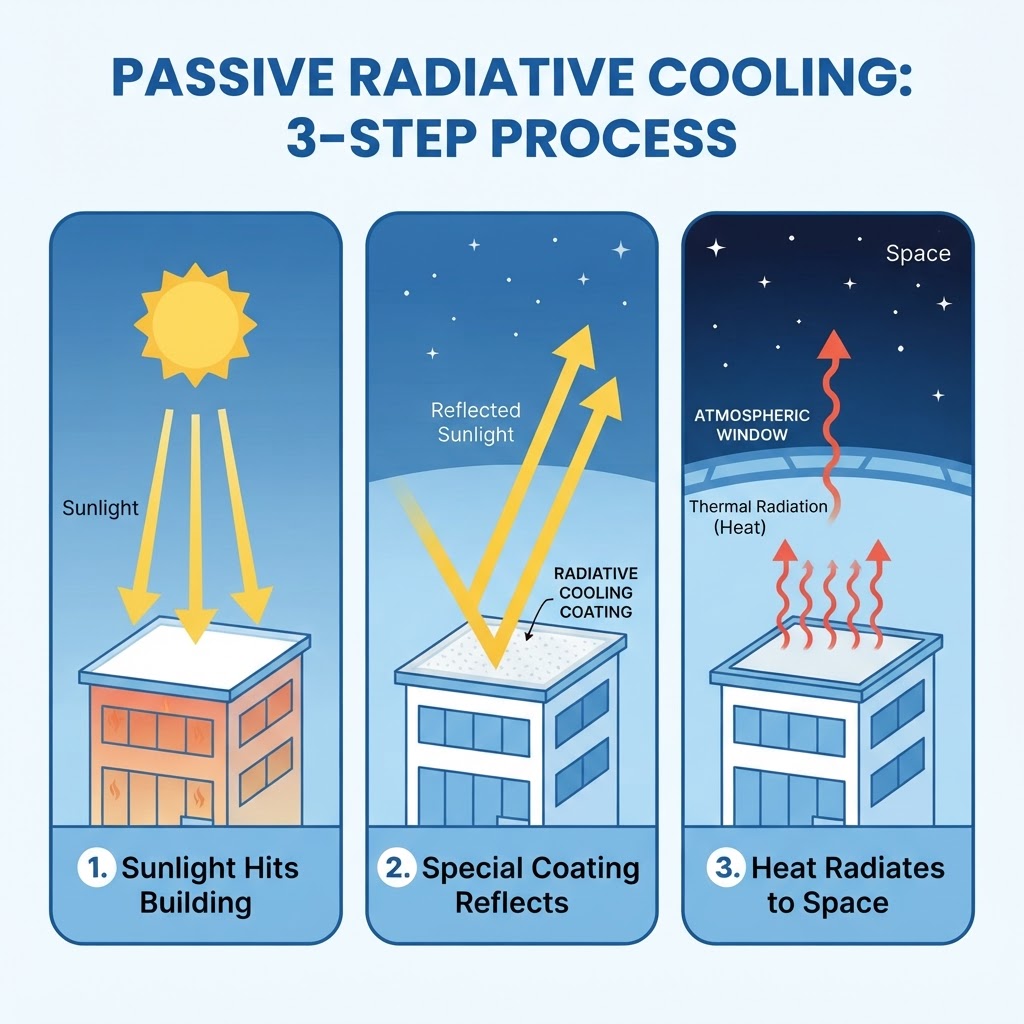
The trick was making stuff that does two jobs. First, it bounces away almost all sun light. Some stuff made at City University of Hong Kong reflects 99.6% of sun. Second, it sends heat out through the sky gap very well. Do both at once and you get a surface that stays cool even at noon. People thought that was not possible a few years ago.
Here is why it was hard. If a surface absorbs even a tiny bit of sun, that heat beats the cooling. So the stuff must be a near-perfect mirror for sun. At the same time, it must send out heat very well. Doing both in one tough, cheap thing took many years of work. Labs around the world tried many things. Some used paint. Some used thin films. Some used glass-like tiles. Each had good and bad points. But the goal was the same. Make something that bounces sun and sends heat to space at the same time.
Why This Matters Right Now
Let us talk about the problem. AC is one of the biggest power users on Earth. It uses about 7% of all power and makes about 3% of carbon. In the US, cooling takes 19% of home power. A 2025 study found that having AC bumps up home power use by 36% on average.
And it is getting worse. A 2024 study in Nature says AC ownership could grow from 27% to 41% by 2050. That means billions more AC units. More power. More emissions. The IEA says AC will drive 33% of new power demand — more than electric cars at 13%.
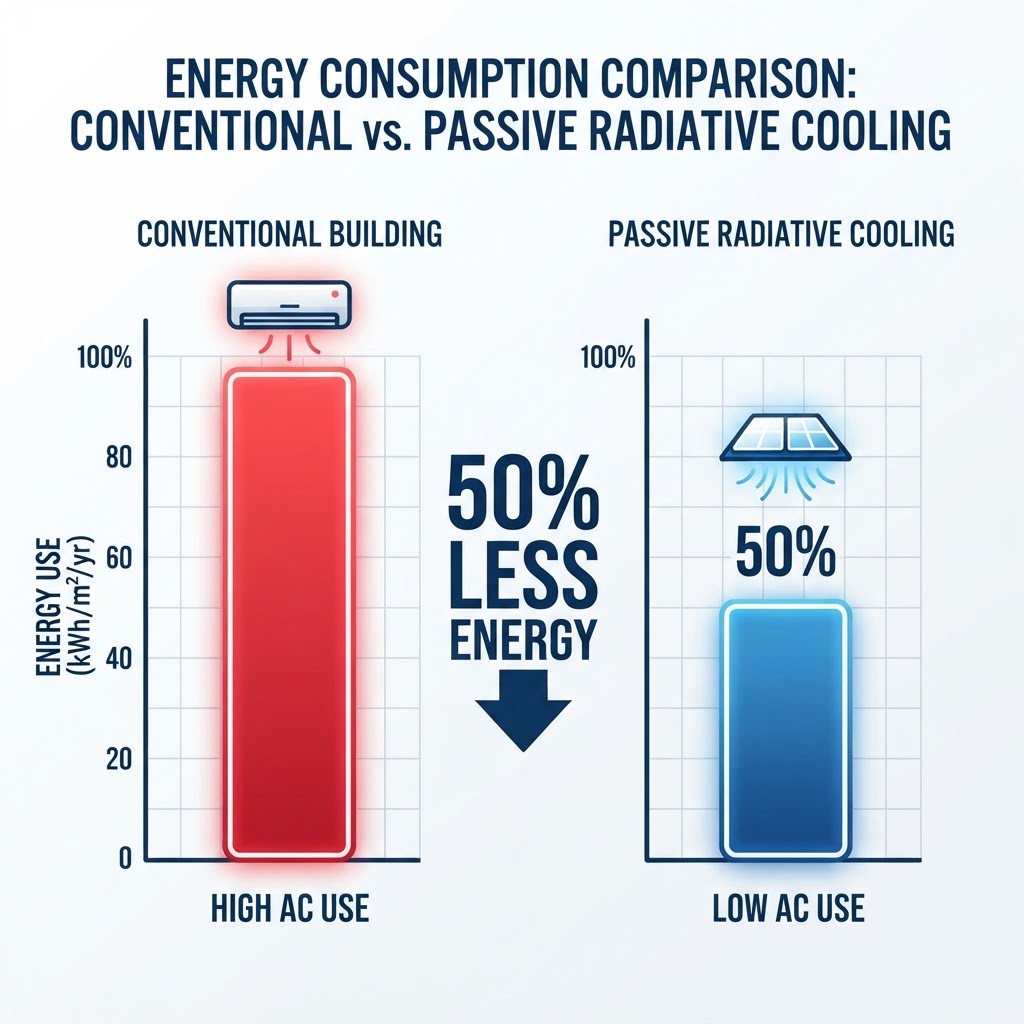
Here is the good news. A 2021 study showed buildings with passive cooling used up to 50% less power. That is not a small change. That is huge. A 2024 study mapped this across Europe. It found real, clear savings across the whole area.
And right now, Europe is living the problem. Heat records are breaking. Countries that never needed AC are adding it fast. Power grids are stressed. France had to turn down nuclear plants. The river water was too warm to cool them. This is not a future worry. It is here now. Cities that used to be fine in summer are now too hot. People who never had AC are buying it. The grid cannot keep up. We need answers fast.
How Passive Radiative Cooling Materials Work
Let us look at the details. These cooling stuffs — paints, films, tiles — have two key traits working together.
Bouncing Sun Away
The first job is keeping sun out. These stuffs reflect sun light very well. The best ones reflect over 95% of sun. Some hit that 99.6% mark. It is like a mirror that bounces sun away. Compare that to a dark roof. A dark roof takes in about 90% of sun and bakes your house.
Sending Heat Out
The second job is pushing heat away. The stuff sends heat out at the right size for the sky gap. This heat goes through the air to space. The surface dumps its heat into the cold void. The best stuffs send heat out at over 0.95 on a scale of 0 to 1.
Put both together and you get a surface that cools 5 to 10°C below the air even in daytime. Some stuffs have shown cooling of up to 12°C below air in real tests. So if it is 35°C outside, the surface could be 23 to 25°C. With zero power used. That is a big deal. It means a roof can stay cool while the sun beats down on it all day long.
Real-World Uses and Materials
This is not just lab talk. Real goods are on the market. And the uses go far beyond buildings.
Cooling Tiles and Paints
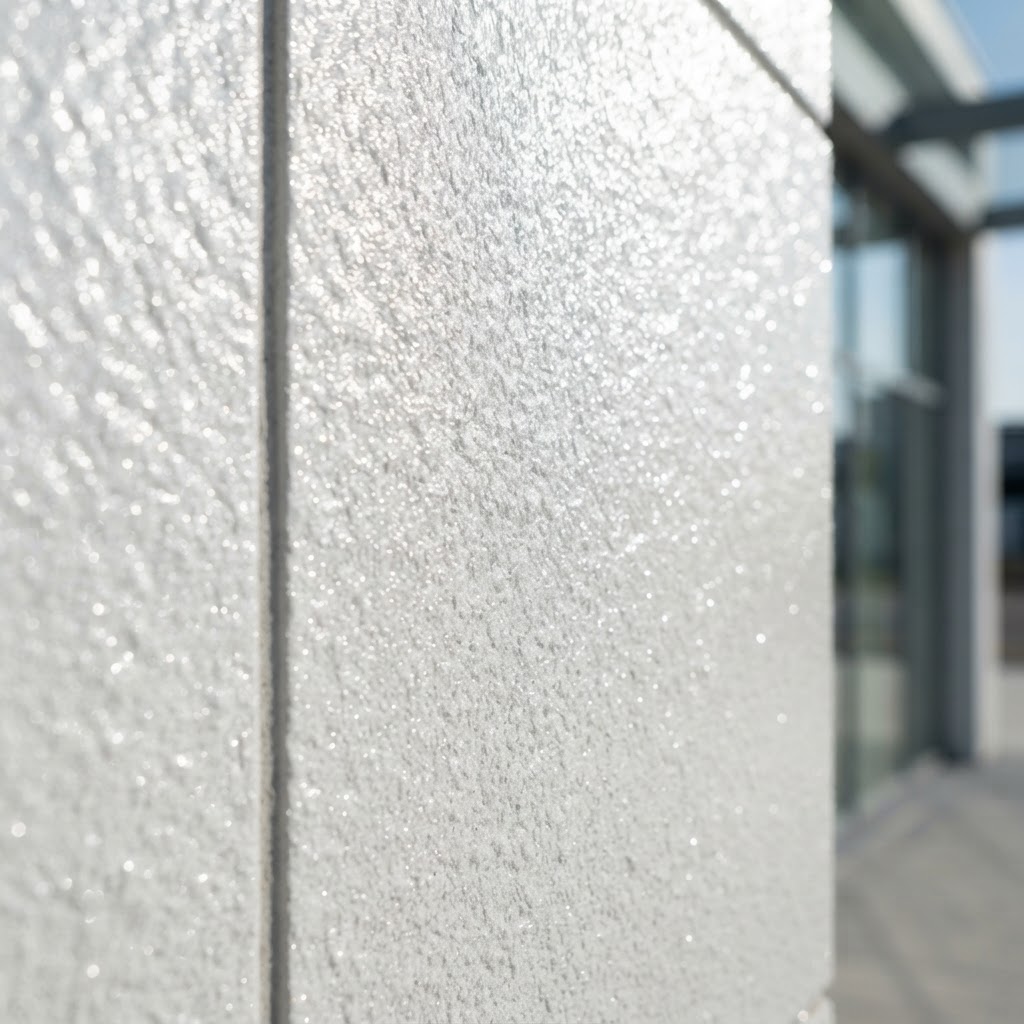
Researchers at City University of Hong Kong made a cooling tile. It reflects 99.6% of sun. You can put it on walls and roofs. It cools with no power at all. The tile is tough. You can wash it. It works in real weather, not just labs. It uses a special shape that scatters light so well that almost no sun gets in.
Cooling Films for Roofs and Windows
Thin films are very useful. You can put them on roofs, windows, and walls. Think of it like smart wrap for your building. The market for these films hit USD 561 million in 2025. It is set to grow at 18.2% per year through 2034. That kind of growth means real sales, not just talk. Films are great because you can add them to old buildings. No big work needed.
Farms and Greenhouses
One of the most cool uses is farming. A 2025 study looked at using cooling films on greenhouses. The films keep the inside at the right temp for plants. No power needed. No fans. No cooling units. Just the film doing its job. For a world that needs food and faces heat, this is big. Plants fail when it gets too hot. These films could keep them safe.

Data Centers
Data centers use a ton of power. Cooling is a huge part of that cost. Cooling stuff on data center roofs and walls could cut the power needed to keep servers safe. The best part? It works all the time. Day and night. No upkeep. No running cost once it is on.
If you like tech that changes energy, check out our post about silicon carbon batteries — the next power leap. It covers another way we are changing how we store and use power.
The Market Is Growing Fast
The numbers tell a clear story. The market for these cooling stuffs was about USD 1.46 billion in 2026. It should reach about USD 2.64 billion by 2032. That is 8.81% growth per year. The panel part alone was $312.4 million in 2025. It should hit $1,189.6 million by 2034 at 16% per year.
In China, KPMG says this market could reach RMB 3.2 billion by 2030. It covers building, farming, and factory uses. The bigger cooling system market could reach USD 7.8 billion by 2035. Big names like Uponor and Daikin are joining in.
What is driving this? Three things. First, heat is making cooling a must, not a want. Second, rules and public pressure push firms to cut power and waste. Third, the stuff is getting cheaper and better. Old models were costly and broke easy. Today's films and tiles are tough enough for real use. Prices drop as more get made.
Investors see it too. Patent filings have surged, says a 2026 report. More patents mean more firms spending on new ideas. More firms mean more competition. More competition means better goods at lower prices. The wheel is starting to turn.
Challenges and Limits
Let's be honest. This tech is not perfect. It has real issues that researchers are working on.
Cost
The biggest problem is price. Costs are dropping. But good cooling stuff still costs more than normal paint. For it to spread to poor areas — where cooling need is growing fastest — prices must fall a lot. The good news? Making is getting better. Scale should help. But we are not at the point where anyone can buy it like a can of white paint.
Weather Wear
Buildings face rain, wind, dust, and sun. A film that works on day one needs to keep working for years. Researchers are getting better at this. But long-term real data is still thin. Many of these stuffs are new. A coating that fails after two years of weather is not much help. That is why long tests matter so much.
The Color Problem
Here is a fun one. The best cooling stuff is bright white or shiny. It needs to bounce max sun. But not everyone wants a bright white roof. Researchers are making colored versions. But color eats into how much sun gets bounced. There is a tug of war between looks and cooling. Some are trying new ways to make color without taking in heat. But it is early days.
Wet Air Problems
When a surface gets colder than the air, water can form on it. In wet places, this water can hurt how well it works. It can also cause damage. Fixes like water-shedding coatings and good air flow are being tested. But it adds cost and work in damp areas — the places that need cooling most.
Depends on Where You Are
This works best in dry, clear places. In wet or cloudy areas, water in the air eats some of the heat. So the cooling effect drops. A film in Phoenix will beat the same film in Mumbai. Even though Mumbai needs it more.
Can You Use This Today?
If you own a home or a shop, here is the honest answer. Yes, you can use some of it now.
Cool roof paints with this tech are for sale. They may not match lab stuff. But they can drop roof heat a lot. If you live where it is hot and sunny, this is one of the best things you can do. It can cut roof surface temp by 20 to 30°C on hot days. That means cooler rooms and lower AC bills.
If you are building new, it is even better. You pick the cooling stuff instead of normal stuff. The extra cost is small. Architects in hot places are using it more and more. Some new buildings now come with these cooling roofs from the start. It is just part of the plan.
For farms, greenhouse films are getting easier to find. They cut the need for fans. They keep plants at the right temp. This helps a lot in places where heat kills crops.
Be real about what to expect. This will not replace your AC overnight. Think of it as a strong helper. It cuts your cooling needs a lot. Use it with good insulation, shade, and air flow. The less heat gets in, the less work your AC does. Some homes could see their AC bills drop by a third. That is real money saved each month.
The Future of Cooling Without Power
Looking ahead, the path is clear. As the science gets better and making scales up, this tech will get cheaper, tougher, and more useful. Researchers are already looking at self-fixing stuff that heals its own cracks. Clear films for windows that could replace blinds. Even cloth that cools your body the same way.
The World Economic Forum pick is more than an award. It is a signal. The science world, industry, and government see real hope here. The shift from AI news to real stuff that acts on power grids, homes, and farms is a big change. We are moving from software that thinks to stuff that does.
And let's be real — we need this to work. The other option is a bad loop. More heat means more AC. More AC means more power. More power means more emissions. More emissions means more heat. Passive radiative cooling breaks that loop. It cools with no power. It cools with no waste. And it uses the coldest thing we know — space — to do it.
That is not just smart. It is the kind of thinking we need as the planet gets hotter. The question is not if this will become normal. It is how fast we can get there.
Frequently Asked Questions
How does passive radiative cooling work?
It uses special stuff that bounces sun away and sends heat through the sky gap into space. This lets surfaces get colder than the air with no power and no waste.
Can passive radiative cooling replace air conditioning?
Not fully, but it can cut AC use a lot. Buildings using passive cooling have shown up to 50% less power use. It works best with insulation and good design.
How much does passive radiative cooling cost?
Costs vary by type and use. The film market was $561 million in 2025 and grows 18.2% per year. Prices should drop as more gets made and more people use it.
Does passive radiative cooling work in humid climates?
It works less well in wet air. Water in the air eats some of the heat. But it still helps. Researchers are making water-shedding coatings to fix the damp issue.
What materials are used for passive radiative cooling?
Common types include cooling tiles, thin films, special paints, and tiny-coated layers. The best ones bounce over 95% of sun and send heat to space very well.
Is passive radiative cooling available for homes?
Yes, cool roof paints with this tech are for sale for homes. They may not match lab stuff. But they cut roof heat and lower AC bills in hot, sunny areas.


Comments
Post a Comment