Agentic AI in 2026: How Autonomous AI Agents Are Reshaping Every Industry
Agentic AI in 2026: How Autonomous AI Agents Are Reshaping Every Industry

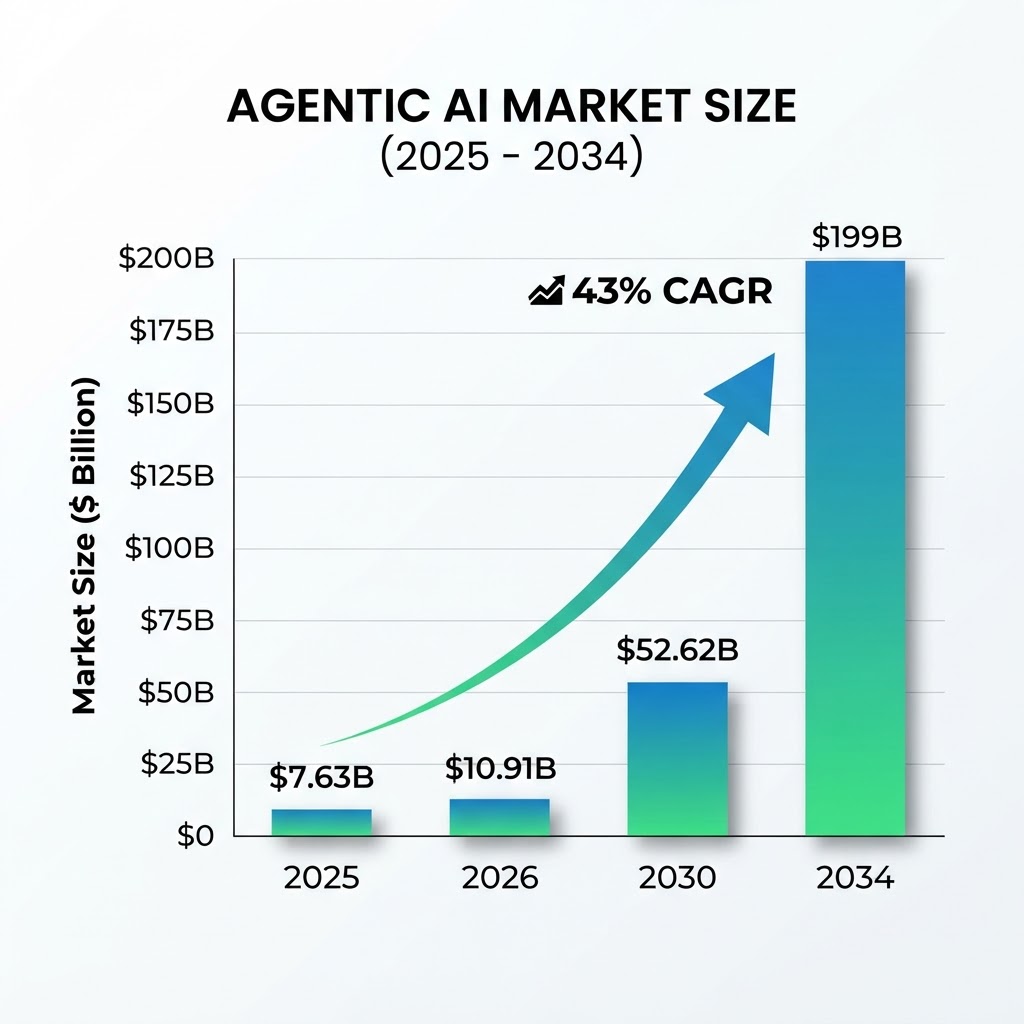
Have you ever wished your software could just handle things for you? Not just answer questions, but actually do the work? That's what agentic AI does. In 2026, it has arrived with serious force. Agentic AI means AI systems that can plan, decide, and act on their own. No human needs to guide every step. Gartner named it the number one tech trend for 2026. The market is exploding. The global AI agents market hit $10.91 billion in 2026. That's up from $7.63 billion the year before. A 43% jump in just twelve months.
But what makes agentic AI different from the chatbots you already know? Why are companies racing to adopt it? Let's break it down. We'll look at real examples, hard numbers, and what this means for your future.
What Is Agentic AI and Why Does It Matter Now?
From Chatbots to Autonomous Agents
You've probably used AI tools like ChatGPT or Google Gemini. You type a question, and they give you an answer. That's helpful, but it's reactive. You ask, it responds. Agentic AI flips that around. Instead of waiting for instructions, an AI agent can break a big goal into steps. It figures out which tools it needs. Then it runs each step on its own.
Think about it this way. A chatbot is like a librarian who tells you where to find a book. An AI agent is like a helper who reads the book, writes a summary, emails it to your boss, and books a meeting. All without you saying another word. That shift from answering to acting is huge. It's what makes agentic AI a game changer.
Here's a real example. Say you run a small shop. You tell an AI agent, "Order more stock when inventory gets low." The agent watches your sales data every hour. When stock drops below a set level, it checks supplier prices. It compares shipping times. It places the order. It sends you a note saying what it did. You didn't lift a finger. That's agentic AI in action.
The Numbers Tell the Story
The growth numbers are wild. Gartner says 40% of business apps will have AI agents by the end of 2026. That's up from less than 5% in 2025. An eightfold jump in one year. The AI agents market should reach $52.62 billion by 2030. That's a growth rate of 46.3% per year.
Even more stunning, the agentic AI market could hit $199 billion by 2034. That means the field grows about 31 times in one decade. When did you last see tech grow that fast at that scale? The smartphone took a decade to reach similar levels. Agentic AI is moving faster.
Let's put that in perspective. The entire smartphone industry took about fifteen years to reach $200 billion in annual revenue. Agentic AI is on track to hit that mark in roughly ten years. That's not just fast. That's historic.
Here's why it matters to you. Whether you run a business or just use tech daily, agentic AI will change how work gets done. It's not a future dream. It's happening right now in 2026.
How Agentic AI Actually Works
The Building Blocks of an AI Agent
An AI agent has four main parts. First, it has a goal. Someone tells it what to do. Maybe "find cheap flights to Tokyo" or "review 50 resumes and pick the top 10." Second, it can see data. It reads files, browses the web, and checks databases. Third, it can think. It uses a language model to break the problem into steps and choose what to do next. Fourth, it can act. It sends emails, updates sheets, calls APIs, or runs other software.
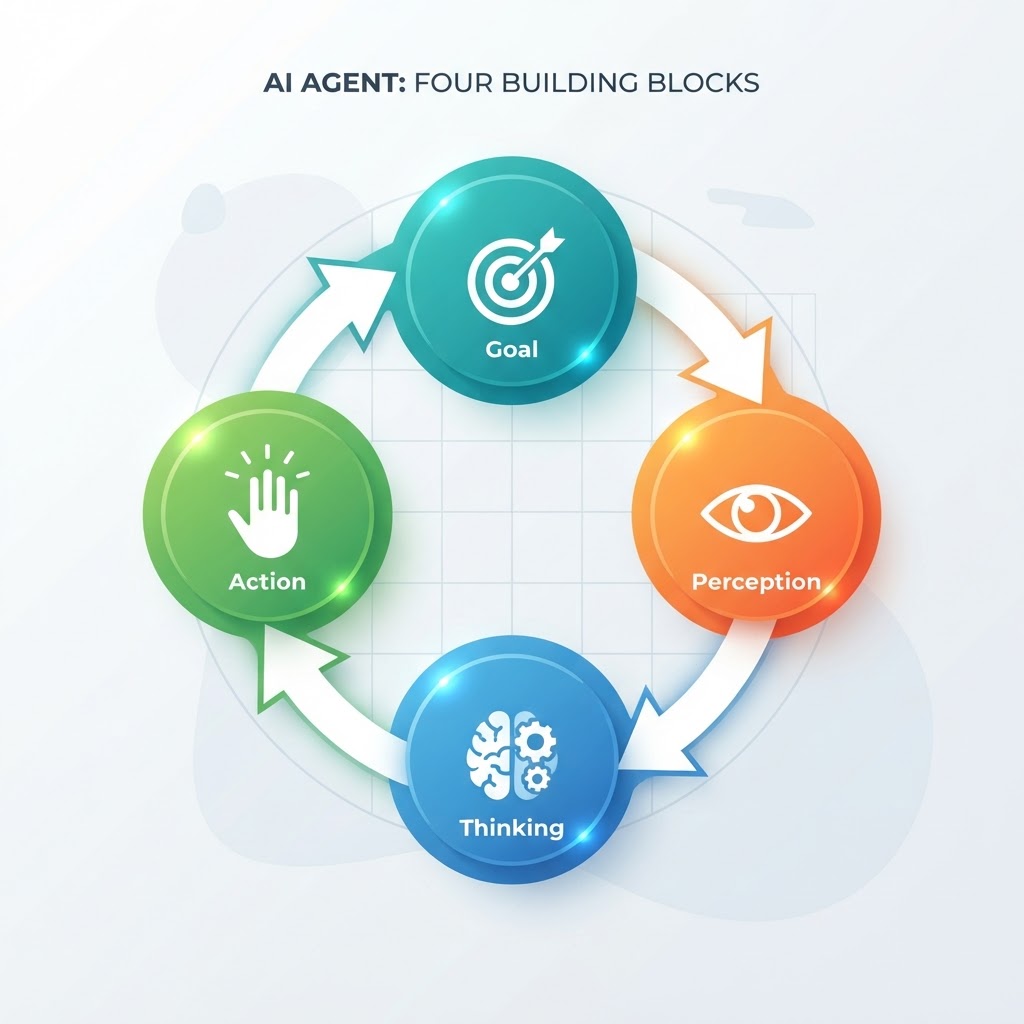
Let's walk through a simple example. You tell an agent to plan a team lunch. The agent checks everyone's calendar for free slots. It looks up nearby restaurants with good ratings. It sends a poll to the team asking for food preferences. It tallies the votes. It books the table. It sends calendar invites. It even orders an Uber for the group. One goal, many steps, zero hand-holding from you.
The big change from older AI is memory. In 2026, AI agents keep memory across tasks. They recall what they did yesterday. They learn from mistakes. They fix their approach over time. This isn't a one-time chat. It's an ongoing bond between the agent and its work.
Multi-Agent Systems: AI Teams Working Together
Here's where it gets really cool. The hottest trend is multi-agent systems. Instead of one AI doing everything, you get a team. Each agent handles a different part of the job.
Picture a customer service team. One agent reads emails and sorts them by urgency. Another drafts replies using company rules. A third checks those drafts for tone and accuracy. A fourth tracks whether the issue got fixed. They work together. They hand off tasks. They catch each other's mistakes.
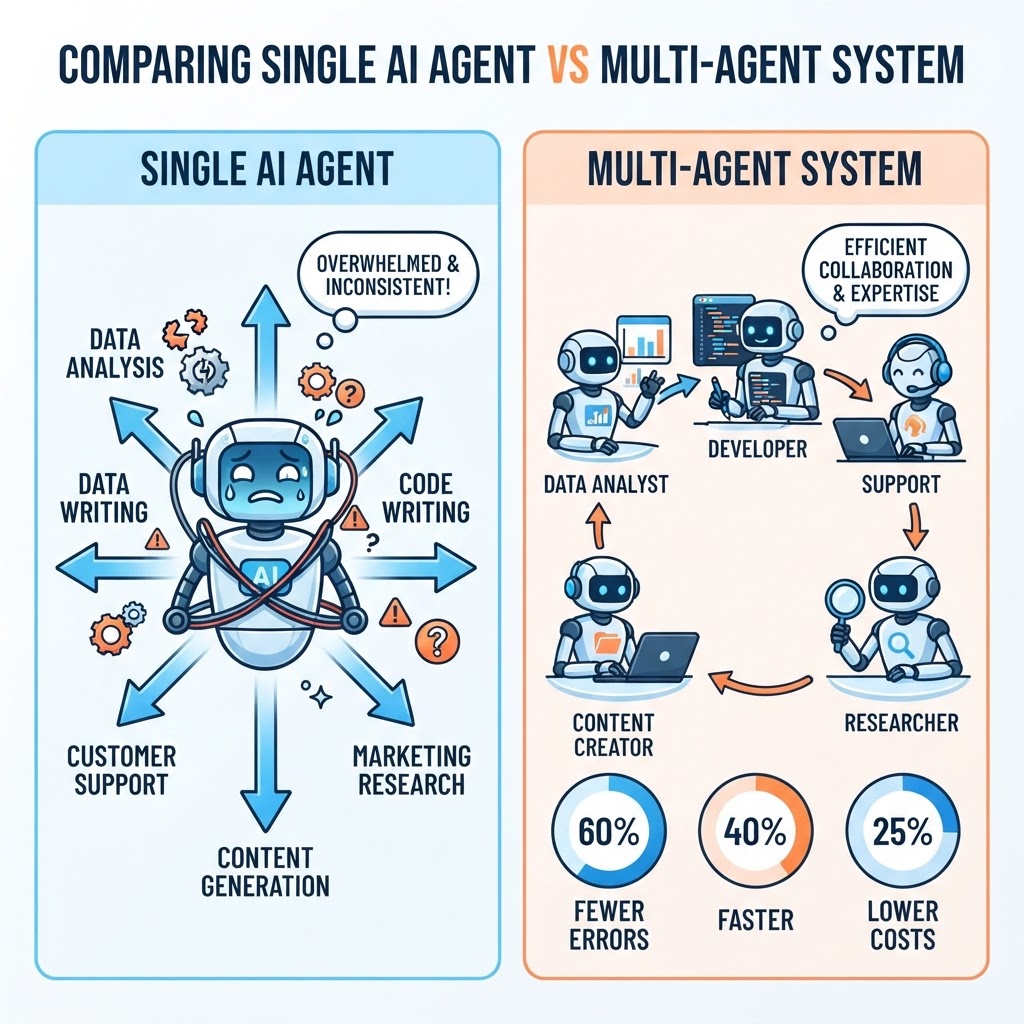
The results speak for themselves. Teams using multi-agent setups see 60% fewer errors. They run 40% faster. They cost 25% less to operate. Multi-agent systems now hold over 53% of the market share in agentic AI. That number keeps climbing.
Why does this matter? Because real tasks are rarely simple. Take an insurance claim. You need document review, policy lookup, fraud checks, customer contact, and payment. No single agent does all that well. But a team? That's where the magic happens.
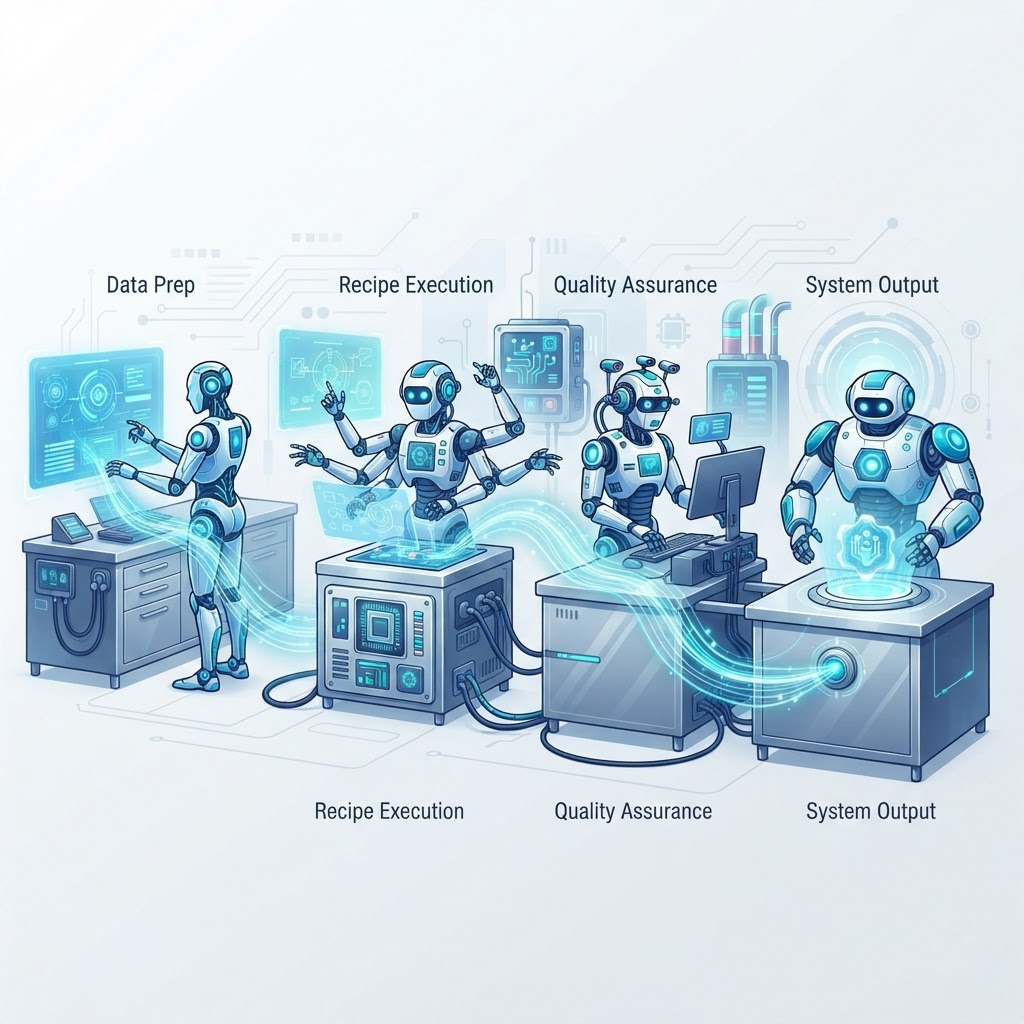
It's like a kitchen. One cook preps the veggies. Another grills the meat. A third makes the sauce. A fourth plates the dish. Each one is great at their job. Together, they serve a meal no single cook could match. That's the power of multi-agent AI.
Real-World Examples of Agentic AI Today
Healthcare: Helping Doctors Work Faster
Healthcare leads the way in agentic AI. Firms like Nabla, Aidoc, and Nuance build agents that help doctors. An agent might watch a patient's vital signs in real time. It flags danger signs. It alerts the care team. It even suggests diagnoses based on lab results and history.

Doctors in these hospitals spend less time on paperwork. They spend more time with patients. One agent can scan a full medical history in seconds. That used to take a clerk thirty minutes. Another agent checks drugs against allergies. It catches bad mixes before they harm anyone.
This saves lives. It saves time. It cuts costs. And it lets doctors focus on what matters most, caring for people. In one hospital network, agents cut paperwork time by 40%. Doctors got back three hours per day. That's three more hours of patient care.
Finance: Trading, Fraud, and Compliance
Banks jumped on AI early. Agentic AI takes things to a new level. Trading agents watch markets all day and night. They make trades based on live signals. They shift plans on the fly. Fraud agents scan millions of transactions per second. They flag odd patterns that humans would miss.
On the compliance side, finance teams cut processing time by 50%. Accuracy goes up too. An agent can review filings, check them against rules, find gaps, and draft fixes. What used to take weeks now takes hours. That's a huge win for banks facing tighter rules each year.
Think about what that means. A compliance team that used to spend three weeks on a report now finishes in a day. The agents do the boring part. Humans review the results and make final calls. Everyone wins.
Logistics: Keeping Supply Chains Moving
Supply chains are complex. You've got suppliers, factories, ships, warehouses, and stores. One delay can mess up everything. A port closes. Demand spikes. The whole chain feels it.
Agentic AI watches every link at once. If a supplier runs late, the agent finds backups right away. It compares costs. It predicts delivery impacts. It picks the best path forward. Companies using these tools report faster deliveries and lower costs. That means products reach shelves quicker. Customers stay happy.
One shipping firm used agents to reroute 200 containers during a port strike. The agents found new routes in minutes. A human team would have needed days. The firm saved $2 million in delays. That's real money saved by smart software.
Retail: Shopping Gets Personal
Retail adoption sits at 23% and rising fast. E-commerce agents suggest products in real time. They change prices based on demand. They manage stock levels. They handle customer questions on their own.
By 2028, Gartner says 60% of brands will use agentic AI for one-to-one customer chats at scale. That means when you shop online soon, an agent might know what you need before you do. It tracks your habits. It knows your budget. It checks stock. It shows you the right product at the right price. All in real time.
Ever searched for a gift and felt overwhelmed by choices? An AI agent could narrow it down. It knows the person you're shopping for. It knows what they already own. It finds the perfect gift in your price range. You just click buy.
The Benefits and Risks of Agentic AI
Why Companies Are Racing to Adopt It
The upsides are clear. Agentic AI handles dull tasks so people can do creative work. It works all day and night without getting tired. It processes huge amounts of data faster than any human team. And it gets better with each task it completes.
For businesses, this means lower costs and faster work. For you, it means better service and quick replies. One survey found 75% of marketers now use AI in some form. Many are shifting to fully agentic systems that act on their own.
There's also a competitive angle. Early adopters are pulling ahead. If your rival's AI agent replies to customers in seconds while your team takes hours, you lose. That pressure drives adoption faster than any tech in recent years. Nobody wants to be left behind.
Here's a stat that drives this home. Companies using agentic AI report 25% lower costs on average. That's not a small edge. That's the kind of gap that decides who wins and who loses in business.
The Risks Nobody Talks About
But agentic AI isn't all good news. There are real risks you need to know about.
First, control. When an AI agent acts on its own, who's to blame when things go wrong? If it sends a wrong email to thousands of people, the company pays the price. The AI doesn't. That creates legal and moral questions we still can't answer in 2026.
Second, security. Agents need access to data and systems to work. That access opens new doors for hackers. A hacked agent could steal data or disrupt key operations. The more agents you deploy, the bigger the target.
Third, jobs. Agentic AI creates new roles in AI oversight. But it also automates tasks humans do today. Customer service reps, data clerks, and admin staff face the most risk. The shift will create winners and losers. Society needs to prepare.
Fourth, trust. Many firms claim to use agentic AI but are still just testing. The gap between hype and reality is real. Companies need to be honest about what the tech can and can't do today. Don't believe every headline you read.
Let's be real for a second. The hype around agentic AI is loud. But many tools calling themselves "agentic" are just chatbots with extra steps. True agentic AI means the agent takes real actions, learns from results, and improves over time. If a tool can't do that, it's not really agentic. Know the difference.
Practical Tips: How to Prepare for the Agentic AI Era
For Business Owners
Start small. Pick one dull, clear task and let an agent handle it. Maybe sorting emails, making weekly reports, or tracking brand mentions on social media. Measure the results. Then decide if you want to expand.
Train your team. People need to know how to work with AI agents, not fear them. The best companies in 2026 are those where humans and AI work side by side. Each does what they're good at. Humans bring creativity and judgment. Agents bring speed and scale.
Set rules early. Decide what your agents can and can't do. Create a plan for when things go wrong. Make sure a person is always accountable for the agent's actions. Never let AI run free without oversight.
One more tip. Talk to your customers about how you use AI. People are more trusting when they know what's happening. A simple note saying "we use AI to sort your emails but a human reviews every reply" goes a long way.
For Individuals
You don't need to be a tech expert to benefit. Start with tools that exist today. Try an AI helper that runs your calendar. Use a tool that sorts your email. Get used to software that acts for you.
Learn the basics. You don't need to code. But knowing how agents work helps you pick the right tools. There are free guides online that explain agentic AI in simple terms. Spend an hour reading. It'll pay off.
Stay flexible. The job market is changing fast. People who thrive will be those who work with AI, not against it. Look for ways to use agents to boost your skills. Automate the boring stuff. Use AI to learn faster and research better.
Think about your career too. What parts of your job could an AI agent do? What parts need a human touch? Focus on building the skills that AI can't copy. Things like empathy, creative thinking, and big-picture judgment. Those will always be in demand.
The Future of Agentic AI Beyond 2026
What comes next? By 2029, Gartner says AI agents will create 10 times more data from the physical world than from digital apps. That means agents will work with sensors, robots, and smart devices. They won't just live on your computer. They'll be out in the world.
We'll see agents that run entire business processes from start to finish. An agent might plan a campaign, run it, track results, and tweak it, all on its own. We'll see agents from different firms talk to each other. Networks of AI working across company lines.
The tech will get easier to use too. Just like website builders let anyone make a site, new tools will let anyone build an AI agent. No coding needed. That will speed up adoption even more.
Some experts worry about what happens when agents get too smart. If an agent can do everything a human can, where does that leave us? It's a fair question. But history shows that every major tech shift creates more jobs than it kills. The key is making sure people can learn new skills fast.
The time to start is now. Companies and people who engage with agentic AI in 2026 will lead the future. Those who wait may find themselves far behind in a world that has moved on. If you want to dive deeper into how AI is changing search and content, check out our guide on AI SEO and search rules in 2026. And if you're curious about other breakthrough tech, our post on silicon carbon batteries shows how new power tech is changing the game too.
Frequently Asked Questions
What is agentic AI in simple terms?
Agentic AI is AI that takes actions on its own to reach a goal. It doesn't just answer questions. It plans, decides, and does tasks without a human guiding each step. Think of it as a digital helper that does the work for you.
How is agentic AI different from ChatGPT?
ChatGPT gives you text answers when you ask. Agentic AI goes further. It takes real actions like sending emails, updating files, or making choices. ChatGPT is a tool you use. Agentic AI is a helper that works for you.
What companies use agentic AI in 2026?
Banks use it for fraud checks. Hospitals use it for patient care. Stores use it for customer service. Firms like Nabla, Aidoc, and Nuance lead in health. Overall, 40% of business apps now have AI agents built in.
Is agentic AI safe to use?
It can be safe with proper oversight. But risks exist. These include security gaps, blame issues, and job loss. Firms should set clear rules for agents and keep humans in charge of big decisions. Always test before you trust.
Will agentic AI replace human jobs?
It will automate many routine tasks. Roles in customer service, data entry, and admin face the most risk. But it also creates new jobs in AI management. The key is learning to work with AI, not against it.
How big is the agentic AI market in 2026?
The market hit $10.91 billion in 2026, up 43% from the year before. It should reach $52.62 billion by 2030. Some say it could hit $199 billion by 2034. It's one of the fastest-growing tech markets ever.


Comments
Post a Comment