US Iran Sanctions August 2026: Trump's Economic D-Day and What It Means for the World
US Iran Sanctions August 2026: Trump's "Economic D-Day" and What It Means for the World
Today is August 24, 2026, and something big is happening. US Treasury Secretary Scott Bessent is rolling out what the Trump administration calls the "toughest sanctions in history" against Iran. He literally called it an "economic D-Day" — the single greatest financial offensive ever marshaled against an adversary. That is not my phrasing. That is a direct quote from his post on X.
The US Iran sanctions August 2026 package is being rolled out as the Strait of Hormuz remains effectively closed, oil prices hover above $93 a barrel, and the 60-day ceasefire between the US and Iran has expired with no deal in sight. If you have noticed petrol getting more expensive, your grocery bill creeping up, or news anchors looking more stressed than usual, this is why.
I have been following this story since the war started on February 28, and honestly, today might be the most consequential day yet. Let me break down what is happening, why it matters, and how it could hit your wallet — especially if you live in Pakistan, South Asia, or any country that depends on Gulf oil.
What Are Trump's New Iran Sanctions and Why Now?
President Donald Trump announced last week that he would launch the "most crushing economic operation ever taken against any country" against Iran. He called it "Economic Warfare and Isolation on an unprecedented scale." Those are strong words, even for Trump.
Here is the context. The US and Israel launched joint military strikes on Iran on February 28, 2026. Iran responded by closing the Strait of Hormuz — the narrow waterway that carries about 20 percent of the world's daily oil supply. A ceasefire was reached in June with a 60-day negotiation window. That window expired on August 18. No permanent deal was reached. The fighting paused, but nothing was resolved.
So now Trump is shifting from military pressure to economic pressure. Treasury Secretary Bessent told CNBC last week that Washington intends to "collapse" the Islamic Republic with these sanctions. He also said countries need to decide whether they "are with us or against us." That is a pretty clear ultimatum.
The "Economic D-Day" Details
Bessent is set to detail the full sanctions package today. Here is what we know so far:
- Secondary sanctions targeting any country that buys Iranian oil or does business with Iran
- Pressure on China, which buys more than 80 percent of Iran's shipped oil, to cut those purchases
- Financial penalties for countries that give Iran "any type of lifeline," as Trump phrased it
- Plans to economically isolate Iran from the global banking system
The big question is whether this actually works. Iran has been under various forms of US sanctions for decades. They have survived before. But the scale of this package, and the threat of secondary sanctions against countries that do not comply, is something we have not seen before.
Strait of Hormuz Crisis: Why This Waterway Controls Your Fuel Prices
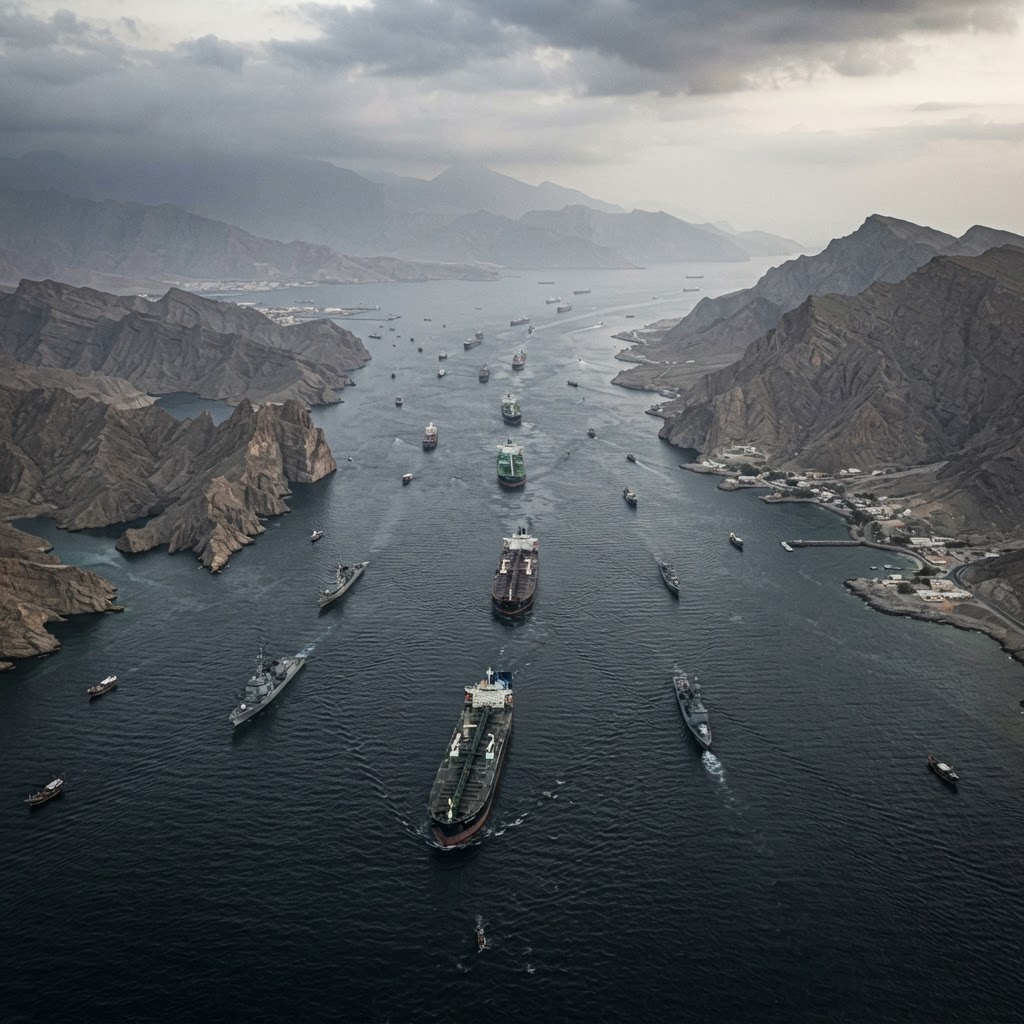
If you do not know much about the Strait of Hormuz, you should. It is a narrow strip of water between Iran and Oman, and it is the most important oil shipping lane on the planet. Before the war, about 20 million barrels of oil passed through it every single day. That is roughly one-fifth of all oil consumed worldwide.
Iran shut it down after the US-Israeli strikes in February. And it has been mostly closed ever since. According to The Economist, the closure removed about 12 million barrels of oil per day from global markets. That is a massive hit. Countries have been draining their strategic reserves to keep things running, but those reserves are not infinite.
Over the weekend, fewer than 20 ships managed to transit the strait. That is a tiny fraction of normal traffic. Iran has allowed some Iraqi oil tankers through after Baghdad made repeated appeals, but the overall situation remains what Al Jazeera called "vague." Iran says the strait stays closed until the US lifts its naval blockade.
Trump, for his part, claims the US controls the strait. He even said he wants to declare it US "territory." Iran's army chief responded by saying anyone who tries to control the Strait of Hormuz will "break your legs." So yeah, the rhetoric is not exactly calming.

Oil Prices Surge 2026: How High Can They Go?
Here is where it gets real for your wallet. Oil prices have been volatile since the war started, and the current situation is not helping.
As of today, Brent crude — the international benchmark — is trading around $93 per barrel. West Texas Intermediate, the US benchmark, is around $86. Interestingly, prices actually fell slightly today as investors took profits ahead of the sanctions announcement. But nobody expects that to last.
The Commonwealth Bank of Australia expects Brent to trade between $70 and $100 per barrel for the rest of 2026. Here is the thing though — that range depends on what happens with Hormuz. If even 50 to 60 percent of pre-war oil flows resume, prices could drop toward the lower end. If the strait stays closed and these new sanctions bite, we could see $100+ oil again.
Why does this matter to you? Because oil is in everything. Not just petrol and diesel. Fertilizer, plastics, shipping costs, food transport — all of it ties back to oil prices. When oil goes up, everything goes up. And the people who feel it first and hardest are the ones who can least afford it.
Pakistan Iran War Impact: Why Islamabad Is Worried
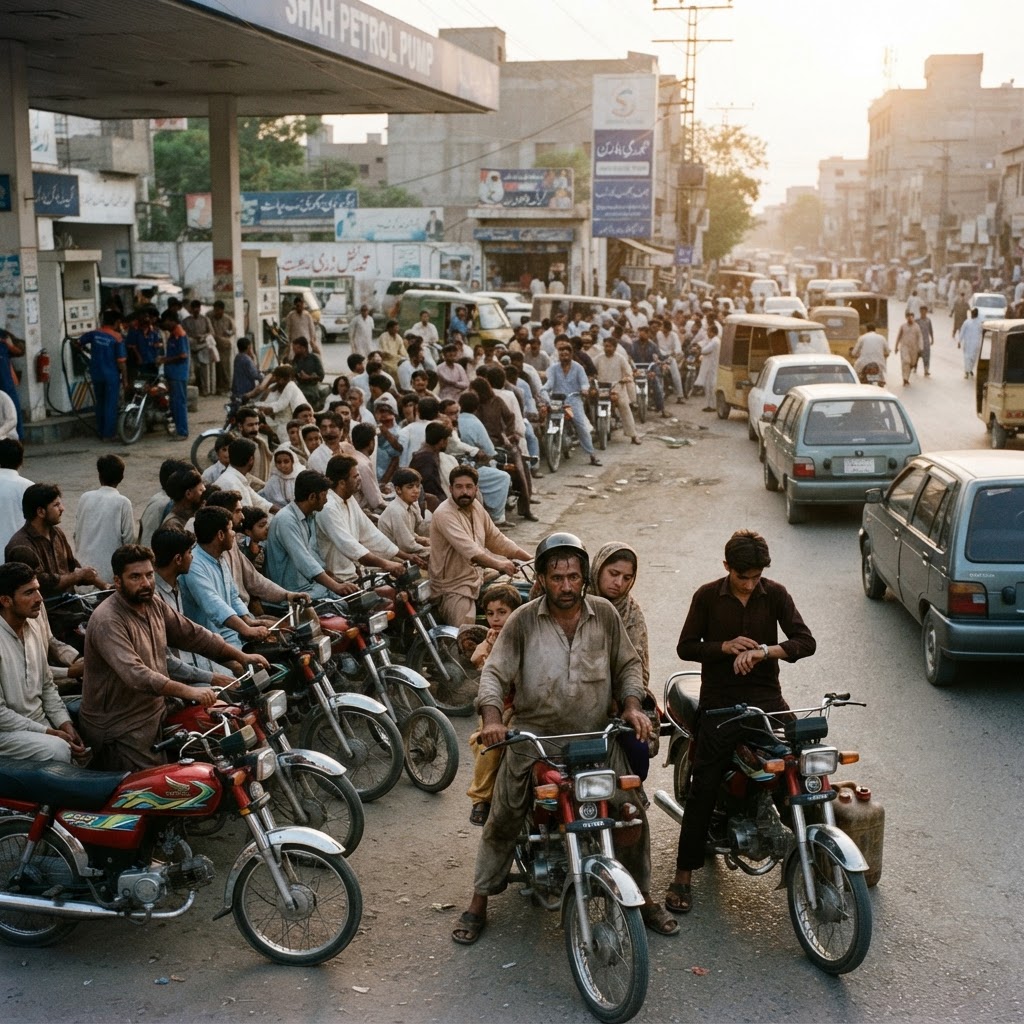
If you are in Pakistan, this story is not abstract. It is hitting your daily life right now.
Pakistan imports about 80 percent of its energy from the Gulf. When the Strait of Hormuz closed, Pakistan's fuel supply chain was choked almost immediately. Back in March, the government had to take emergency measures:
- Schools were closed to conserve fuel
- Government offices switched to a four-day work week
- Half of public sector employees were ordered to work from home
- Fuel allowances for official business were slashed
- Petrol and diesel prices rose by 55 rupees per litre
Prime Minister Shehbaz Sharif initially absorbed the cost to avoid passing it on to consumers, especially around Eid. But as the war dragged on, that became unsustainable. S Akbar Zaidi, who heads the Institute of Business Administration in Karachi, said the shock was "quite severe" even though it had not been fully passed on to consumers yet. He expected things to get worse.
He was right. Diesel is the backbone of Pakistan's freight and agricultural economy. When diesel prices spike, everything from flour to fertilizer gets more expensive. Khalid Waleed, a research fellow at the Sustainable Development Policy Institute in Islamabad, pointed out that Pakistan's wheat harvest runs on diesel — combine harvesters, threshers, tractors, trucks. If diesel stays expensive through planting and harvest seasons, food inflation goes through the roof.
For a country where wheat flour is the single biggest food item for lower-income families, that is not a minor issue. That is a crisis.
Pakistan's Diplomatic Push to End the War
Pakistan has not just been sitting and taking the hit. In July, Pakistan started pushing for new US-Iran talks with backing from China. Reuters reported that Islamabad was exploring a path to restart stalled negotiations, with three Pakistani officials confirming the effort.
Pakistan also sought Saudi Arabia's support for a diplomatic push. Prime Minister Sharif traveled to Saudi Arabia with army chief Field Marshal Asim Munir for a three-day visit. And Iran's foreign minister Abbas Araghchi confirmed he spoke with Pakistan's army chief about "effective solutions to strengthen peace, stability and security in the West Asian region."
But here is the frustrating part. When Trump was asked about mediators pushing to end the war, he listed several countries — and skipped Pakistan entirely. Whether that was intentional or just a slight, it stung in Islamabad. Pakistan has few tools to halt the escalation on its own, and being ignored by the US president does not help.
Iran's Response: "Seismic" Retaliation Threats
Iran is not taking these sanctions quietly. Mohsen Rezaei, the secretary of Iran's Supreme National Security Council, went on state television and warned that any country joining the US "economic war" would be considered an enemy.
He described a three-stage strategy. First, Iran will negotiate with countries and ask them to step aside. Second, if they do not comply, Iran will strike. Third, Iran will target that country's interests. He called the potential retaliation "seismic."
That is a not-so-subtle threat aimed at countries like China, Iraq, and the Gulf states that might cooperate with US sanctions. Iran also said the sanctions amount to "economic terrorism" and "an assertion of extraterritorial sovereignty over every independent member state of the United Nations."
Iran's president, Masoud Pezeshkian, admitted that the Iranian people face "many problems" but insisted the country would not be broken. The Islamic Revolutionary Guard Corps said Iran has ways "to counter the adverse effects of the enemy's war" and can "easily establish economic relations with countries."
So both sides are posturing. The US says it will collapse Iran's economy. Iran says it will retaliate against anyone who helps. And the rest of the world is caught in the middle, trying to figure out which side to pick — or whether picking a side at all is worth the risk.
Global South: The Countries Suffering Most From the Iran War
Here is something that frustrates me. The countries being hit hardest by this war had no say in starting it. They are not parties to the conflict. They do not get a seat at the negotiating table. But they are paying the price at the petrol pump and the grocery store.
The Washington-based Centre for Global Development identified the countries most at risk. The list includes Pakistan, Bangladesh, Sri Lanka, Jordan, Senegal, Egypt, Angola, Ethiopia, and Zambia. What do these countries have in common? They are heavily dependent on imported energy, they have high debt levels, and they have limited financial reserves to absorb price shocks.
Bangladesh imports about 95 percent of its oil. When the war started, fuel pumps in some districts literally ran dry despite fuel rationing. Sri Lanka, still reeling from its 2023 economic collapse, declared every Wednesday a public holiday and introduced a mandatory fuel pass for vehicle owners. Egypt ordered malls, shops, and cafes to close by 9pm and raised fuel prices by 15 to 22 percent.
Yeah Kim Leng, an economics professor at the Jeffrey Cheah Institute in Malaysia, said it plainly: "For a majority of developing economies, especially those already grappling with debt and high import dependence, they are facing a potent mix of inflation, currency pressures and fiscal strains."
In other words, the poorest countries are paying for a war between some of the richest and most powerful nations on earth. There is something deeply unfair about that.
What Happens Next: Three Scenarios for the Iran War
Nobody has a crystal ball, but based on what is happening right now, I see three possible directions.
Scenario 1: Sanctions Bite and Iran Comes Back to the Table
If these secondary sanctions actually work — especially if China cuts its Iranian oil purchases — Iran's economy could face serious pressure. That might force Tehran back to negotiations. The Oman-mediated talks have not produced a deal yet, but they have not completely collapsed either. Egypt is also pushing for a diplomatic path. If Iran feels the economic pain is unsustainable, we could see a return to talks and eventually a Hormuz reopening deal.
Scenario 2: Iran Retaliates and the Conflict Escalates
Iran has threatened "seismic" retaliation. If Tehran decides to strike at countries cooperating with US sanctions, or if it launches new attacks on shipping in the Gulf, the situation could escalate quickly. Iran has already shifted to what it calls a "fully offensive" military posture. If talks do not restart soon and sanctions start hurting, Iran might decide that fighting is its only option. That would mean higher oil prices, more shipping disruptions, and potentially a wider regional war.
Scenario 3: A Long Stalemate
This is arguably the most likely outcome, and honestly the worst one for everyone except oil companies. The war does not escalate into a full regional conflict, but it does not end either. The strait stays mostly closed. Oil stays expensive. The Global South keeps suffering. Oil companies keep posting record profits — because when oil prices spike, the companies selling it make more money, not less. Al Jazeera reported that Big Oil has been bagging "astronomical profits" throughout this crisis. Meanwhile, ordinary people in Pakistan, Bangladesh, Egypt, and elsewhere keep paying more for food and fuel with no end in sight.
How to Prepare If Oil Prices Keep Rising
I am not going to pretend I can predict the future. But if you are reading this and wondering what you can do, here are some practical steps that make sense regardless of what happens next:
- Reduce fuel consumption — carpool, combine errands into one trip, use public transport where available. Every litre saved is money in your pocket
- Stock up on non-perishable food — if food inflation hits as hard as analysts predict, buying staples like flour, rice, and cooking oil now could save you money later
- Build an emergency fund — even a small one. If prices spike suddenly, having some cash set aside gives you breathing room
- Follow energy-saving practices — turn off appliances when not in use, use LED bulbs, limit AC usage during peak hours. In Pakistan and similar countries, this also helps with power load-shedding
- Stay informed — follow credible news sources for updates on the sanctions and Hormuz situation. Knowing what is coming lets you prepare instead of reacting
Frequently Asked Questions About the US Iran Sanctions 2026
What did Trump announce as the "Economic D-Day" against Iran?
Trump and Treasury Secretary Scott Bessent announced the "toughest sanctions in history" against Iran, including secondary sanctions on any country that buys Iranian oil or does business with Iran. Bessent called it "the single greatest financial offensive ever marshaled against an adversary." The full details were released on August 24, 2026.
Why is the Strait of Hormuz so important?
The Strait of Hormuz is a narrow waterway between Iran and Oman that carries about 20 percent of the world's daily oil supply — roughly 20 million barrels per day before the war. Iran closed it after US-Israeli strikes in February 2026, causing global oil prices to surge and disrupting energy supplies worldwide.
How is the Iran war affecting Pakistan?
Pakistan imports about 80 percent of its energy from the Gulf. The Hormuz closure has caused fuel shortages, price hikes of 55 rupees per litre, school closures, and a four-day government work week. Diesel price increases are expected to drive up food prices, especially for wheat and other staples.
Will oil prices go higher in 2026?
Brent crude is currently around $93 per barrel. Analysts at Commonwealth Bank of Australia expect it to trade between $70 and $100 for the rest of 2026, depending on whether the Strait of Hormuz reopens. If the new US sanctions escalate tensions further, prices could exceed $100.
Is there a ceasefire between the US and Iran?
A ceasefire with a 60-day negotiation period was reached in June 2026, but it expired on August 18 with no permanent deal. Trump says no new talks are scheduled. Iran has threatened a "fully offensive" military posture. Oman and Egypt are pushing for a return to diplomacy, but no breakthrough has been achieved.
Conclusion: The World Is Watching and Waiting
Here is where we are. The US is launching what it calls the biggest sanctions campaign ever against Iran. Iran is threatening seismic retaliation against anyone who joins. The Strait of Hormuz is still mostly closed. Oil is above $90 a barrel. The ceasefire is dead. And the countries suffering the most — Pakistan, Bangladesh, Sri Lanka, Egypt, and others — did not start this fight and have no power to end it.
I wish I could tell you this ends soon. But the signals right now point to escalation, not de-escalation. Trump seems to believe that maximum economic pressure will force Iran to surrender. Iran seems to believe that enduring the pressure and threatening retaliation will make the world back away from US sanctions. Neither side is blinking.
If you are in Pakistan or anywhere in South Asia, my advice is to prepare for higher prices in the coming weeks. Stock up on essentials where you can. Cut fuel usage where possible. And pay attention to what happens today when Bessent lays out the full sanctions package — because the details will determine whether this crisis gets better or worse.
Share this article with people who need to understand what is happening. The more we know, the better we can prepare. And if you have family or friends in the Gulf region, check in on them. This situation affects everyone, and we are all in it whether we chose to be or not.


Comments
Post a Comment