Meta Modi Video Row: Why the Error Matters
Meta Modi Video Row: Why the Error Matters
Meta’s temporary blocking of a video posted by Indian Prime Minister Narendra Modi has become more than a brief social-media glitch. The company says the restriction happened because of an operational error, but the episode has opened a larger argument about automated moderation, political speech, and how much power technology companies should have over public communication in India.
- Meta said Modi’s post was restricted inadvertently and was restored.
- An Indian parliamentary committee demanded an apology and raised the possibility of consequences for Meta’s legal protections.
- The dispute shows how a single moderation decision can become a diplomatic, political, and regulatory issue.
- The difficult question is not only why the post disappeared, but whether users can receive a clear explanation when it happens.
What happened to Narendra Modi’s Facebook video?
The incident centered on a video posted by Narendra Modi that was briefly unavailable to some users in India. The post concerned strict action against paper leaks, according to reporting about the dispute. It was later restored, but the short period of restricted access was enough to trigger questions in Parliament and across India’s technology-policy community.
Meta’s explanation was straightforward: the post had been blocked inadvertently because of an operational error. That explanation matters because it places the incident in the category of an unintended moderation failure rather than an announced decision to remove political content. Yet an accidental decision can still have serious consequences when it affects a head of government.
For an ordinary user, a blocked post may be frustrating. For a prime minister, even a short-lived restriction can affect the reach of an official message, create confusion about whether the content violated a rule, and invite speculation about political bias. The difference between an intentional takedown and an automated mistake is therefore important, but the public needs a reliable way to tell which one occurred.
Reuters reported that Meta described the restriction as an operational error and covered the company’s response to the controversy. That account provides the clearest basis for separating what Meta acknowledged from the broader claims being made by politicians and commentators.
Why India’s parliamentary committee reacted so strongly
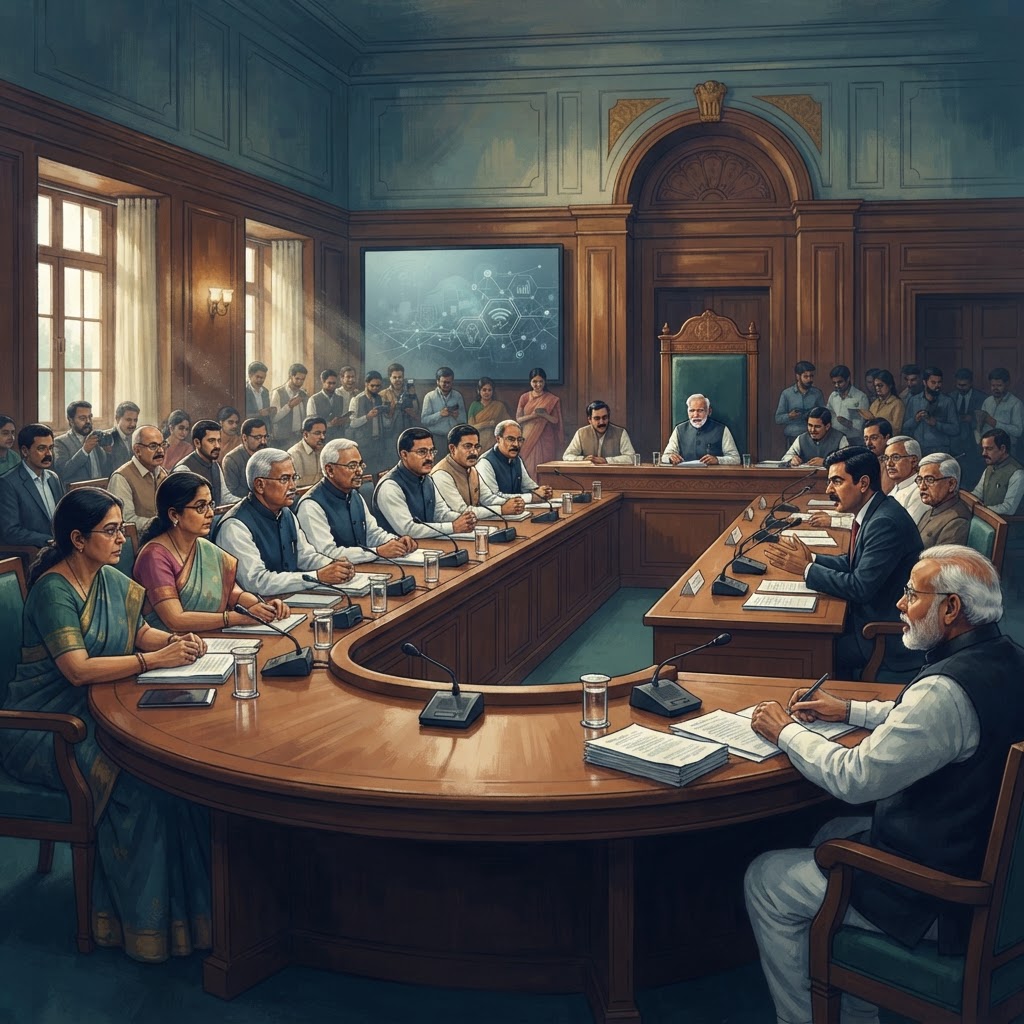
The reaction from India’s parliamentary standing committee on communications and information technology was unusually forceful. Reports said the committee demanded an apology from Meta chief executive Mark Zuckerberg and gave the company a short deadline to respond. The committee also raised the possibility of action affecting Meta’s safe-harbour protection.
Safe-harbour rules are central to the business model of online platforms. In broad terms, they can protect an intermediary from being treated as the publisher of every piece of user content on its service, provided the company follows the applicable legal obligations. The exact legal framework is complex, and the practical protections depend on the jurisdiction and the facts of a case.
That is why a single blocked video can carry stakes beyond the video itself. If lawmakers believe a platform is not applying its systems fairly, they can question whether the company deserves the protections that make large-scale user-generated services possible. The threat of losing those protections is not a minor public-relations complaint; it is a statement that platform governance may have regulatory consequences.
The Hindu reported that the parliamentary panel linked the demand for an apology to the possibility of losing legal protection. That framing explains why the controversy moved quickly from a content-moderation incident into a debate over corporate accountability.
There is also a political dimension. Governments around the world increasingly use social platforms to reach citizens directly, bypassing traditional news organizations. When a platform restricts a government leader’s post, officials may see it not simply as a private company enforcing its rules, but as an interruption to a public channel.
How a moderation error can happen

Large platforms use a mixture of automated systems, human reviewers, user reports, account-level signals, and legal requests to decide whether content should be limited. These systems operate at a scale that no manual team could match. Every minute, users upload more video, text, images, and live content than reviewers could inspect individually.
Automation makes speed possible, but it also creates failure points. A system may misread the words in a video, misunderstand the context of a political statement, associate a post with a prohibited pattern, or apply a regional restriction more broadly than intended. An account or page can also be caught by a temporary technical problem during a policy update.
Video moderation is particularly difficult because meaning can depend on speech, captions, visual symbols, surrounding events, and the identity of the speaker. A short clip about paper leaks may contain language that resembles other content the system has been trained to flag, even when the overall message is lawful and politically significant.
None of this proves that the system made a specific technical mistake in this case. Meta has publicly described the restriction as operational, but the company has not provided a full public reconstruction of every step in the decision. That distinction is important: the known fact is the company’s explanation, while the exact internal trigger remains unverified.
The responsible response to a moderation error is therefore not to pretend that every automated decision can be perfect. It is to build safeguards around predictable failures: fast appeals, meaningful explanations, human review for high-profile public-interest content, and clear records showing what happened and when.
Political speech creates a higher standard
Political posts are not automatically exempt from platform rules. A politician can still publish misinformation, incitement, harassment, or other prohibited material. The challenge is that political content often has public importance even when it is controversial, sharply worded, or connected to a fast-moving dispute.
Platforms must balance two risks. If they leave harmful content online, people may be exposed to threats, manipulation, or false claims. If they remove lawful political speech by mistake, they can distort public debate. The problem becomes more sensitive when the affected speaker is a national leader, because a decision that would be private for an ordinary user becomes visible to millions.
That does not mean prime ministers should receive an unlimited privilege to post without review. It means the review process should be more careful and more transparent when a post is part of official public communication. A temporary restriction followed by a vague explanation leaves citizens unsure whether the content was judged dangerous, technically misclassified, or caught in a regional policy error.
The episode also highlights the difference between reach and access. Even if a post remains available on another government channel, losing access on Facebook can reduce the audience that sees it. Many people encounter political information through recommendations, shares, and feeds rather than by visiting an official website. A brief interruption can therefore change who receives the message during the period when it matters most.
Why the dispute matters for Meta in India
India is one of the world’s most important markets for social-media companies. Its enormous online population, multilingual environment, political intensity, and rapid growth make content governance especially challenging. A moderation system that works reasonably well in one language or cultural context may perform differently in another.
Companies operating in India also face strong expectations from elected officials and regulators. The government wants platforms to respond quickly to unlawful content and security concerns. At the same time, users and civil-society groups ask for due process, consistency, and protection against arbitrary removal. Meta must navigate both demands while maintaining global rules that are understandable across countries.
The Modi video dispute gives Indian lawmakers a visible example of the risks they have been raising. If Meta can mistakenly restrict an official video, critics may ask how often ordinary users are affected without the incident attracting national attention. A high-profile case can become a test of whether the platform’s appeals and transparency systems work for everyone.
The Indian Express summarized the reported apology and placed the dispute among the day’s major Indian current-affairs developments. That context shows how quickly a platform error can become a mainstream national news story.
What a useful apology should include
An apology is meaningful only if it answers the questions raised by the error. Saying that a post was restricted accidentally is a start, but users also need to know whether the content was restored everywhere, whether its distribution was affected after restoration, and whether the company has corrected the underlying problem.
Meta does not need to reveal every detail of its anti-abuse systems. Publishing too much technical information could help people evade safeguards. But the company can still explain the category of failure, the geographic scope, the duration, the corrective action, and the appeal path. Those details would help distinguish an honest mistake from a decision that has been quietly reversed.
Independent oversight could add credibility. A public transparency report could record significant government-account incidents without exposing private user data. A review by an internal oversight body or an external auditor could examine whether the same class of error affects content in particular languages or political contexts.
Most importantly, the remedy should not be limited to a famous account. If the platform improves escalation procedures only because the blocked post belonged to a prime minister, ordinary users may remain trapped in the same opaque process. The strongest response would turn a high-profile failure into a system-wide improvement.
The wider global debate over platform power
The argument in India reflects a global shift. Governments no longer treat social-media platforms as neutral communication pipes. They regulate them, summon their executives, demand removals, and question how algorithms shape elections and public opinion.
Companies, meanwhile, argue that moderation decisions are difficult judgments made under enormous pressure. They must remove harmful content quickly, respond to government demands without becoming instruments of censorship, and protect users while respecting local laws. A mistake in any direction can produce serious consequences.
The central policy question is who should decide what the public can see. If governments control the answer too directly, political speech may be suppressed. If private companies control it without meaningful accountability, unelected executives and opaque systems may exercise extraordinary influence. The best answer is likely a combination of clear law, independent review, platform transparency, and accessible user appeals.
India’s parliamentary response shows that lawmakers are willing to use the leverage available to them. Meta’s response shows that the company recognizes the political sensitivity of the incident. The next test will be whether the dispute produces durable rules or ends as another cycle of outrage, apology, and forgetfulness.
What users should do when a post is wrongly blocked
Users who believe a post was removed or restricted by mistake should first save evidence: screenshots, the exact notice, the time of the restriction, and the post’s URL. They should use the platform’s appeal process and describe the factual context rather than simply repeating that the decision is unfair.
For journalists, public officials, and organizations, maintaining an alternative publication channel is sensible. An official website, email list, or second platform cannot replace the reach of Facebook, but it reduces dependence on one company’s feed and moderation system. Cross-posting also creates a public record that can help identify whether a restriction is regional or universal.
Users should be cautious about claims that spread after a high-profile moderation dispute. A post being unavailable does not automatically prove censorship, and a company calling an incident a glitch does not automatically prove that no policy decision was involved. The reliable approach is to separate confirmed statements, documented timelines, and speculation.
Why jurisdiction makes the problem harder
Content moderation is never governed by one universal rulebook. A post may be legal in one country, restricted under another country’s law, and still be evaluated under a platform’s global community standards. That creates difficult questions when a company applies a regional restriction to content from a political leader whose audience is spread across borders.
In the Modi case, the reported restriction affected access in India. That geographic detail matters. It suggests that the incident was not necessarily a worldwide disappearance, but it also means users in one of Meta’s most important markets experienced a different information environment from users elsewhere. Regional moderation can be necessary, yet it should be visible enough for people to understand what happened.
Platforms should tell users whether a restriction was caused by local law, a global safety rule, or an internal technical fault. Those categories have different implications. A legal order may be challenged through courts or regulators. A policy decision may be appealed through the company. A technical fault should lead to engineering and quality-control fixes. Blurring them together makes accountability harder.
What happens after the headlines fade?
The immediate controversy may end with the apology, but the lasting value of the incident will depend on what changes behind the scenes. Meta could review the decision path, test whether similar content is being misclassified, and improve escalation for official public-interest accounts. Indian lawmakers could ask for evidence that those steps were taken rather than treating an apology as the final remedy.
There is also an opportunity to create a clearer standard for future incidents. A platform could publish a short incident notice whenever it mistakenly restricts a major public communication: what was affected, how long it lasted, why the mistake occurred at a high level, and what was done to prevent a repeat. Such notices would not solve every disagreement, but they would give the public a factual record.
That record would help researchers distinguish isolated failures from patterns. If similar mistakes repeatedly affect one language, region, or political viewpoint, the evidence would be harder to dismiss as random. If the incidents are rare and corrected quickly, that would also be useful information. Transparency is not only a burden for companies; it is a way to establish whether criticism is justified.
The Modi video dispute is therefore a small event with a large lesson. The public square is increasingly mediated by private systems, and those systems need rules for failure as well as rules for removal. A platform’s credibility is tested not when everything works, but when a politically sensitive mistake happens and the company has to explain itself.
FAQ: Meta and the Modi video dispute
Why was Narendra Modi’s video blocked on Facebook?
Meta said the restriction happened inadvertently because of an operational error. Public reporting has not established a more specific technical trigger.
Was the video restored?
Yes. Reports said the video was temporarily restricted and later restored, although the public details about its reach during the interruption remain limited.
What did India’s parliamentary committee demand?
Reports said the committee demanded an apology from Meta chief Mark Zuckerberg and warned that the company could face consequences involving its legal protections if it did not respond.
Does this mean social-media platforms cannot moderate political content?
No. Platforms may still enforce rules against unlawful or harmful content. The dispute is about accuracy, transparency, accountability, and safeguards when moderation affects important public communication.
What do you think platforms should disclose after a high-profile moderation mistake? Share your view in the comments.


Comments
Post a Comment