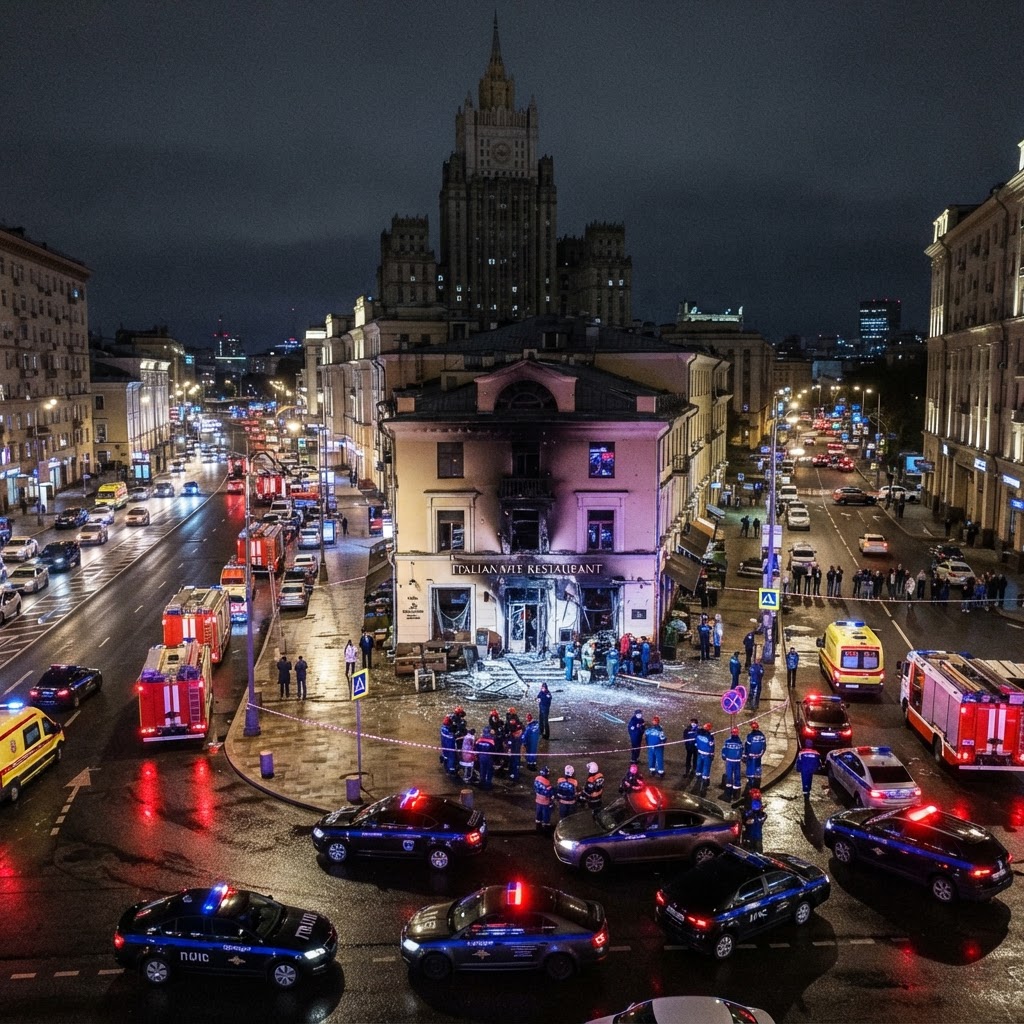
Moscow Restaurant Bombing: Private Event Turns Tragedy as Homemade Device Kills Three
A homemade bomb detonated at an upscale Italian restaurant in central Moscow on Saturday evening, August 1, 2026, killing three people and injuring at least 21 others in what Russian authorities have confirmed as a deliberate bombing. The explosion occurred during a private event at a venue near Kudrinskaya Square, one of Moscow's most prominent neighborhoods, forcing emergency responders into a tense security operation in the heart of the Russian capital and raising fresh questions about urban security, terrorism prevention, and the vulnerability of civilian gathering spaces in major cities.
Key Takeaways
- Homemade bomb killed at least 3 people and wounded 21+ at a Moscow restaurant during a private event on August 1, 2026
- Device was reportedly carried by a woman; Russian authorities say the woman was among the fatalities
- Russia's National Anti-Terrorism Committee is leading the investigation into the attack
- The bombing marks a rare act of violence in central Moscow and raises fresh security questions for the Russian capital
The Attack: Timeline and Early Details
According to BBC News, the explosion happened in the evening as guests attended a private gathering at the Italian restaurant, one of several upscale dining establishments in the Kudrinskaya Square area known for serving Moscow's business elite, diplomats, and cultural figures. Al Jazeera reported that the blast was centered near Kudrinskaya Square, a location with significant historical and cultural weight in Moscow, situated in a neighborhood known for its restaurants, cafes, and entertainment venues catering to Moscow's more affluent residents. The device was a homemade explosive that detonated with enough force to kill three people immediately and leave more than 20 others with injuries ranging from minor lacerations to severe blast trauma, burns, and crush wounds from structural collapse.
The three confirmed deaths include the woman believed to have carried the device into the restaurant, marking an unusual detail in Russian bombing attacks where perpetrators often attempt to escape after detonation or are killed inadvertently by their own devices. The New York Times noted that security personnel were among those killed in the blast, suggesting the attack caught both guests and event organizers off guard despite what may have been standard security precautions. The private nature of the event—identified as a gathering for what Russian media described as a select group of business figures, officials, or socialites—raises critical questions about how the device was brought inside the venue, whether security protocols were adequate, and whether the attacker had advance knowledge of the venue layout and security measures.
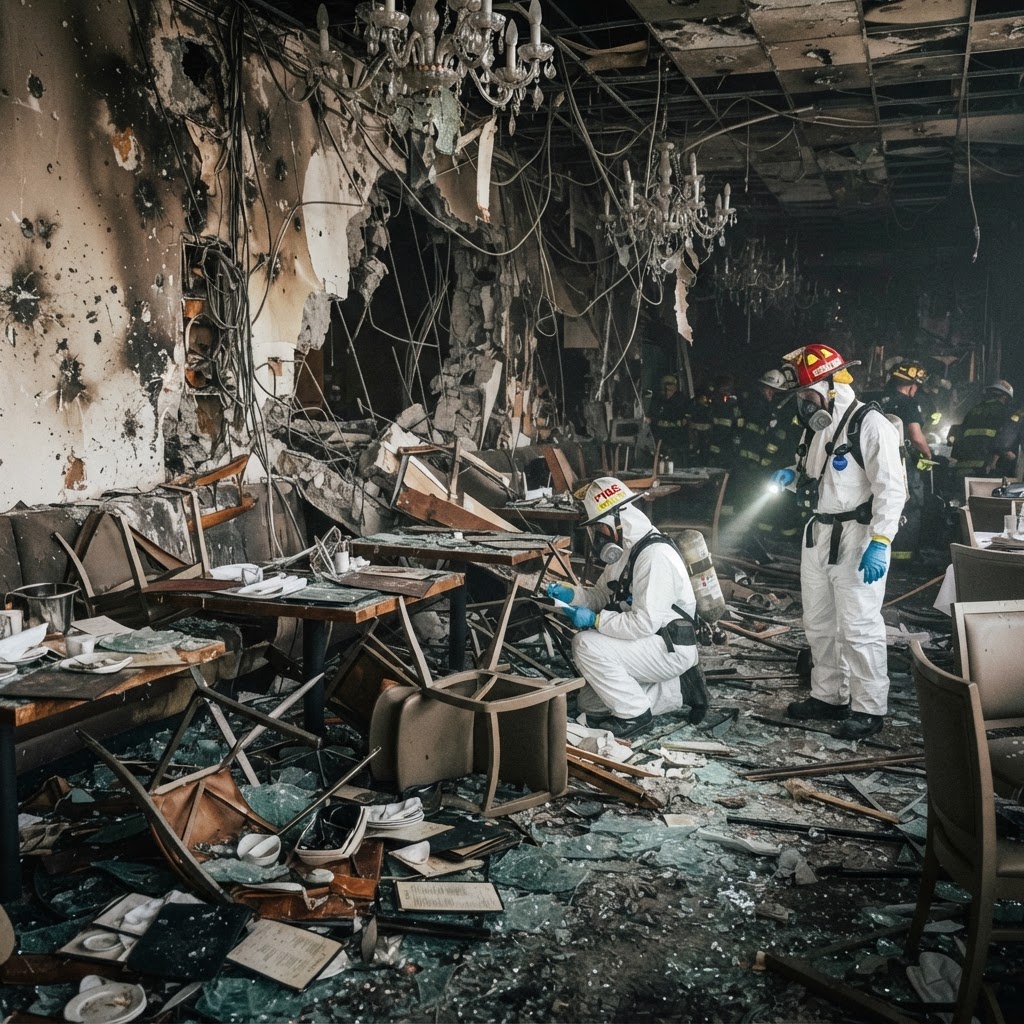
The Guardian reported that emergency services arrived within minutes of the explosion, though the confined space of a restaurant basement or private dining room made rescue operations difficult, dangerous, and time-consuming for responders wearing protective equipment. Paramedics transported the wounded to several nearby hospitals as first responders worked to secure the scene, establish a perimeter, and ensure no secondary devices were present—a standard protocol in terrorist bombings. Russian state media, cited by CNN, confirmed early on that authorities were treating the incident as terrorism rather than an accidental gas leak, structural failure, or workplace accident—a designation that immediately elevated the investigation's scope, resources, and institutional priority within Russian security services.
Who Was the Attacker? Identity and Motive Questions
The woman suspected of carrying the device remains the central focus of the investigation and the subject of intense analysis by Russian security services and international intelligence observers. Initial reports suggest she arrived at the private event either as a guest, as part of the venue's service staff, or possibly as a performer or contractor—accounts differ depending on the source and the stage of the investigation as details are released selectively. If she was a staff member or contractor, critical questions arise about hiring practices, background checks, and whether someone with a criminal history, extremist connections, or suspicious financial transactions slipped through the venue's vetting procedures. If she was a guest, the inquiry shifts to who invited her, whether attendees knew her by name or cover identity, and whether anyone noticed suspicious behavior in the hours before the attack.
Her background, ideological affiliations, educational history, financial status, and access to explosive materials are now subjects of intense scrutiny by Russian security services, the FSB (Federal Security Service), and the National Anti-Terrorism Committee. Did she construct the device herself using materials purchased online or from legitimate suppliers, or did she acquire a pre-made device from someone else—possibly a black market arms dealer, a criminal organization, or a terrorist cell? Was she motivated by a specific political or religious ideology, revenge against a particular target, sectarian grievances, or personal psychological factors? The answers to these questions will shape not only the legal response and charges but also Russia's assessment of whether the attack represents a lone wolf actor or a cell with broader operational capacity and resources.
Russian media outlets and official statements have been careful not to jump to conclusions about motive or attribution, a reflection of the sensitivity around terrorism narratives in Russia and the potential for disinformation campaigns. Framing matters significantly: if the attack is attributed to Islamic extremism, it may prompt different policy responses—surveillance of mosques, restrictions on immigration, profiling of Muslim communities—than if it is seen as domestic political violence, anarchist extremism, or criminal revenge tied to organized crime. The government's official narrative, once finalized and presented to the public, will likely influence both public perception and international interpretation of the event.
Investigation and Attribution: What Russian Authorities Know
Russia's National Anti-Terrorism Committee took immediate control of the investigation, signaling Moscow's assessment that this was not an accident but a deliberate, premeditated attack. The committee has mobilized forensic teams specializing in explosives analysis, ballistics experts, and intelligence analysts to reconstruct the attack from physical evidence, witness testimony, cellular data, and digital forensics recovered from the scene. Preliminary statements suggest investigators are examining the woman's background—her education, employment history, social circles, and relationships—as well as her financial transactions, phone communications over the preceding months, social media footprint, internet search history, and any ideological content she consumed or shared.
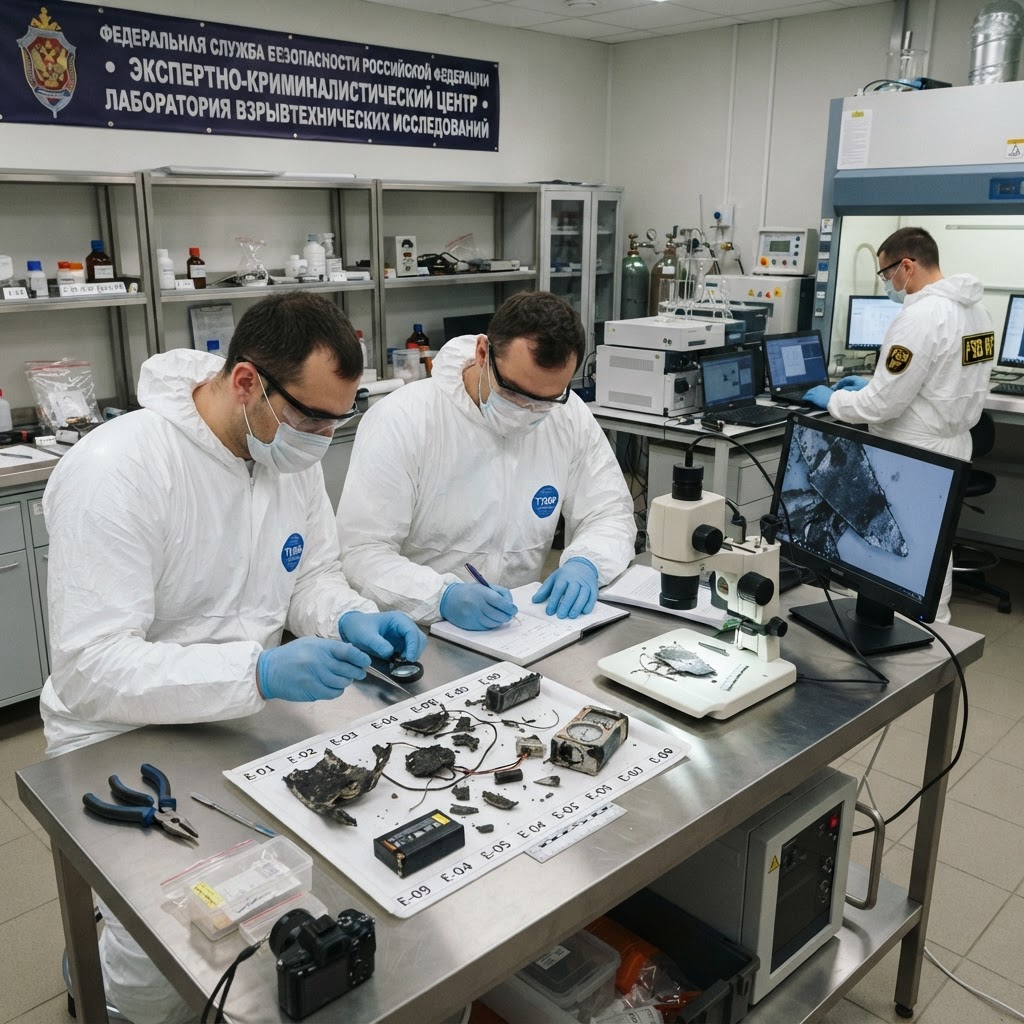
Key investigative questions include: Where did the woman obtain the materials for the homemade explosive—potentially sourced from hardware stores, industrial suppliers, online retailers, or black market channels? What was her technical background and education? Did she have formal training in chemistry, engineering, or military science, or was she relying entirely on online instructions, video tutorials, or guidance from someone else with explosive expertise? Did she communicate with anyone about her intentions, timeline, or target in the days, weeks, or hours before the attack? Were there warning signs that security services, family members, friends, or colleagues missed, and if so, why were those signs not acted upon?
The question of motive remains central to the investigation and its outcome, with profound implications for policy and public understanding. Moscow has experienced sporadic attacks linked to terrorism and organized crime over the past two decades, but bombings in central locations targeting civilian gatherings have become less common since the early 2010s, when ISIS-linked cells and North Caucasus insurgents carried out multiple bombings in major cities including the 2010 Moscow Metro bombings that killed 40 people. This restaurant attack represents a significant escalation from the relatively quiet years and disrupts the public sense that Moscow's security infrastructure has stabilized and improved since the early 2000s.
Euronews reported that Russian officials are examining whether the attack was motivated by political extremism tied to opposition to the government, criminal rivalry or revenge, sectarian violence between religious communities, personal disputes with specific attendees, or foreign intelligence operations by NATO or Middle Eastern actors. The use of a homemade device rather than a factory-made or military explosive suggests either significant resource constraints, an attempt to evade pre-attack detection by electronic surveillance, or a desire to minimize collateral damage to other nearby buildings and civilians—interpretations that point to different levels of sophistication, planning, and underlying motivation.
Geopolitical Context and Broader Security Concerns
The timing of the attack—occurring as Russia faces ongoing military conflicts in Ukraine, rising NATO tensions, economic sanctions, and regional instability across the Middle East and Central Asia—adds geopolitical weight to the incident. Some international analysts, particularly those in Western intelligence communities, are speculating whether the bombing could be linked to broader conflicts in the region, whether as a direct attack ordered by a foreign intelligence service, a response to Russian military actions in Ukraine or Syria, or an expression of domestic discontent tied to the broader geopolitical climate and economic hardship. However, Russian authorities have not yet indicated any connection to external actors, and jumping to such conclusions without evidence would be premature and irresponsible.
If the attack is confirmed to be purely domestic—the work of a single individual or a small Russian-based cell with no foreign backing—it would suggest that security tensions and grievances exist within Russian society independent of external conflicts and geopolitical struggles. Conversely, if any foreign connection emerges through investigation or intelligence—whether Western, Middle Eastern, or Chinese—it would dramatically complicate Russia's security calculus and potentially trigger changes in surveillance, border controls, visa policies, or foreign policy responses. The appearance of external involvement, even unproven, could shift both Russian security policy and international relations, particularly if Western or Middle Eastern actors are implicated in funding, training, or coordinating the attacker.
Victims and Damage Assessment
The three confirmed fatalities and 21 injured represent a significant human toll for a single incident in Moscow. The three deaths include the woman suspected of carrying the device and at least one security guard trained to protect the venue; identity verification of the third victim was still ongoing as of August 2, 2026, and may require DNA analysis or dental records comparison. The private nature of the event and the gathering's apparent selectivity mean victim identities are being verified carefully and methodically as families are notified and privacy is respected during a sensitive investigation.
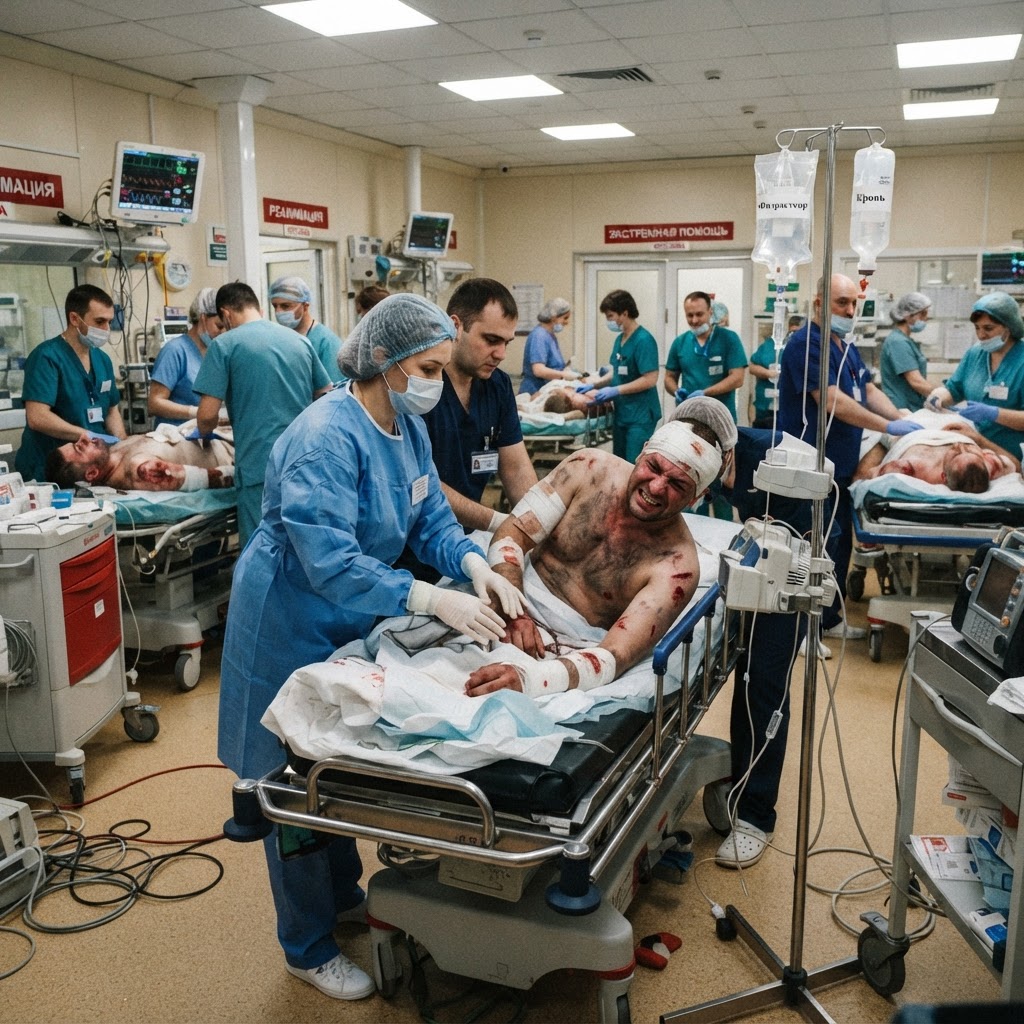
The injured range from people with minor cuts and bruises from the blast wave and flying glass to those with serious blast injuries, burns covering significant portions of their bodies, and crush wounds from structural collapse or falling debris. Moscow hospitals, including the city's premier trauma centers, have been coordinating care and sharing information as families search for relatives. Some victims are expected to require long-term rehabilitation, particularly those with severe burns requiring reconstructive surgery or limb trauma requiring multiple operations and physical therapy. The psychological impact of surviving a bombing—witnessing an explosion firsthand, seeing injured or dead fellow attendees, processing the realization one was targeted—will likely result in post-traumatic stress disorder and anxiety that persists long after physical wounds heal.
The restaurant itself, identified as an upscale Italian venue near Kudrinskaya Square, sustained considerable structural damage affecting both the immediate area of the blast and surrounding sections of the building. Windows were blown out across multiple floors, interior walls were damaged or partially collapsed by the blast wave, wooden furniture was splintered and scattered across the debris field, and electrical systems were disrupted. The restaurant's owner and staff have lost their business location, at least temporarily, and the incident will likely affect the neighborhood's dining and entertainment reputation in the short to medium term as diners process the risk of dining in a frequented upscale venue. Recovery efforts to identify victims, preserve evidence for investigators, and document the scene for prosecution will take weeks as forensic teams work methodically and carefully through the wreckage.
Russian Security Response and Historical Context
The Russian government's immediate response has focused on securing the scene, establishing a wide perimeter with multiple security rings, and launching a full investigation under the National Anti-Terrorism Committee's authority. President Putin's office is expected to make a statement once preliminary findings are presented, though the government has historically avoided premature statements that could later be contradicted by additional evidence or new leads. Public statements are typically coordinated with intelligence briefings, and any official narrative will reflect the government's assessment of the attack's nature and implications.
Russia has faced terrorism threats from multiple sources over the past three decades: insurgent groups in the Caucasus (particularly in Chechnya and Dagestan) fighting for independence or radical Islamic governance; ISIS-linked cells that emerged in the 2010s and carried out bombings and shootings; and domestic extremist networks spanning anarchist, anti-government, ultranationalist, and sectarian categories. The 2010s and early 2020s saw a decline in major terrorist attacks following successful counter-terrorism operations, including the targeted killing of prominent insurgent leaders, increased surveillance and security measures, and the territorial defeat of ISIS in Syria and Iraq. However, low-level incidents—individual attacks, smaller bombings, stabbings—have continued sporadically, and the 2023-2024 period saw a modest uptick in anti-war and anti-government incidents in response to the Ukraine conflict.
Historically, Russian terrorism has followed patterns shaped by the country's conflicts and social divisions: attacks were often claimed by the groups responsible if they had organizational backing, while unclaimed attacks typically fell into categories of organized crime violence, personal revenge, or psychological disruption by lone actors. The slow emergence of details and the apparent lack of any immediate claim of responsibility suggest either that investigators have not identified a clear organizational link or that the attacker intended to create ambiguity about her motive and affiliations.
International Attention and Diplomatic Implications
While Russia's domestic security agencies handle the investigation, international observers from NATO, the European Union, the United States, and regional powers are watching closely. Attacks in major capital cities often draw attention from foreign intelligence services and terrorism analysts worldwide as agencies assess threats to their own citizens and interests. France24 reported on the incident with emphasis on its rarity in Moscow's recent history, noting that such attacks were more common during the more unstable periods of the 1990s and early 2000s when the city experienced periodic bombings tied to the Chechen conflict and organized crime turf wars.
NATO allies and the United States are unlikely to claim responsibility or credit for the attack, despite ongoing geopolitical tensions over Ukraine and Russian military actions abroad. Instead, intelligence services will attempt to determine whether the attack has any connection to broader regional conflicts, whether foreign actors provided funding or training, or whether it is a purely domestic Russian matter driven by internal grievances. The appearance of external involvement could dramatically shift both Russian security policy and international relations in unpredictable ways. Disinformation campaigns may emerge from various sources—Russian state media may blame Western actors, some Western outlets may speculate about anti-Putin resistance, and extremist groups may attempt to claim credit even without involvement—so critical evaluation of claims will be essential.
Lessons for Urban Security and Private Events
The incident raises practical questions about security protocols at private events in major cities. How did a person carrying a homemade explosive device enter a private restaurant gathering supposedly hosting vetted guests or authorized personnel? Were security protocols inadequate, was security staff insufficiently trained, or was the attack executed with such sophistication and planning that it bypassed even careful standard checks? Event organizers and venue managers across Moscow will likely reassess their security measures in coming weeks, potentially implementing metal detectors, bag checks, or more thorough identity verification procedures.
Private events often operate with lighter security than public venues, a deliberate risk-benefit calculation that venues and organizers make to preserve the intimate, exclusive atmosphere that high-paying clients expect. Upscale restaurants trading on privacy, discretion, and exclusivity may resist heavy security measures that would visibly change the guest experience and create an atmosphere of suspicion or militarization. This bombing may force a reckoning with that balance, particularly for high-profile or politically connected events. Venue owners face a genuine dilemma: invest in enhanced security measures that may deter some customers or change the tone of their establishment, or maintain the status quo and accept greater risk of catastrophic liability and loss of life.
Looking Ahead: Implications for Russia and the Region
In the days and weeks ahead, Russian investigators will release more details as forensic evidence accumulates, witness interviews are completed, and digital forensics yield results. Security policy reviews will likely follow, particularly if gaps in surveillance, vetting procedures, or facility access controls are identified during the investigation. The incident may also trigger a broader reassessment of terrorism threats in Russia and prompt changes to how authorities engage with sources of radicalization, whether ideological, criminal, or political in nature. Public discourse around security, freedom of movement, and the role of surveillance in urban life will likely intensify.
The bombing will likely remain a significant news event in Russia and internationally until a clear narrative emerges: who the attacker was, what motivated her, whether she acted alone or as part of a network, and what security lessons apply to other cities and venues around the world. For Moscow residents and visitors, the immediate legacy will be a reminder of vulnerability and a temporary shift in risk perception—a common and understandable psychological pattern after terror attacks in major cities worldwide. The restaurant district near Kudrinskaya Square may experience reduced foot traffic initially, though demand for entertainment and dining typically recovers as the psychological immediacy of the attack fades.
FAQ: Moscow Restaurant Bombing
Q: How many people died in the Moscow restaurant bombing?
A: At least three people were killed, including the woman believed to have carried the device and a security guard. The third victim's identity was still being confirmed as of August 2, 2026, and may require forensic analysis.
Q: What was the device used in the Moscow bombing?
A: A homemade explosive device, also called an improvised explosive device (IED). Russian authorities have not yet released technical details about its construction, power output, or chemical contents pending the completion of forensic analysis by explosives experts.
Q: When did the Moscow restaurant bombing occur?
A: The attack happened on Saturday, August 1, 2026, in the evening, at an upscale Italian restaurant near Kudrinskaya Square in central Moscow, during a private event for select guests or attendees.
Q: Has anyone claimed responsibility for the Moscow bombing?
A: As of August 2, 2026, no terrorist organization or individual has publicly claimed responsibility. Russia's National Anti-Terrorism Committee is investigating the attack, and authorities have not yet announced the attacker's motive or any linked organizations.


Comments
Post a Comment