Hong Kong Bar Attack: 12 Arrested in Murder Case

Hong Kong bar attack: the death of 32-year-old entrepreneur Issac Yeung after a July 26 assault in Tsim Sha Tsui has become a murder investigation involving 12 arrested suspects and alleged triad links. The case is now moving from a nightlife brawl to a wider test of Hong Kong’s anti-triad policing, court process, and public-safety response.
Key takeaways
- Issac Yeung was attacked at an upstairs bar on Cameron Road in the early hours of July 26 and died five days later after suffering severe head injuries.
- Hong Kong police reclassified the case from assault to murder on July 31; 12 people had been arrested by August 3.
- A 40-year-old alleged triad leader known as “Left Mouth” has been charged with murder, while another man faces an assisting-an-offender charge.
- One alleged triad leader, known as “Wai-Kin,” remained wanted in the latest report, while several other suspects were released on bail.
What happened at the Tsim Sha Tsui bar?
The incident began shortly after midnight on July 26 at an upstairs bar on Cameron Road in Tsim Sha Tsui, one of Hong Kong’s busiest nightlife and commercial districts. According to the Hong Kong government’s police statement, officers received a report at 12:03 a.m. that a man had been assaulted inside the premises.
Police found Yeung unconscious on the floor. He had serious injuries to his head and chest and was taken to Queen Elizabeth Hospital in an unconscious state. The official account said the initial investigation indicated that he had allegedly been attacked with hands before the assailants fled.
Early reports treated the case as an assault occasioning actual bodily harm. That changed after Yeung died at 2:54 a.m. on July 31. Police then reclassified the investigation as murder, a legal and investigative shift that reflected the death and triggered a more intensive search for everyone involved.

Why the case is linked to triad activity
The reported background to the assault was an altercation involving Yeung’s birthday party and a neighboring table. The latest account from The Standard said the neighboring group was associated with the Wo Shing Wo triad society, one of the organized-crime groups historically known to Hong Kong law-enforcement agencies.
That reported connection matters, but it does not mean every person arrested has been proven to be a triad member or that every allegation has been established in court. The careful distinction is important: police can investigate suspected organized-crime involvement, prosecutors can file charges, and courts still have to determine criminal responsibility under Hong Kong law.
The case has nevertheless revived a familiar question about the relationship between Hong Kong’s nightlife economy and organized crime. Bars, private clubs, karaoke venues, and entertainment districts create crowded environments where disputes can escalate quickly, witnesses may be reluctant to speak, and participants can leave before police arrive. A single incident can therefore require investigators to reconstruct events through CCTV, phone records, medical evidence, witness statements, and the movements of multiple suspects.
The investigation widened from one assault to 12 arrests
Police made arrests across several districts between July 26 and July 29. The official statement initially described four local men, two non-ethnic Chinese men, and three local women aged between 24 and 46 being arrested for wounding or assisting offenders. As the investigation developed, the total number of arrests rose to 12.
The South China Morning Post reported that three further suspects were arrested as police investigated Yeung’s death. The report said six of the 12 had already been charged, while the remaining suspects included people released on bail and required to report back to police later in August.
The numbers show why a violent incident involving a group can become legally complicated. Investigators must separate the alleged roles of the people present: who was at the scene, who took part in the assault, who may have helped someone leave, who may have concealed evidence, and who may simply have been nearby. The law does not treat every person connected to an incident in exactly the same way.
The distinction is visible in the charges reported so far. Some suspects face murder-related allegations, while others face allegations of assisting an offender. Those are not interchangeable claims. The murder charge concerns the death and the accused person’s alleged responsibility for it; assisting-offender allegations concern post-offence help or other conduct that investigators say obstructed justice or aided a suspect.
Who is “Left Mouth,” and what has police alleged?
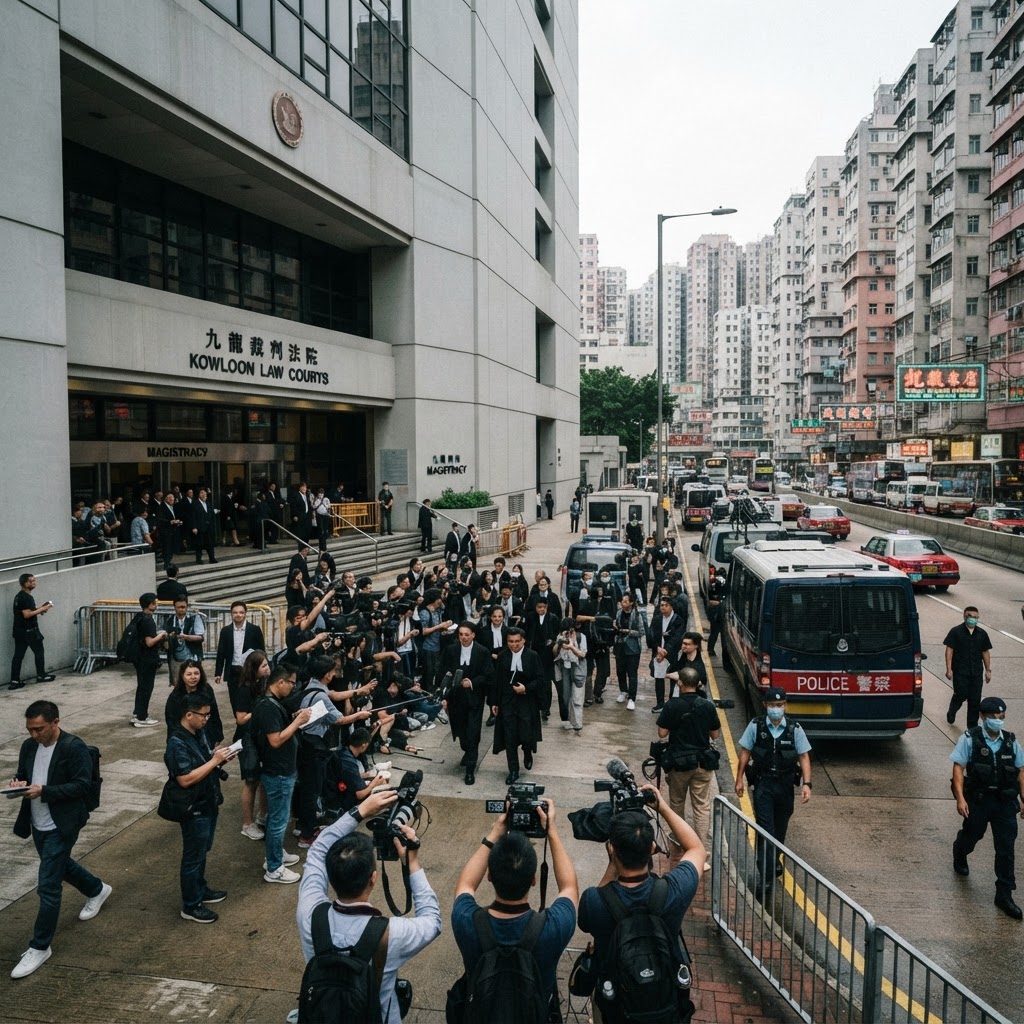
On August 3, police announced that a 40-year-old man known by the nickname “Left Mouth” had been charged with murder. A 52-year-old man was charged with assisting an offender. Their cases were scheduled to be heard at Kowloon City Magistrates’ Courts on August 4, according to The Standard’s report.
News reports have described “Left Mouth” as an alleged triad leader. That description identifies the police theory and the context of the investigation; it is not a substitute for a judicial finding. The same caution applies to the name “Wai-Kin,” another alleged triad leader whom police were still seeking in the latest report.
The Hong Kong government’s police release gave a more limited official chronology. It said a 33-year-old arrested man had been placed on a holding charge of murder, while a 37-year-old arrested man and a 41-year-old arrested man faced holding charges related to assisting offenders. The differences in age and charge details across updates reflect a case still moving through the early court stage, when police and prosecutors may present new information as arrests and evidence develop.
What happens next in the Hong Kong murder case?
The immediate next step is the court process. A first appearance does not decide guilt. It allows the court to address the charge, custody or bail arrangements, and the next procedural stage. A murder prosecution can later involve disclosure of evidence, witness testimony, forensic findings, CCTV footage, and arguments about the precise role of each defendant.
Police also said post-mortem examinations would be conducted to establish the cause of death. That evidence can be central in a case that began as an assault. Medical findings may help prosecutors explain how the injuries occurred, whether the injuries were consistent with the alleged assault, and how the death connects legally to the conduct under investigation.
The search for the suspect identified as “Wai-Kin” is another major part of the investigation. The Standard reported that police urged anyone with information to contact the Kowloon West regional anti-triad unit. Public appeals are common in cases where investigators believe people who witnessed the event, saw suspects leaving, or know where a wanted person may be hiding could provide information that cannot be obtained from official records alone.
At the same time, suspects released on bail remain subject to conditions. Being released does not mean the investigation is over, and being arrested does not mean a person will ultimately be convicted. That distinction is especially important in fast-moving crime stories, where early headlines can create an impression of certainty before the evidence has been tested.
The public-safety question behind the case
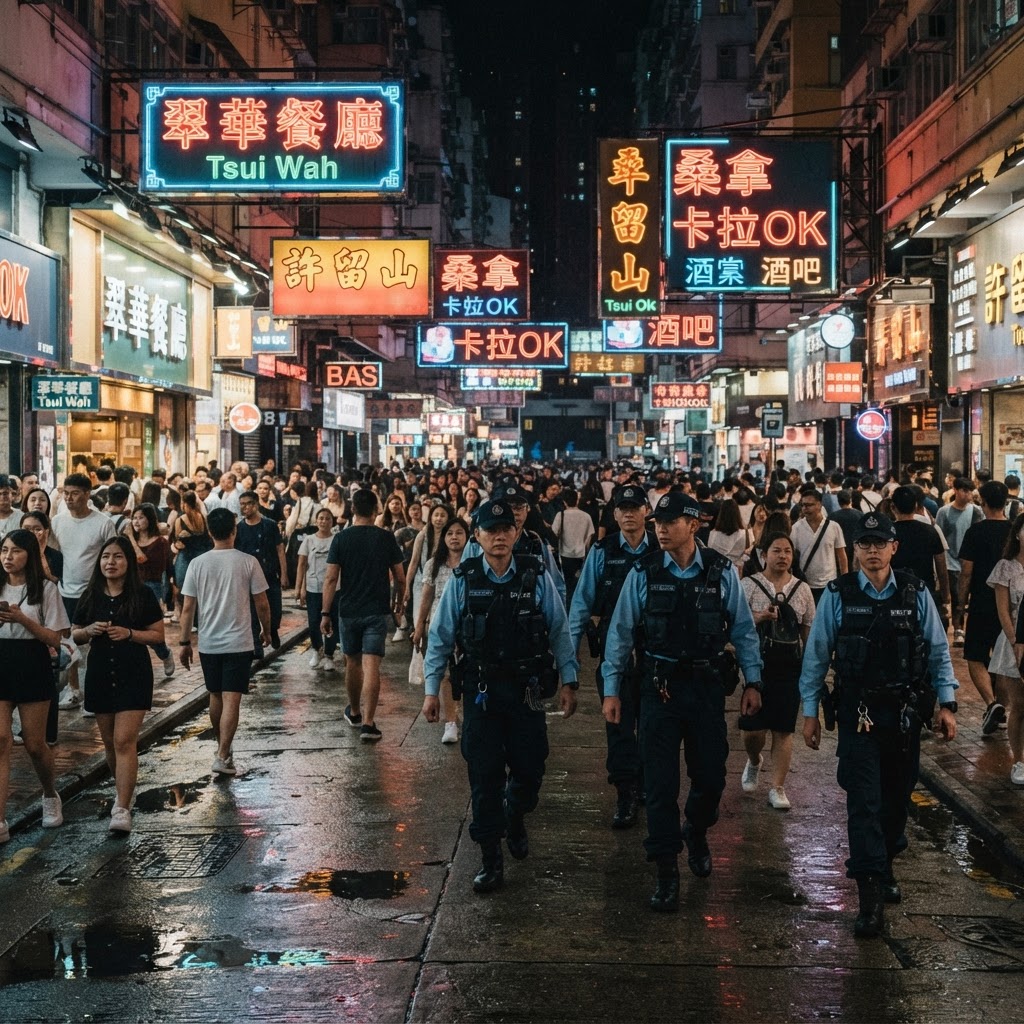
Tsim Sha Tsui is built around movement: tourists, residents, office workers, restaurants, bars, hotels, and late-night venues share a compact urban space. That density can make the district economically vibrant while also creating practical challenges for violence prevention. A disturbance inside an upstairs venue may be invisible from the street until emergency calls begin.
The case raises several operational questions without proving that any one answer caused the death. Were staff trained to recognize escalating conflict? Was security present and able to separate the groups? Was there clear access for emergency responders? Were cameras working and preserved quickly? Did witnesses feel safe enough to contact police? These are the questions that a serious review should examine after the criminal investigation has established the facts.
There is also a broader issue of deterrence. Organized-crime investigations are not only about prosecuting the person alleged to have thrown a punch. They can involve venue licensing, illegal gambling, intimidation, protection payments, weapons, money flows, and networks that connect individuals across multiple locations. Hong Kong’s Regional Anti-triad Unit is investigating this case, and the decision to frame the inquiry around possible triad activity suggests police are looking beyond the immediate confrontation.
Why careful reporting matters in organized-crime cases
Stories involving triads attract attention because they combine violence, secrecy, and recognizable city locations. But the same features can encourage speculation. Nicknames can spread faster than verified identities, online posts can repeat unconfirmed claims, and a crowd of arrested people can be described as a single criminal group even when their alleged roles differ.
Responsible coverage should keep several lines clear. First, separate confirmed facts from police allegations. Second, identify the date of each update, because arrest totals and charges can change. Third, avoid publishing personal details that are not necessary to understand the case. Finally, remember that the victim should not disappear beneath the crime narrative: Yeung was a 32-year-old entrepreneur whose family and friends are dealing with a death that began with an ordinary birthday gathering.
That last point is not merely a matter of tone. It also explains why public safety is measured in human outcomes rather than arrest counts. Twelve arrests may indicate an active investigation, but they do not undo the loss, answer every question about what happened inside the bar, or guarantee that similar violence will be prevented.
What the case could mean for Hong Kong nightlife
For venue operators, the case may intensify scrutiny of private bars and other establishments where entry controls, staffing, and incident reporting are difficult to assess from outside. For police, it may provide a reason to increase visible patrols and intelligence-led operations in western Kowloon. For customers, it is a reminder that leaving a venue early or calling for help can be safer than trying to settle a confrontation personally.
None of those responses should be confused with a conclusion that Hong Kong nightlife is generally unsafe. The significance of the case is that a localized dispute allegedly escalated into a fatal assault, and the suspected organized-crime context makes the consequences wider than a conventional bar fight. The best response is precise: enforce the law, protect witnesses, examine venue practices, and avoid turning a pending case into a license for rumor.
Conclusion: a murder case still awaiting answers
The Tsim Sha Tsui bar attack has moved rapidly from an overnight assault to a murder prosecution. Yeung’s death, 12 arrests, charges against alleged triad figures, and the search for another wanted suspect have made it one of Hong Kong’s most closely watched crime stories this week.
But the most important facts are still to be tested in court. The next updates should clarify the defendants’ alleged roles, the medical evidence, the identity and location of remaining suspects, and whether investigators uncover a broader network behind the confrontation. Follow the court proceedings rather than the rumor cycle: that is where the difference between allegation and proof will finally be established.
Timeline: from the first call to the latest charge
The timeline helps explain why the legal description changed. At 12:03 a.m. on July 26, police received the first report and officers went to the Cameron Road bar. Yeung was found unconscious and taken to Queen Elizabeth Hospital. Over the following days, officers arrested people in different districts while trying to identify the participants and reconstruct the route taken after the assault.
On July 30, the case was already before Kowloon City Magistrates’ Courts in relation to assisting-offender allegations. On July 31, Yeung died and police formally reclassified the investigation as murder. The same day, the government statement recorded holding charges against several arrested men. By August 2 and August 3, reports said the arrest total had risen to 12 and that an alleged triad leader known as “Left Mouth” had been charged with murder.
That sequence is important because early information is necessarily incomplete. The first police response focuses on preserving life, securing the scene, and locating suspects. A later murder investigation can add medical conclusions, CCTV analysis, witness accounts, and information from people arrested in the first wave. Readers should therefore treat each update as a dated stage of the investigation, not as a final account.
Evidence investigators will have to assemble
A case arising from a crowded bar can produce many kinds of evidence. CCTV may show the argument, the assault, the moment people left, and whether anyone returned or met a vehicle outside. Phone and location records may help establish relationships and movement, although investigators still have to interpret them carefully. Staff members and customers may provide accounts of what happened before and after the physical confrontation.
Medical evidence will be equally important. The official police statement recorded serious head and chest injuries and said a post-mortem examination would be conducted. Prosecutors will need to connect the injuries to the alleged conduct and explain the medical cause of death. Defence lawyers may challenge identification, intent, causation, or the role attributed to each accused person. Those questions belong in court, where evidence can be tested under legal rules.
The alleged assistance after the assault may also become a major line of inquiry. If people helped a suspect leave, discarded clothing, moved a vehicle, or attempted to conceal information, investigators will need to establish what each person knew and intended. A person’s presence near a suspect is not automatically proof of assistance. The prosecution must prove the elements of the relevant offence for each individual defendant.
What residents and visitors should do during a violent incident
The case also has a practical lesson for people in nightlife districts. When an argument becomes physical, bystanders should move away from the danger zone, alert venue staff or emergency services, and avoid trying to act as a private enforcement team. Useful details include the venue name, floor, entrance, direction of travel, clothing, vehicle information, and whether weapons were visible. Those details should be passed to police rather than shared recklessly online.
Venue owners can reduce risk by keeping exits clear, maintaining working cameras, training staff to separate customers without escalating the confrontation, and recording incidents promptly. Staff should know when to call police and emergency medical services instead of attempting to manage a serious assault themselves. None of these measures can guarantee that violence will never occur, but they can shorten response times and preserve evidence.
For Hong Kong authorities, the challenge is to turn this individual investigation into useful prevention without creating a publicity-only response. Targeted inspections, intelligence sharing, witness protection, and consistent enforcement can be more valuable than a short burst of patrols that fades after headlines move elsewhere.
Frequently asked questions
What happened in the Tsim Sha Tsui bar attack?
A 32-year-old man, Issac Yeung, was allegedly assaulted inside an upstairs bar on Cameron Road shortly after midnight on July 26, 2026. He suffered serious head and chest injuries and died in hospital on July 31.
How many people have been arrested?
Hong Kong police said the total had reached 12 by August 3. The suspects’ alleged roles and charges differ, and some had been released on bail while the investigation continued.
Why is the case connected to triads?
Reports said the altercation involved a neighboring table associated with the Wo Shing Wo triad society. Police’s Regional Anti-triad Unit is investigating, but alleged affiliations and criminal responsibility must still be established through the legal process.
Who is “Left Mouth”?
“Left Mouth” is the reported nickname of a 40-year-old alleged triad leader charged with murder in connection with the case. The charge is an allegation, and the court process will determine the outcome.
What do you think Hong Kong should prioritize after this case — stronger venue security, more nightlife patrols, or tougher action against organized-crime networks?


Comments
Post a Comment