Summer COVID 2026 Surge: XFG Variant Cases Rising in Every State - What You Need to Know
Summer COVID 2026 Surge: XFG Variant Cases Rising in Every State — What You Need to Know
The summer COVID 2026 surge is here, and honestly, I am not surprised. Cases are climbing in all 50 states right now, driven by the XFG variant that just refuses to go away. If you have been brushing off that scratchy throat as "just a summer cold," you might want to think again.
Here is what is actually happening across the country right now, which COVID variants are spreading, and what you should do about it — without the panic, without the hype, just straight facts from the people who study this stuff every day.

COVID Cases Rising August 2026: The Numbers Are Climbing Fast
Let me start with the numbers, because they tell the story better than anything else. As of August 12, 2026, the CDC estimates that COVID-19 cases are growing in every single U.S. state. Not some states. Not most states. All 50.
Now, before you panic — the overall level of COVID activity is still considered "low" nationwide by CDC standards. But here is the part that should grab your attention: the rate of increase is fast. Really fast.
According to WastewaterSCAN, a Stanford University infectious disease monitoring program, SARS-CoV-2 concentrations in wastewater are up 106% in August 2026 compared to July. Let me say that again — 106% increase in just one month. That is not a gradual drift upward. That is a sharp spike.
Amanda Bidwell, the Scientific Program Manager at WastewaterSCAN, put it plainly: concentrations have been rising steadily since late June across the entire country. The West and South regions currently have the highest levels, with California and Texas seeing the sharpest upticks.
15 States With Active COVID Outbreaks
Here is something that caught my attention. An August 17 report from the Pandemic Mitigation Collaborative identified at least 15 states and territories experiencing active COVID outbreaks right now. Michael Hoerger, a professor at Tulane University School of Medicine who leads the PMC, said that is troubling — especially if you live in one of those areas.
But there is some good news mixed in. The current wave appears less severe than what we dealt with last year. In 2025, the U.S. got hit with an intense summer surge fueled by the "Stratus" variant that dragged on into fall. This year, wastewater concentrations are significantly lower than the same time in 2025. Last week, about 4% of COVID tests came back positive — compared to over 9% at this point last year.
So yes, cases are rising. But they are rising from a lower baseline, and the wave is not as intense. Still, "less severe than last year" does not mean "nothing to worry about." Especially with schools opening back up and millions of kids about to share germs in classrooms again.
What Is the XFG Variant and Why Is It Dominant?
If you have been following COVID news, you have probably heard about XFG. But what actually is it?
XFG is a recombinant variant — meaning it formed when two different COVID strains combined their genetic material. Think of it like two viruses walking into a bar and walking out as a new, more contagious version of themselves. Charming, right?
The specific version driving most of the current wave is XFG.1.1, which accounted for 22 to 40% of all U.S. cases last month according to CDC data. It overtook the Nimbus (NB.1.8.1) variant that was dominant last summer.
Dr. Albert Ko, a professor of public health and epidemiology at Yale School of Public Health, explained it this way: XFG is still part of the omicron family. It has not made a huge evolutionary jump. And that is probably why we are not seeing a massive peak this summer — our immune systems have some familiarity with this general branch of the virus family tree.
But do not let that give you false confidence. Ko also pointed out that just because there is no brand-new variant does not mean COVID cannot cause severe disease. It absolutely can, especially for certain groups of people.
The BA.3.2 "Cicada" Variant: Should You Worry?
There is also another variant making headlines called BA.3.2, nicknamed "Cicada." It is a heavily mutated strain that emerged earlier in 2026 and started spreading rapidly around the world. About 15% of current U.S. cases are tied to Cicada.
Now, here is the interesting part — despite its mutations, Cicada has not really taken off in the U.S. the way it has in other countries. The experts I read about seem cautiously optimistic about that, but they are still watching it closely. Viruses are unpredictable. What looks like a dud today could explode tomorrow if it finds the right conditions.
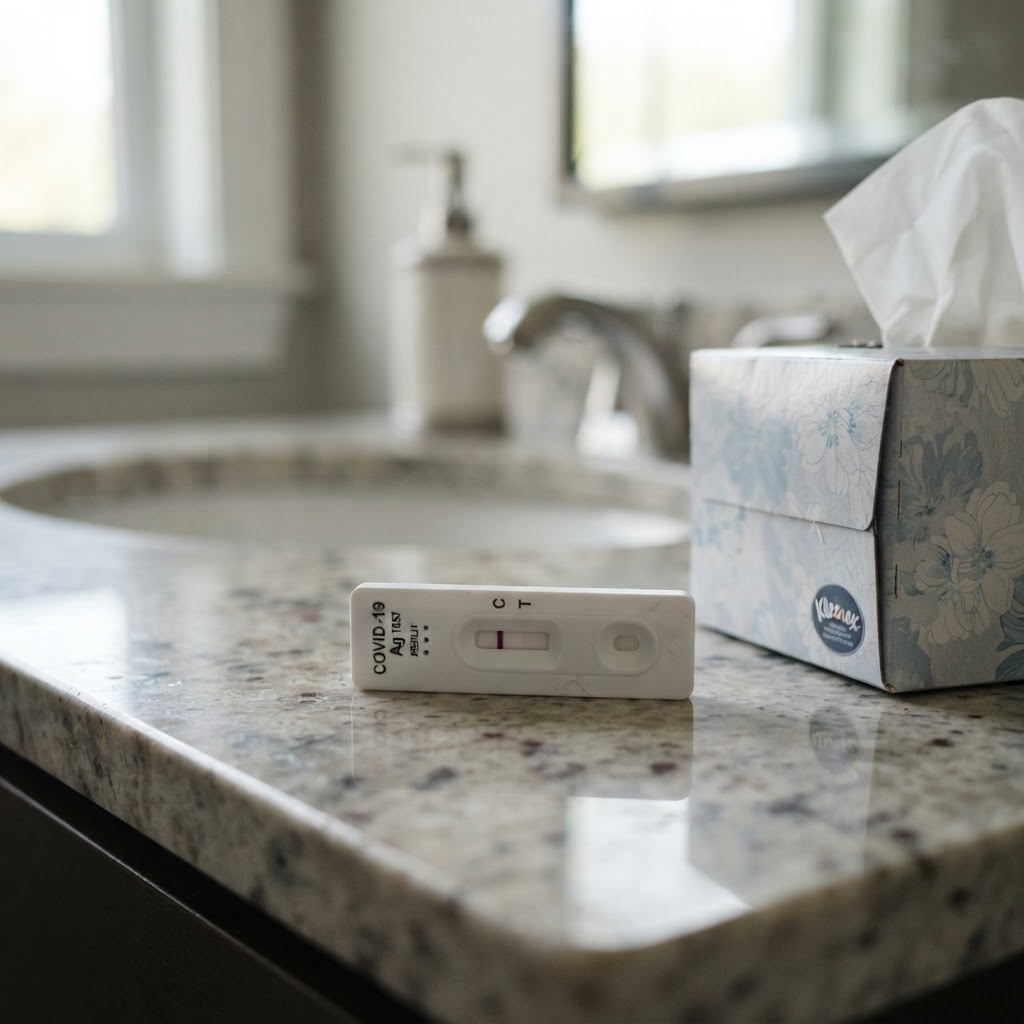
COVID Symptoms 2026: How to Tell If Your Summer Cold Is Actually COVID
This is the part I think most people need to hear. The symptoms of the current COVID variants look almost identical to a regular cold or mild flu. And that is exactly why so many people are walking around spreading it without realizing it.
According to the CDC, the common symptoms of COVID-19 in 2026 include:
- Cough (usually dry and persistent)
- Sore throat (often the first sign)
- Nasal congestion or runny nose
- Fatigue that hits you like a truck
- Fever and chills
- Shortness of breath or chest tightness
- Headache
- Nausea, vomiting, or diarrhea
These symptoms typically show up within 2 to 14 days after you have been exposed to the virus. And here is the tricky thing — for a lot of people, the symptoms are mild enough that they just power through and go to work, go to the gym, send their kid to school. That is how it spreads.
Dr. William Schaffner, an infectious disease specialist at Vanderbilt University Medical Center, said the symptoms of COVID and other common respiratory viruses are so similar that testing is really the only way to know for sure what you have. So if you feel sick, do not just guess. Get a test.
Who Is Most at Risk From the Summer COVID Surge?
Most people recover from COVID-19 on their own without serious problems. But there are groups who are at much higher risk of severe illness or hospitalization. If you or someone you love falls into any of these categories, please take this surge seriously:
- Adults over 65 — the older you are, the higher the risk
- Infants and young children whose immune systems are still developing
- People with weakened immune systems from illness or medication
- Anyone with underlying health conditions like diabetes, heart disease, or asthma
- People who have never received a single COVID vaccine dose
- Pregnant women, who are more vulnerable to severe COVID outcomes
If you are in one of these groups and you start feeling sick, do not wait it out at home. Contact your doctor early because antiviral treatments work best when started right away. These medications can reduce how severe your symptoms get and how long they last — but only if you take them early in the infection.
COVID Prevention Tips 2026: What Actually Works Right Now
Okay, so cases are rising. What should you actually do about it? I am not going to tell you to lock yourself in your house and never go outside. That is not realistic, and honestly, it is not necessary at this stage. But there are practical things that make a real difference.
1. Get Tested If You Feel Sick
This is the simplest and most effective thing you can do. If you have a sore throat, cough, or any of the symptoms listed above, take a COVID test. Home tests are still available at most pharmacies. If it is positive, stay home. Do not be the person who brings COVID to the office because you "think it is just allergies."
2. Stay Home When You Are Sick
I know this sounds obvious, but you would be amazed at how many people still go to work, to parties, to school while actively sick. The CDC guidelines for 2026 say: stay home and isolate from others until your symptoms improve AND you have been fever-free for at least 24 hours without medication. That is the bare minimum.
3. Wear a Mask in Crowded Indoor Spaces
Yes, I know. Nobody wants to hear this. But if you are in a high-risk group, or if you are going to be in a crowded airport, a packed bus, or a busy hospital waiting room, a well-fitted N95 or KN95 mask genuinely reduces your chances of catching COVID. It is not political. It is physics — the mask blocks viral particles from reaching your nose and mouth.
4. Improve Indoor Ventilation
COVID spreads through the air, especially in poorly ventilated indoor spaces. Opening windows, using air purifiers with HEPA filters, and spending more time outdoors can all lower your risk. If you are a business owner or school administrator, this is one of the most impactful things you can do for the people in your building.
5. Practice Good Hygiene — But Do Not Obsess Over It
Washing your hands regularly is always good advice, not just for COVID but for flu, RSV, and other bugs going around. But remember — COVID is primarily airborne. Hand sanitizer alone will not protect you. Focus on the air you breathe, not just the surfaces you touch.

COVID Vaccine 2026-2027: When Is the New Booster Available?
This is one of the biggest questions people are asking right now, and the answer is a bit frustrating. The FDA voted earlier this year to recommend that the updated 2026-2027 COVID vaccine target the XFG variant — which is exactly what is spreading right now. Good news on that front.
The bad news? The new vaccines are not available yet. Experts expect them to be released sometime in September 2026. So there is a gap between when cases are peaking and when the updated booster will be in your local pharmacy.
Hoerger from Tulane put it bluntly: it could be even later if there are any snags in the approval process, and that is frustrating because outbreaks are happening right now.
Should You Get the New COVID Vaccine This Fall?
Last year, the CDC shifted its vaccine guidelines from a universal recommendation to a "shared clinical decision-making" model for everyone 6 months and older. What that means in plain English is: talk to your doctor about whether the vaccine makes sense for you.
That said, most medical experts still recommend getting the updated booster this fall, especially if you are in a high-risk group. The vaccine protects against severe illness, hospitalization, and death. It can also lower your chances of developing long COVID, which is still a real concern even with milder variants.
Schaffner from Vanderbilt said it is especially important for older adults and pregnant women to get vaccinated. The protection passes from mother to baby, which matters a lot when you consider that infants are one of the high-risk groups.
Why COVID Keeps Coming Back Every Summer Like Clockwork
Have you noticed that COVID seems to spike every single summer? It is not a coincidence. The virus has settled into a predictable seasonal pattern in the U.S., with two waves each year — one in late summer and one in winter.
Schaffner explained it simply: "We have had two waves every year. One in the middle to late summer, and the other during the winter." This pattern has held steady since the pandemic began.
But why summer specifically? A few reasons. First, people travel more during summer, which spreads the virus across regions. Second, people spend more time in air-conditioned indoor spaces when it is hot outside, and those environments are perfect for viral transmission. Third, immunity from previous infections or vaccines wanes over time, and by mid-summer, enough people's protection has dropped that the virus finds plenty of susceptible hosts.
And now, with schools reopening in August and September, there is an extra transmission engine. Millions of kids gathering in classrooms, sharing supplies, eating in cafeterias — it is basically a viral exchange program. Hoerger expects transmission to peak around the first week of September, which lines up perfectly with back-to-school season.
COVID Wastewater Levels 2026: What the Sewage Tells Us
If you have never heard of wastewater monitoring, it is actually one of the coolest public health tools we have. Scientists test sewage for viral particles, and because everyone flushes the toilet, wastewater gives us a real-time picture of how much COVID is circulating in a community — even before people start showing up at hospitals.
The CDC says national wastewater levels are "very low" as of their August 8 report. But WastewaterSCAN, which uses a different methodology, says levels are "high" nationwide with a significant upward trend over the last 21 days. Why the discrepancy? Different testing methods, different sensitivity levels, and different ways of categorizing the data.
Here is what I take from this: the trend is clearly upward regardless of which monitoring system you look at. The virus is spreading more. The question is not if cases will continue to rise — they will. The question is how high they will go and whether the healthcare system can handle it.
Frequently Asked Questions About the Summer COVID 2026 Surge
Is there really a new COVID surge in August 2026?
Yes. COVID-19 cases are increasing in all 50 U.S. states as of August 12, 2026, according to CDC data. Wastewater monitoring shows a 106% increase in viral concentrations compared to July 2026. Experts describe it as the beginning of a late summer wave that is expected to peak around the first week of September.
What COVID variant is spreading right now?
The dominant variant is XFG.1.1, accounting for 22-40% of U.S. cases. It is a recombinant variant within the omicron family. About 15% of cases are tied to the BA.3.2 "Cicada" variant, which is heavily mutated but has not become dominant in the U.S. yet.
What are the symptoms of the current COVID variant?
Common symptoms include cough, sore throat, congestion, fatigue, fever, chills, shortness of breath, headache, nausea, and diarrhea. These appear 2-14 days after exposure. The symptoms are very similar to a regular cold or flu, which is why testing is important if you feel sick.
When will the 2026-2027 COVID vaccine be available?
The updated COVID vaccine targeting the XFG variant is expected to be released in September 2026. The FDA has already approved the strain selection. Once available, talk to your healthcare provider about whether you should get the booster, especially if you are in a high-risk group.
Should I be worried about the summer COVID surge?
The current wave is less severe than the 2025 summer surge, with lower test positivity rates and lower wastewater concentrations. However, cases are rising quickly, and high-risk groups should take precautions. If you feel sick, test and stay home. If you are over 65, immunocompromised, or pregnant, talk to your doctor about extra precautions.
Conclusion: Do Not Panic, But Do Not Ignore It Either
Look, I get it. We are all tired of COVID. We are tired of hearing about variants and surges and vaccines. Most of us have moved on with our lives, and honestly, that is fine for a lot of people. The virus is not the same threat it was in 2020.
But "not as bad as 2020" is not the same as "not a problem." The summer COVID 2026 surge is real. Cases are rising in every state. The XFG variant is spreading efficiently. Schools are reopening, which will likely push cases even higher through September.
So here is my take: you do not need to live in fear. But you should be smart about it. If you feel sick, test yourself and stay home. If you are in a high-risk group, be extra careful in crowded indoor spaces. And when the updated vaccine comes out in September, have a real conversation with your doctor about whether you should get it.
The virus is not going away. It has become a regular part of our respiratory virus season, alongside flu and RSV. The sooner we accept that and take reasonable precautions without either panicking or pretending it does not exist, the better off we will all be.
Stay informed, stay reasonable, and take care of the people around you — especially the ones who are most vulnerable. That is really all any of us can do.


Comments
Post a Comment