iPhone Duo: Apple's First Foldable Phone Changes Everything in 2026
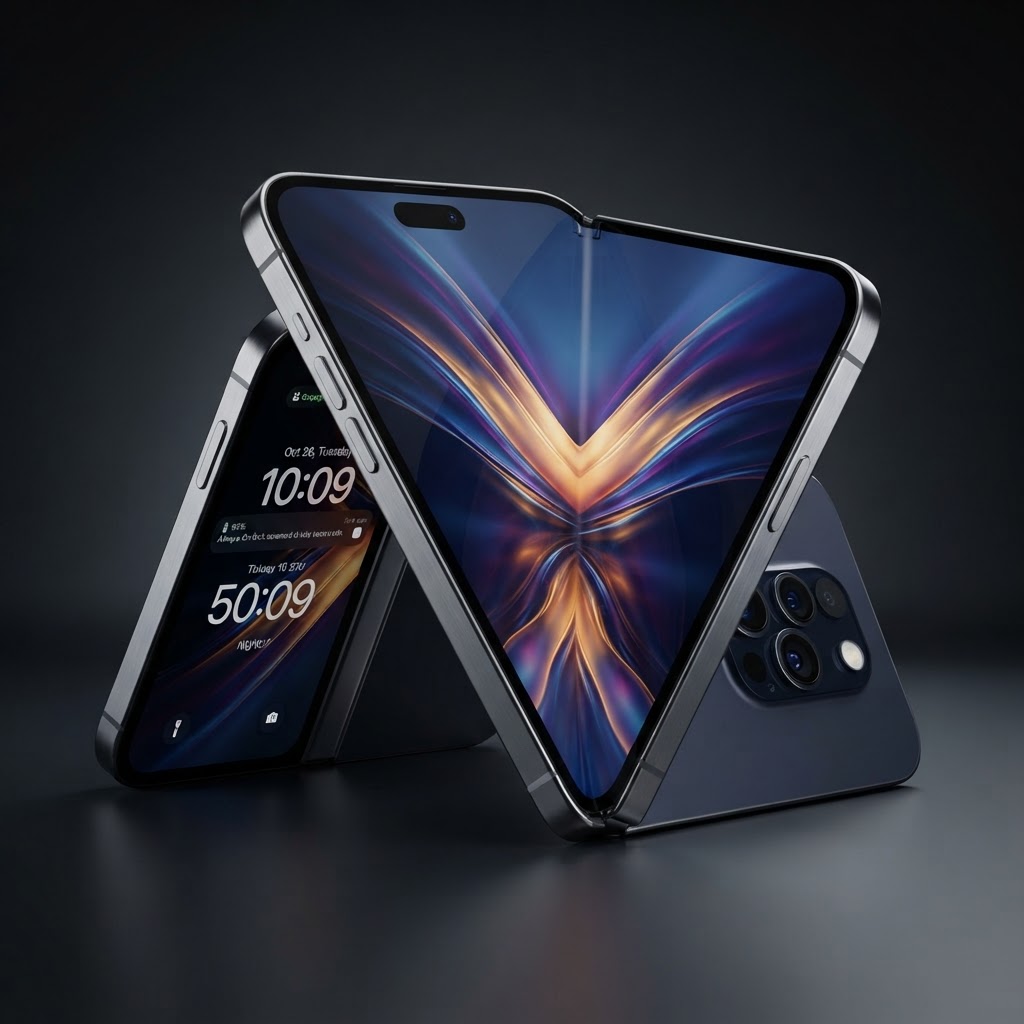
The iPhone Duo is here, and it's not just another phone update. It's Apple's first-ever foldable device, revealed at the "Surprise and Shine" event on September 9, 2026. After years of watching Samsung own the foldable space, Apple finally stepped into the ring. And they came prepared. With a massive 7.6-inch display, a titanium frame, and a starting price of $1,999, the iPhone Duo might be the most exciting iPhone since the original. Or the most expensive experiment Apple has ever tried. Let's break down what makes this phone special, what it costs, and whether it's worth your money.
Why the iPhone Duo Matters Right Now
Think about it this way. Samsung has been making foldable phones since 2019. That's seven years of head start. Most folks expected Apple to wait until the tech was perfect. And that's exactly what they did. But here's the thing: the foldable phone market was actually shrinking. TrendForce reports the segment saw a 20% slump before Apple's entry. That's a big deal.
When the biggest tech company in the world jumps into a declining market, one of two things happens. Either they save the market, or they prove it was never worth saving. The iPhone Duo is Apple's bet that foldables are the future. And the early data backs them up. TrendForce predicts Apple could grab 24.8% of the foldable market in 2026 alone. That's huge for a first-gen product. It means Apple isn't just entering the market. They're aiming to reshape it.
The Foldable Market Before Apple
Before the iPhone Duo, foldables were niche. Samsung's Galaxy Z Fold series led the pack, but adoption was slow. People worried about crease lines, durability, and high prices. The phones were thick when folded. They were expensive to repair. And honestly, they felt like prototypes rather than finished products.
Other companies tried too. Google made the Pixel Fold. Motorola updated the Razr. But none of them broke foldables into the mainstream. The category needed a push from someone with Apple's reach and loyal customer base. That push is finally here.
Apple watched all of this from the sidelines. They waited. And then they built something that fixes nearly every complaint people had about foldables. That patience might be the smartest thing Apple has done in years. Instead of rushing to market, they studied what went wrong and designed around it.
Design and Display: A Foldable Done Right
The iPhone Duo isn't just a phone that folds. It's a phone Apple designed from scratch to make folding feel natural. Let's look at the details.
The Dual Display System
Open the iPhone Duo and you get a 7.6-inch Super Retina XDR display. That's the largest iPhone screen ever made. It's 50% larger than the iPhone 18 Pro Max. The display uses 10 ultrathin layers with a custom nano-texture finish that cuts glare. It hits 3,000 nits peak brightness outdoors. You can actually see it in direct sunlight.
The resolution is 1878 by 2670 pixels at 430 pixels per inch. That's sharp. Text looks crisp, images look detailed, and videos look stunning on a screen this big.
Close it and you get a 5.4-inch outer display. This isn't some tiny cover screen. It has more than 90% of the screen area of an iPhone 18 Pro. You can use it for everything you'd normally do on a phone. Check messages, take photos, scroll social media. All without opening the phone.
Both displays feature ProMotion tech with adaptive refresh rates up to 120Hz. They both have Always-On display, Dynamic Island, True Tone, and P3 wide color. The contrast ratio is 2,000,000:1. These are flagship displays, no compromises.
Build Quality and Durability
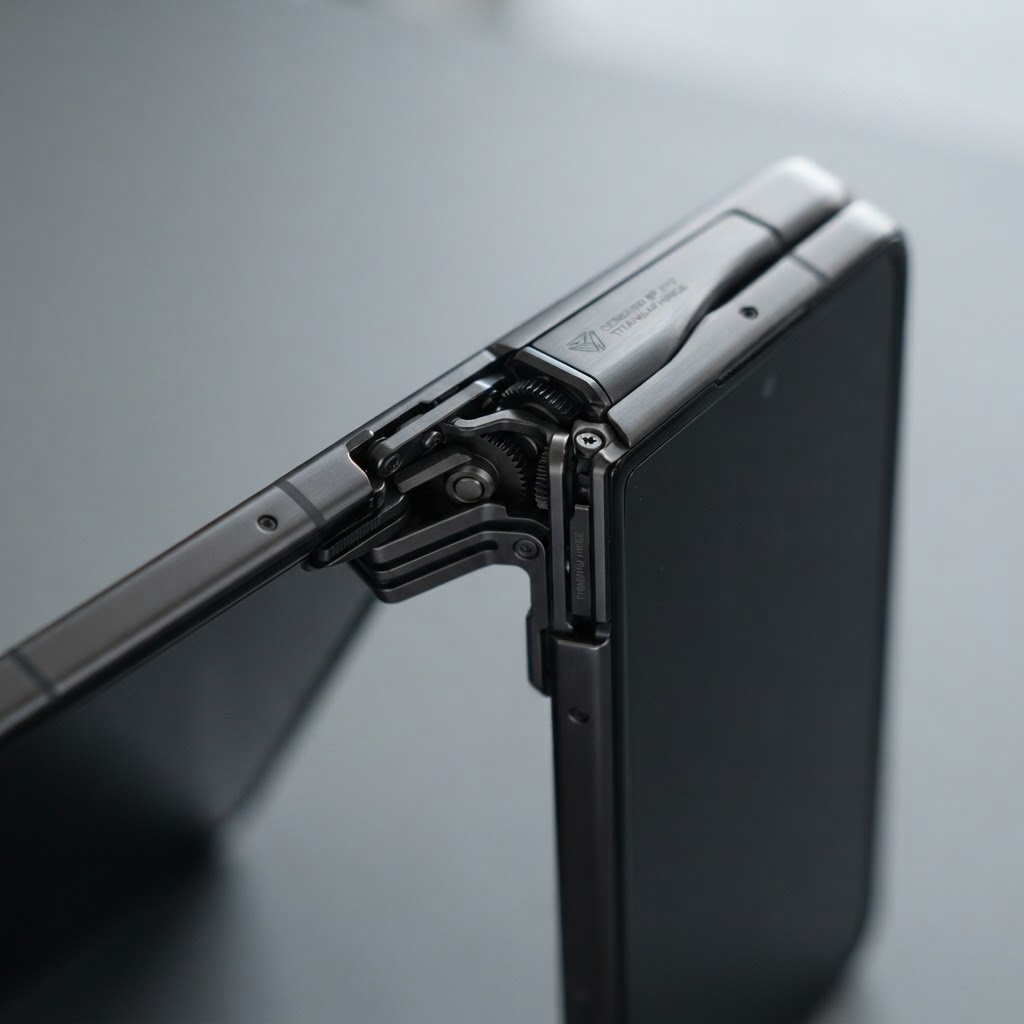
Here's where Apple really flexed. The frame and hinge cover are Grade 5 titanium. That's the same material used in aerospace applications. It's strong, lightweight, and premium. The front and back both use Ceramic Shield for better drop protection. The phone is IP68 water and dust resistant. It can survive in up to 6 meters of water for 30 minutes.
The inner display has a scratch-resistant coating. This directly addresses one of the biggest complaints about foldable screens. And the whole thing weighs just 254 grams. That's lighter than you'd expect for a phone this size.
When closed, the iPhone Duo is 11.3mm thick. It fits in your pocket. When open, it's just 5.2mm thin. That's remarkably slim for a foldable. Samsung's Fold8 is thicker when closed. Apple managed to pack dual batteries, a vapor chamber, and titanium into a thinner profile.
Five Poses, One Phone
Apple didn't just make a phone that folds in half. They designed it to work in five different poses. Landscape mode lets you open it flat for immersive entertainment or Split View multitasking. Portrait mode gives you a wider keyboard and more room to browse.
Closed mode keeps it compact and pocketable. Seated mode lets you stand it up to watch shows or follow workouts. Standing mode uses StandBy for a bedside clock, photos, and widgets.
This is what sets the iPhone Duo apart from other foldables. Apple thought about how people actually use phones. Each pose solves a real problem. You're not just getting a bigger screen. You're getting a phone that adapts to what you're doing.
Performance and Battery: Power on Full Display
The iPhone Duo runs on Apple's new A20 Pro chip. And it's a monster. You get a 6-core CPU with 2 super cores and 4 efficiency cores. That's up to 20% faster than the A19 Pro. The 7-core GPU has Neural Accelerators and hardware-accelerated ray tracing. The Dual 16-core Neural Engine handles AI workloads with ease. And memory bandwidth is up 50% compared to the A19 Pro.
The phone also has an advanced thermal system with a vapor chamber. This means it can handle intense gaming and heavy AI tasks without overheating. That's a common problem with foldables that have less space for cooling. The iPhone Duo solves it by using an internal eSIM design that frees up space for the vapor chamber.
Apple C2 Modem and Connectivity
For the first time, Apple uses its own C2 cellular modem in the iPhone Duo. It supports 5G including both sub-6 GHz and mmWave. There's also a new N1 wireless chip for Wi-Fi 7, Bluetooth 6, and Thread networking. The second-gen Ultra Wideband chip gives better location precision for Find My and device features.
This is a big deal. Apple has been working on its own modem for years. The C2 is the first sign that Apple is serious about controlling its own cellular tech. Better efficiency means better battery life and potentially better signal quality.
Battery Life That Actually Lasts
Foldables are power-hungry. That big display needs juice. Apple solved this with a dual-battery system and an eSIM design that saves space for bigger batteries. The results are impressive. You get up to 44 hours of video playback on the outer display. On the inner display, it's up to 31 hours. And fast charging gives you 50% charge in about 20 minutes with a 60W adapter.
That's not just good for a foldable. It's good for any phone. The dual-battery system is an engineering feat. It shows Apple thought hard about the biggest weakness of foldables and engineered a real solution. If you want to learn more about where battery tech is heading, check out our post on silicon carbon batteries, the next power revolution changing how phones stay charged.
Cameras Built for the Foldable Form
The iPhone Duo has a 48MP Dual Fusion camera system with a Main and Ultra Wide lens. But the real story is the foldable-specific camera features Apple designed. These aren't gimmicks. They solve real problems that every phone owner has faced.
Smart Take
Ever tried to take a group photo and had to rush to get in the frame before the timer fires? Smart Take fixes this. The phone detects when everyone is ready and takes the photo on its own. You can actually be in the picture instead of just taking it. It's the kind of feature that makes you wonder why nobody thought of it before.
Duo Preview and Kid Cue
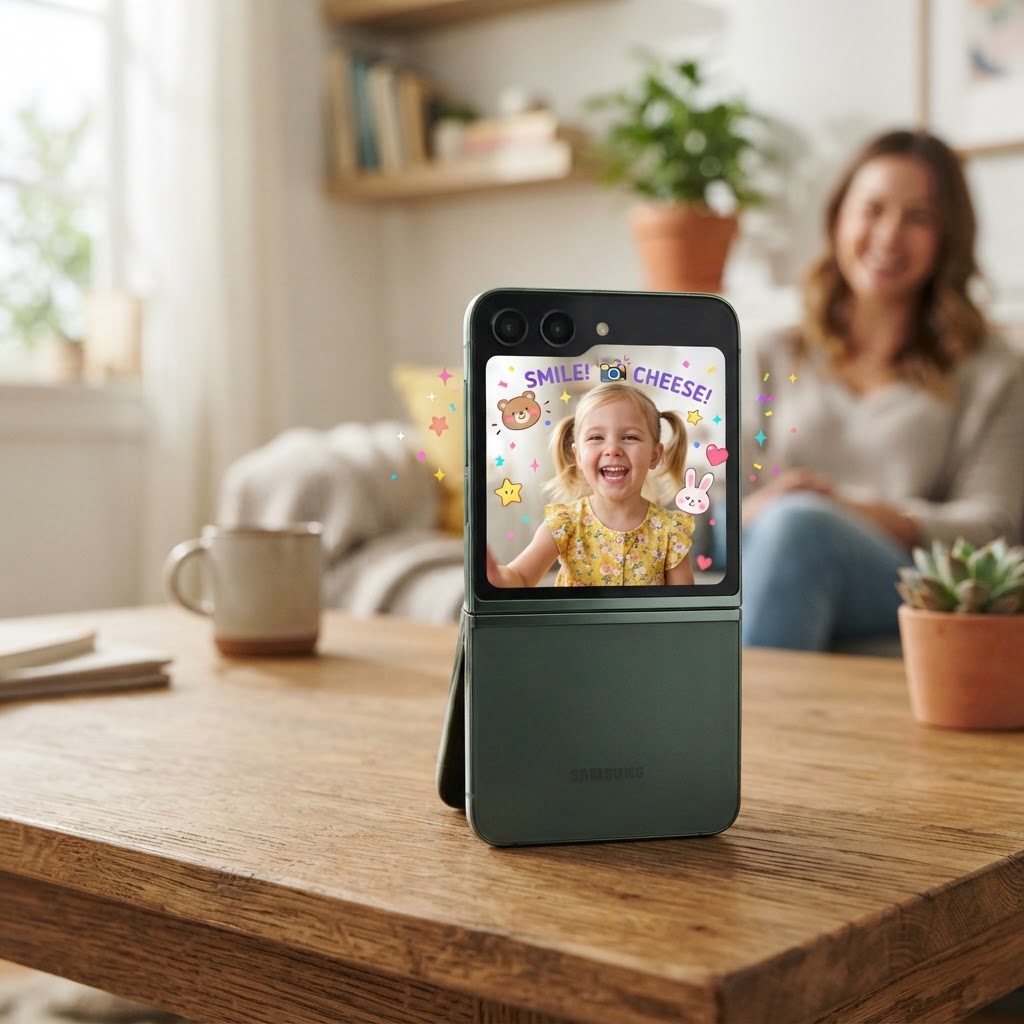
Duo Preview shows a live preview on the outer display. So when someone is taking your photo, you can see how you look and adjust your pose. It's like having a mirror on the back of your phone. No more bad surprises when you check the photo later.
Kid Cue is even smarter. If you've ever tried to get a kid to look at the camera, you know it's nearly impossible. Kid Cue plays playful animations on the outer display to naturally draw children's eyes toward the lens. Parents will love this one. It turns a frustrating photo session into something fun.
Duo FaceTime and Video Features
When you're on a FaceTime call, friends nearby can join using the outer display. No more crowding around one phone or passing it around. It's a small thing, but it makes group calls much easier.
The camera also shoots 4K Dolby Vision video at 120 fps. It supports Cinematic mode up to 4K at 60 fps. Features like Smart HDR 5, Night mode, and Photonic Engine round out the package. The inner display has an under-display camera that's hidden until you need it. No notch, no punch hole. Just a clean, uninterrupted screen. It's the kind of detail that shows Apple's design obsession.
Software and AI: iOS 27 Meets Siri AI
Hardware is only half the story. The iPhone Duo runs iOS 27, which includes experiences designed specifically for the foldable form factor. Apple didn't just stretch apps to fill a bigger screen. They reimagined how iOS works when your phone can fold.
Split View Multitasking
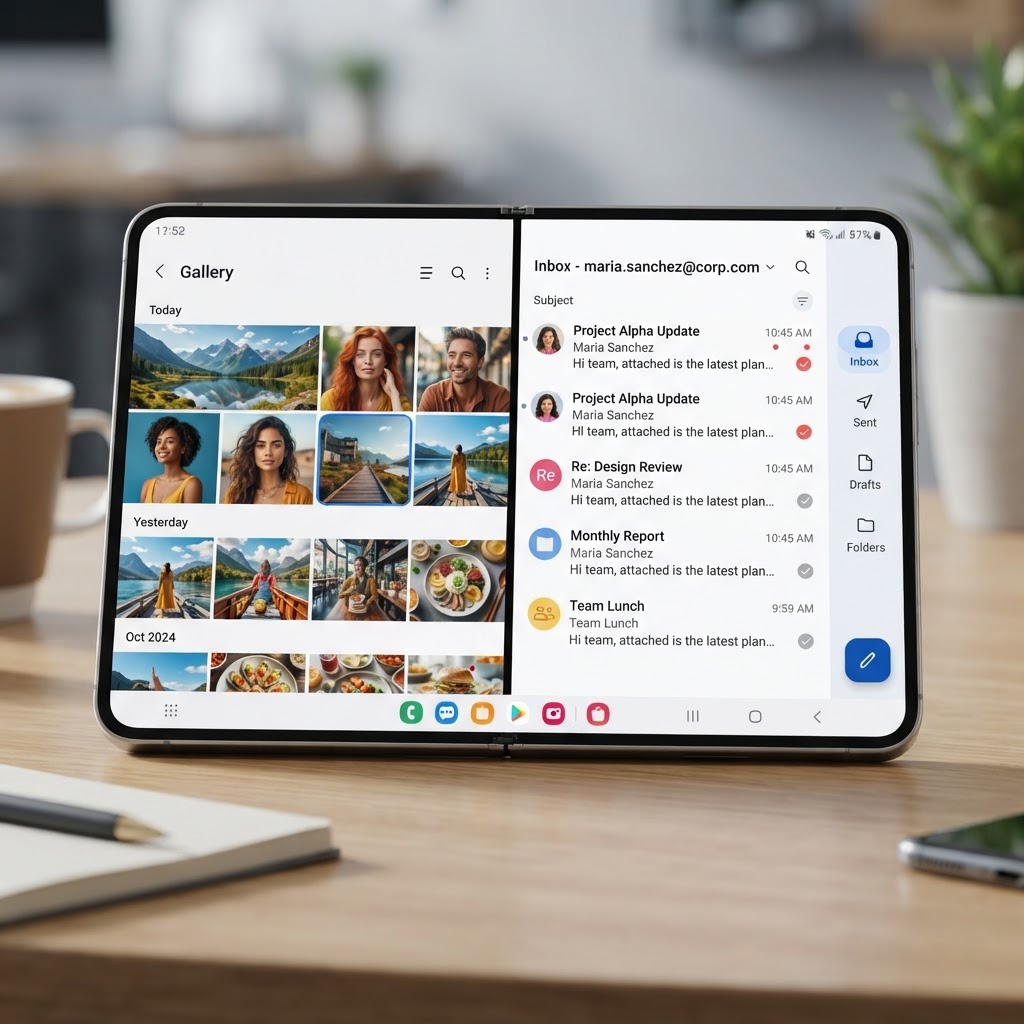
You can run two apps side by side on the inner display. Browse your Photos library on one side. Drag a picture into Mail on the other. It's the kind of multitasking that makes the big screen genuinely useful, not just impressive. This is what foldables should have been doing all along.
Siri AI
The iPhone Duo introduces Siri AI, a new version of Siri that's more personal and conversational. The larger display makes it a great canvas for AI interactions. You can ask questions, get answers, and use a rich conversation window. Siri AI is rolling out in English first. Want to understand how AI is reshaping search and content? Read our guide on AI SEO and how artificial intelligence is rewriting search rules in 2026.
The App Compatibility Question
Here's the honest part. When the iPhone Duo launches in October, many third-party apps won't be fully optimized for the foldable display. Apple has three compatibility modes depending on whether apps target iOS 26, iOS 27.0, or iOS 27.1.
The situation should improve as developers update their apps. Apple has already launched developer resources to help. But early adopters might experience some growing pains. That's the trade-off for being first in line. If you want the polished experience, waiting a few months for the app ecosystem to catch up might be worth it.
Safety Features Worth Knowing
The iPhone Duo includes serious safety tech. Emergency SOS via satellite lets you contact emergency services when you have no cellular signal. Crash Detection can call for help if you're in a car accident. Messages via satellite lets you text when you're off the grid. Find My via satellite helps locate your device anywhere.
These features work because of the C2 modem's satellite connectivity. Apple is also extending free satellite access for existing iPhone users for another year. That's a meaningful safety net that could literally save lives.
Price, Availability, and Should You Buy It?
Let's talk money. The iPhone Duo starts at $1,999 for 256GB. The 512GB model is $2,199. The 1TB is $2,599. And the 2TB maxes out at $3,199. Pre-orders start October 16 at 5 AM Pacific. The phone ships October 23. It comes in two colors: Night Sky and Star White.
Is $1,999 a lot for a phone? Yes. But it's in line with Samsung's Galaxy Z Fold8 pricing. And Apple is betting the experience justifies the price. The titanium build, the camera features, the iOS integration, the battery life. That's what you're paying for.
One surprise: the iPhone Duo uses Touch ID in the side button, not Face ID. This makes sense. The under-display camera is for FaceTime, not Face ID. And Touch ID works whether the phone is open or closed. It's a practical choice that keeps authentication simple.

Who Should Buy the iPhone Duo
If you consume a lot of media on your phone, the iPhone Duo gives you the biggest, best display of any iPhone. Movies, shows, and games look incredible on a 7.6-inch screen. If you multitask heavily, Split View is genuinely useful. And if you're a creator who takes lots of photos, the foldable camera features are innovative and solve real problems.
Who Should Wait
If you're happy with your current phone and don't feel limited by a standard screen, the iPhone Duo is a luxury, not a need. If you're worried about app compatibility, waiting for the ecosystem to mature is smart. And if $1,999 is more than you'd normally spend on a phone, the iPhone 18 Pro gives you most of the same performance for less money.
Protecting Your Investment
If you buy one, get a case. Apple's official case is $79. The Folio with kickstand is $129. Third-party options from Spigen start around $60. Screen protectors are essential too. You've got two screens to protect now, not one. And don't forget a fast charger. You'll need a 60W adapter to get that 20-minute fast charging.
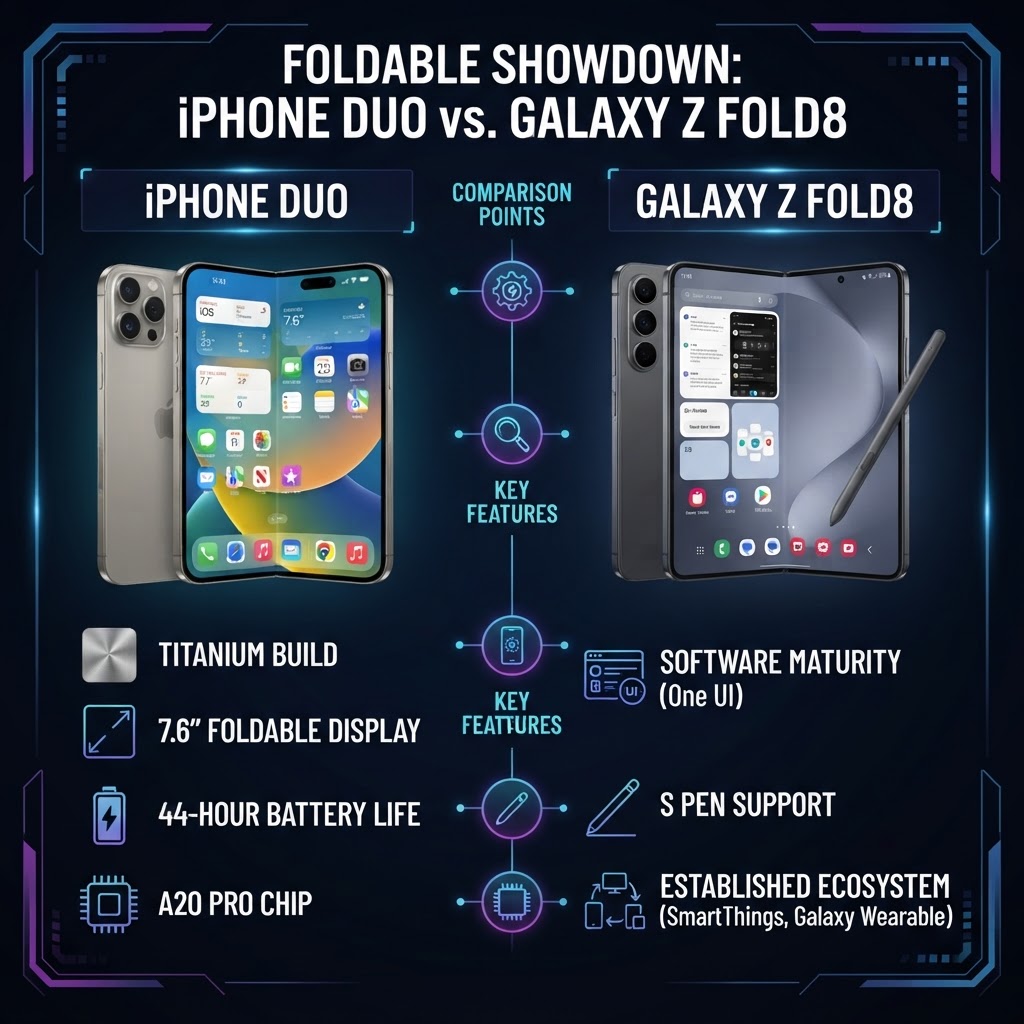
iPhone Duo vs Samsung Galaxy Z Fold8
The comparison everyone is making. Samsung has seven years of foldable experience. Apple is just starting. But here's what matters.
Apple wins on build quality with titanium, battery life with the dual-battery system, and deep iOS integration. Camera features like Smart Take and Duo Preview are unique to the iPhone Duo. The nano-texture display finish and under-display camera are also Apple advantages.
Samsung wins on software maturity, app ecosystem, and S Pen support. They've had years to refine the foldable experience. Their multitasking software is more polished. And the S Pen is genuinely useful for note-taking and drawing.
Both are excellent foldables. If you're in Apple's ecosystem, the Duo is the obvious choice. If you're on Android, the Fold8 remains strong. The real winner? Consumers. Competition drives innovation, and having Apple in the foldable game will push Samsung to do better too.
What's Next for the Foldable iPhone
The iPhone Duo is a first-generation product. It's only going to get better. Apple has a track record of rapid improvement. The first Apple Watch was chunky and limited. Within three generations, it became the dominant smartwatch. The first AirPods were basic. Now they're the gold standard for wireless earbuds.
Expect future iPhone Duo models to be thinner, lighter, and cheaper. Expect developers to optimize apps as adoption grows. And expect the foldable market to expand now that Apple is in it. TrendForce predicts Apple could capture nearly 25% of the foldable market in 2026. That's not just good for Apple. It's good for the entire category, which has been waiting for a catalyst.
The iPhone Duo might be exactly that catalyst. And if history tells us anything about Apple, the second generation will be even better. But for now, the first generation is pretty remarkable.
Frequently Asked Questions
How much does the iPhone Duo cost?
The iPhone Duo starts at $1,999 for 256GB storage. The 512GB model costs $2,199, 1TB is $2,599, and 2TB is $3,199. It comes in Night Sky and Star White. Pre-orders begin October 16, 2026, with general availability starting October 23.
What is the display size of the iPhone Duo?
The inner display is 7.6 inches, making it the largest iPhone display ever. It's 50% bigger than iPhone 18 Pro Max. The outer display is 5.4 inches with over 90% of iPhone 18 Pro's screen area. Both feature ProMotion 120Hz and 3,000 nits peak brightness.
Does the iPhone Duo have Face ID?
No, the iPhone Duo uses Touch ID built into the side button instead of Face ID. This works whether the phone is open or closed. The inner display has an under-display camera for FaceTime calls, but it's not used for Face ID authentication.
When can I buy the iPhone Duo?
Pre-orders start October 16, 2026, at 5 AM Pacific Time. The phone ships and hits stores on October 23, 2026. It was announced at Apple's "Surprise and Shine" event on September 9, 2026, alongside the iPhone 18 Pro.
Is the iPhone Duo water resistant?
Yes, the iPhone Duo has an IP68 rating for water and dust resistance. It can survive in up to 6 meters of water for 30 minutes. It also features a Grade 5 titanium frame, Ceramic Shield on both sides, and a scratch-resistant coating on the inner display.
How is the iPhone Duo's battery life?
The iPhone Duo uses a dual-battery system delivering up to 44 hours of video playback on the outer display and 31 hours on the inner display. Fast charging gives 50% charge in about 20 minutes with a 60W adapter. The Apple C2 modem also improves power efficiency.


Comments
Post a Comment