Digital Detox in 2026: A Science-Backed Guide to Breaking Screen Addiction

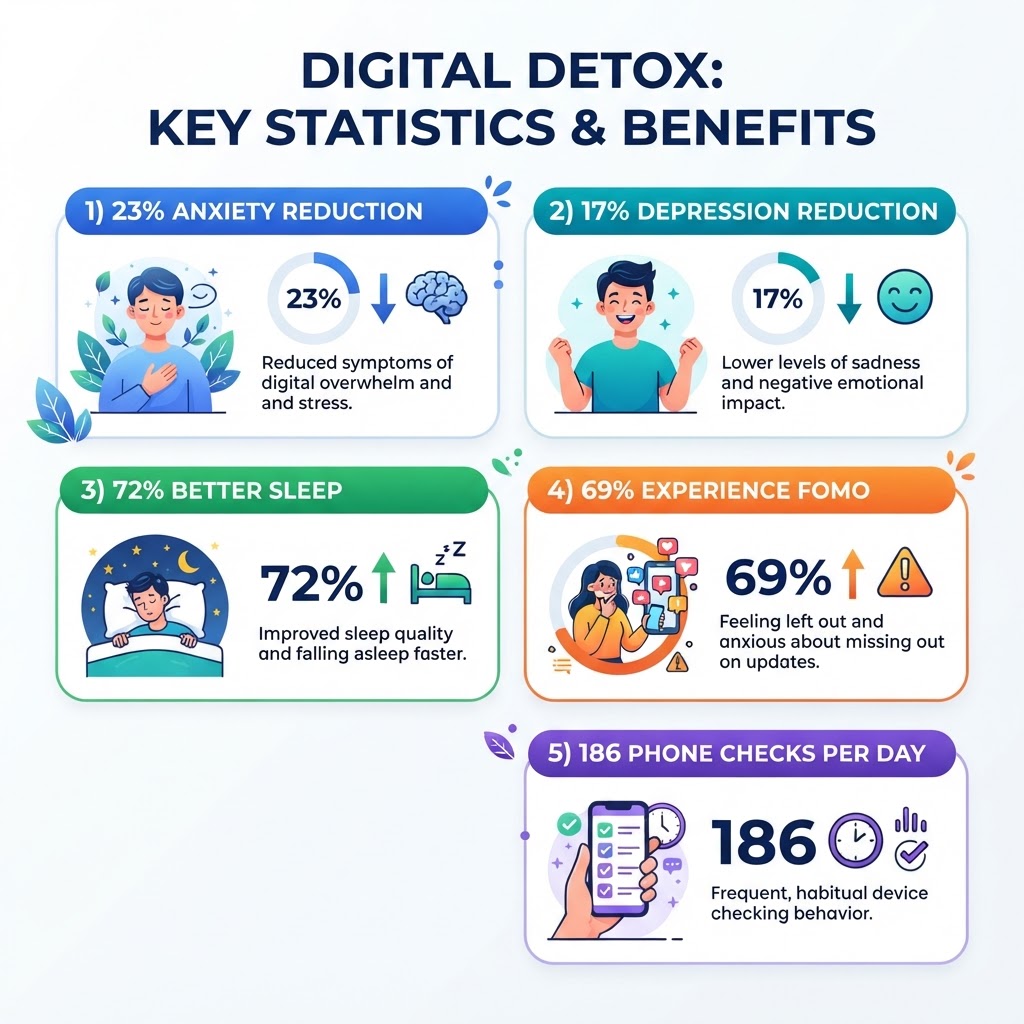
Think about the last time you went a full hour without checking your phone. Could you do it? If you're like most people, the answer is no. A digital detox might be exactly what you need. Americans check their phones an average of 186 times per day. That's once every five minutes while awake. And it's getting worse each year.
In 2026, the chat around screen addiction has hit a tipping point. Google Trends data shows searches for "digital detox" are nearly three times higher than in early 2025. People are waking up to the fact that their bond with tech has turned toxic. The good news? Science says a break can work wonders — if you do it right.
The cost of constant connectivity is steep. Research links heavy phone use to poor sleep, weaker focus, and rising anxiety. But here's the thing: you don't have to throw your phone in a lake to feel better. Small, steady changes can make a huge difference. This guide walks you through what works, what the science says, and how to build habits that last. If you're curious about how AI is reshaping the way we find information online, check out our deep dive on AI SEO.
Why We Need a Digital Detox More Than Ever
Let's be honest. Most of us don't just use our phones. We live on them. The average phone user worldwide spends about 4 hours and 37 minutes per day staring at a screen. Americans do even more — about 5 hours and 16 minutes daily. That's over a third of your waking hours gone to scrolling, tapping, and swiping.
Think about what else you could do with five extra hours a day. You could learn a language. Get fit. Start a side hustle. Read a book a week. Instead, most of that time goes to watching short videos and checking feeds that won't matter tomorrow.
The Numbers Behind Our Screen Addiction
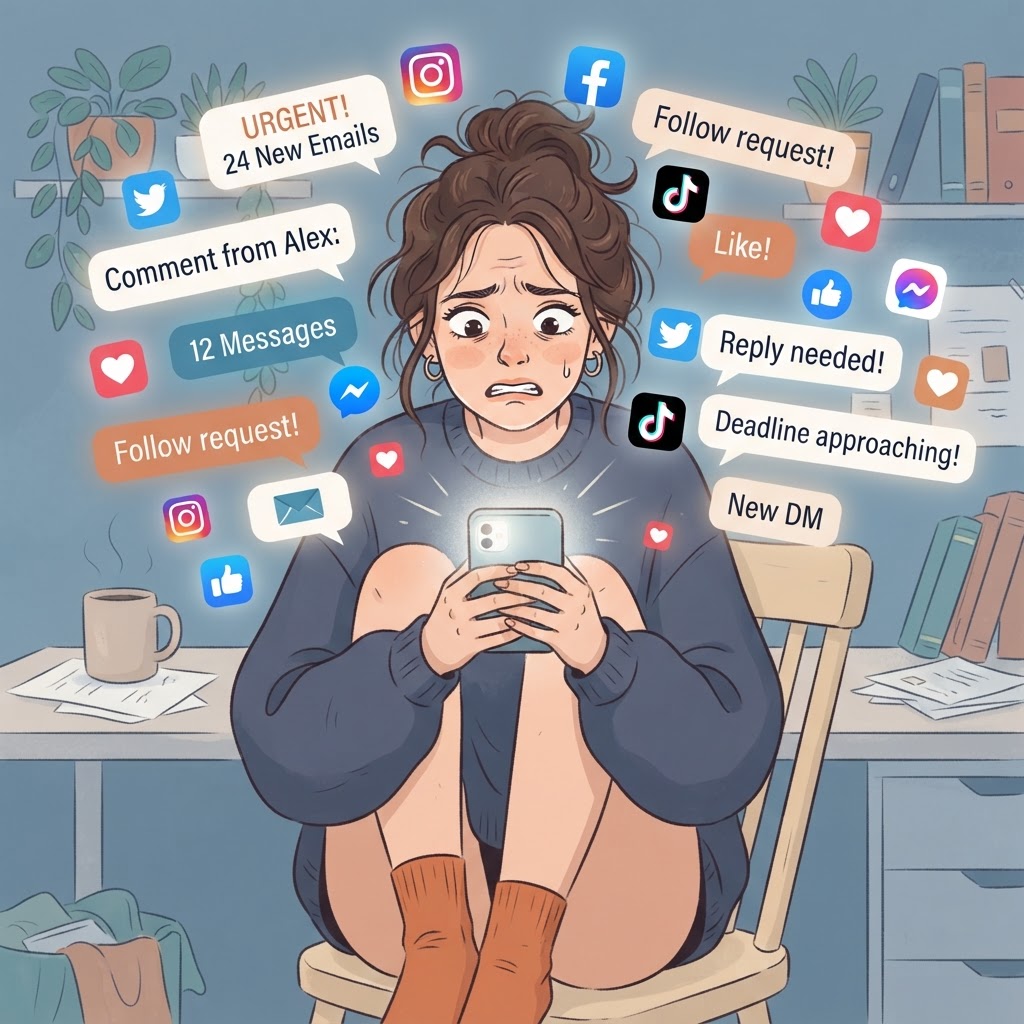
Here's what really hits home. Teens get an average of 240 app alerts per day. That's a buzz, a chime, or a banner every few minutes from dawn to dusk. Each alert pulls your mind away from what you were doing. And studies show it can take up to 23 minutes to fully refocus after one break.
Now think about this. 60% of Gen Z adults spend at least four hours a day on social media alone. 27% spend seven or more hours daily. That's basically a full workday on Instagram, TikTok, and YouTube. It's not just young people either. Adults aged 30 to 49 check their phones around 150 times a day. Even seniors are getting hooked. The 65-plus crowd doubled their screen time between 2019 and 2025.
The global picture is just as stark. Screen time rose across every age group in every region since 2020. In Asia, the average user spends over 5 hours per day on their phone. In Europe, it's about 4 hours. In Africa, smartphone adoption is climbing fast, and so is screen time. This isn't a US problem. It's a human problem.
FOMO and the Mental Health Toll
Why can't we put the phone down? One word: FOMO. About 69% of millennials and Gen Z feel the fear of missing out on a regular basis. That nagging feeling that everyone else is having more fun drives endless checking.
The mental health impact is real. Studies link heavy social media use to higher rates of anxiety, depression, and loneliness. The constant comparison game takes a toll. You see everyone's highlight reel while living your own unedited life. It wears down your self-image over time.
A global survey of 15,000 people across 24 countries found that 63% planned to take a break from screens in 2026. The digital wellness market has grown past $60 billion. People aren't just talking about detoxing. They're spending real money on retreats, apps, and coaching to help them unplug.
Digital detox retreats are now a real thing. You can book a weekend at a cabin with no Wi-Fi. You can join group hikes where phones stay in the car. Some resorts even lock your phone in a safe at check-in. The demand is growing because people are desperate for a break from their own devices.
What the Science Says About Digital Detox Benefits
Now here's the good part. Research shows that a digital detox isn't just a fad. It produces real, measurable changes in mental health. And you don't need to quit for months to see results.
Mental Health Improvements
A landmark 2022 study from the University of Bath found that taking one week off social media cut anxiety by up to 23%. Depression symptoms dropped by 17%. Let that sink in. Seven days. No therapy. No meds. Just putting the phone down.
Another study from the University of Pennsylvania asked folks to limit social media to 30 minutes per day for three weeks. The results? Big drops in loneliness and depression. You don't even need to go cold turkey. Just cutting back helps.
A 2025 study in Nature confirmed these findings. A one-week social media break boosted overall well-being. It reduced depression and anxiety in a randomized trial. The evidence keeps growing. Less screen time means better mental health.
In a separate survey, 68% of people who tried a digital detox said their mood got better. That's real people, not just lab numbers. They felt calmer, happier, and more in control of their own lives. One participant said it felt like waking up from a fog they didn't know they were in.
Better Sleep and Physical Health

Here's something you might not expect. 72% of detox participants reported better sleep. That makes sense when you think about it. The blue light from screens blocks melatonin, the hormone that helps you fall asleep. Scrolling before bed keeps your brain wired when it should be winding down.
Studies show that people who use phones before bed take longer to fall asleep and get less deep sleep. Over time, poor sleep adds up. It weakens your immune system, hurts your memory, and raises your risk of weight gain.
Removing screens from the bedroom was the single most impactful change people made. When the phone isn't within arm's reach, you're not tempted to check it at 2 AM. You fall asleep faster, sleep deeper, and wake up actually rested.
The physical perks go beyond sleep. People who cut screen time tend to move more. They go for walks, hit the gym, or just do things around the house. Less sitting means better heart health, lower risk of weight gain, and more energy. Some detoxers also report fewer headaches and less eye strain after a week away from screens.
Focus and Productivity Gains
Think about how much you could do if your phone wasn't buzzing every five minutes. A digital detox doesn't just help you relax. It helps you focus.
When you remove the constant pings, your brain can settle into deep work. You finish tasks faster and do them better. Many people say they feel sharper after just a few days of less screen time. The brain fog lifts. The scattered feeling fades. You can think clearly again.
Some companies are catching on too. Plenty of firms now offer no-email-after-hours rules and phone-free meeting rooms. They've found that fewer alerts mean better focus, which means better work. A focused worker is worth two distracted ones. It's simple math. If you reclaim just one hour of lost focus per day, that's 365 hours a year. That's nine full work weeks.
Why Most Digital Detoxes Fail (And How to Succeed)
Here's the honest truth that most articles skip. 80% of people who try a digital detox relapse within two to four weeks. App usage bounces back to 85% of old levels within ten days. That's sobering.
The Rebound Problem
Why do so many detoxes fail? It's the same reason crash diets fail. You're fixing the habit without fixing the root cause. You delete Instagram for a week, feel great, then reinstall it the moment you're bored.
The apps are still on your phone. The alerts are still on. The habits are still there, pushed down by willpower. And willpower runs out. Every time you're tired, stressed, or lonely, the old patterns come right back.
The Replacement Strategy

Here's what actually works. A study in the Journal of Environmental Psychology found that people who swapped screen time for outdoor activity reported 31% higher life satisfaction. That beat folks who just removed screens without adding anything new.
You can't just create a void. You have to fill it. If you scroll for an hour before bed, you need something to do instead. Read a book. Call a friend. Do some stretching. Go for a walk. The replacement matters as much as the detox.
The best detoxers don't go cold turkey. They make small changes, tweak their space, and build new habits that last. Think of it as a lifestyle shift, not a quick fix. The goal isn't to never use your phone again. It's to use it on purpose instead of by habit.
Your Step-by-Step Digital Detox Plan
Ready to try? Here's a plan that works, based on what the research says about success.
Week 1: Awareness and Assessment
Before you change anything, figure out where you stand. Most people guess wrong about their screen time. Here's what to do:
Check your phone's built-in tracker. On iPhone, go to Settings, then Screen Time. On Android, go to Settings, then Digital Wellbeing. Write down your daily average. Be honest.
Track which apps eat the most time. Is it social media? Streaming? Gaming? News? Knowing your weak spots helps you target them.
Notice your triggers. When do you reach for your phone? When you're bored? Stressed? Waiting in line? Lonely? Seeing your patterns is the first step to changing them.
Week 2: Gradual Reduction
Now start cutting back. Not all at once. Go slowly. The research is clear that sudden changes rarely last.
Set app limits. Use your phone's tools to cap social media at 30 minutes per day. That's the exact amount the Penn study used with great results.
Turn off extra alerts. You don't need to know every time someone likes a post. Keep calls and texts from real people. Mute the rest.
Create phone-free zones. The bedroom is the big one. Charge your phone in another room at night. Buy a cheap alarm clock. This one change can fix your sleep.
Building Lasting Habits
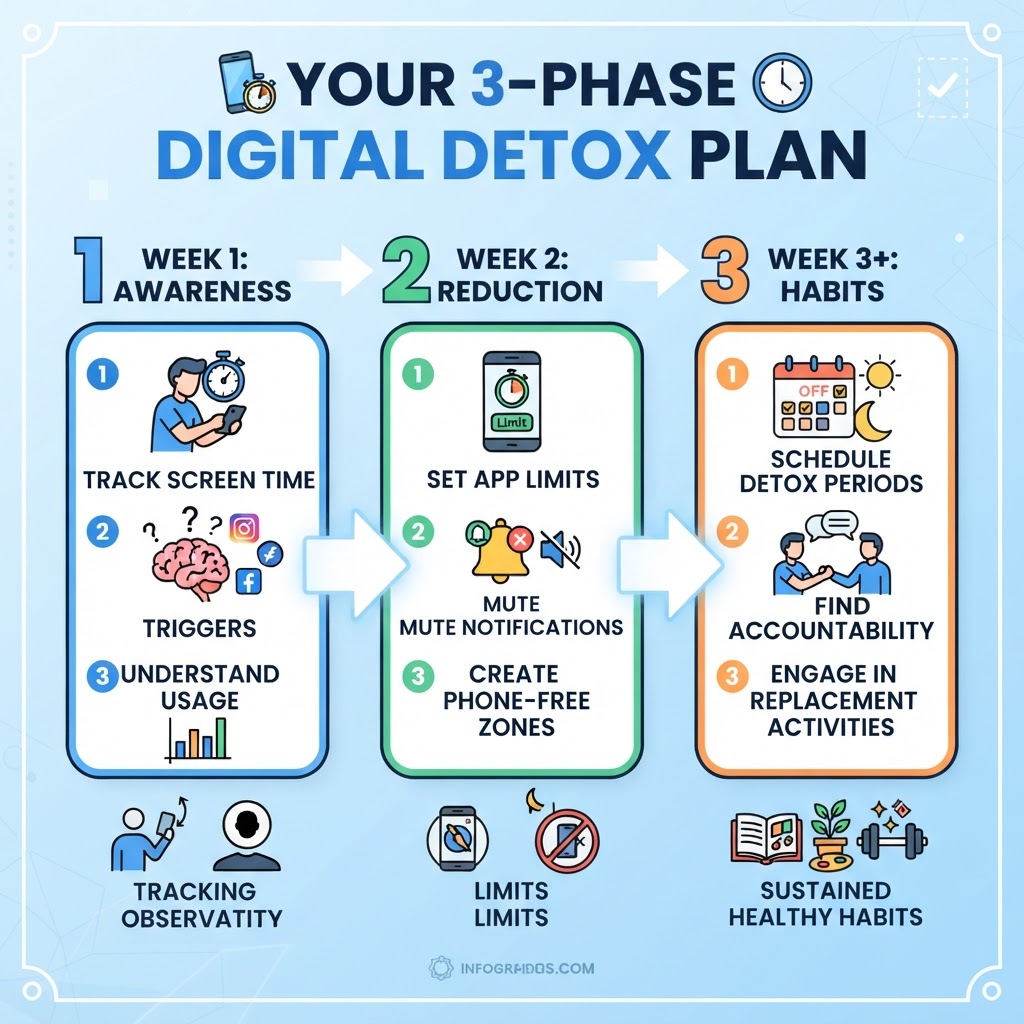
By week three, you're ready to build habits that stick. Research says it takes about 66 days to form a new habit. So keep going.
Schedule regular detox times. Maybe a phone-free Sunday. Or no screens after 8 PM on weekdays. Pick what fits your life and stick with it.
Find a buddy. Tell a friend or family member about your goals. Better yet, do it together. Studies show that social support boosts success rates a lot. When someone else is counting on you, you're less likely to quit.
Tools and Apps That Actually Help
It's a bit funny that apps exist to help you use your phone less. But the right tools make a real difference.
Built-In Phone Features
Both major platforms now pack strong screen tools. Apple's Screen Time shows usage reports, sets app limits, and schedules downtime. Android's Digital Wellbeing does the same plus Focus Mode, which pauses distracting apps.
These tools are free and work well. Start here before paying for anything else.
Third-Party Detox Apps
If you need more help, try these. Forest grows a virtual tree while you stay off your phone. Kill the app and the tree dies. Freedom blocks distracting apps on all your devices at once. Opal uses AI to learn your habits and block things at the right times.
Pick one tool and stick with it. Don't download five apps and spend your time managing them.
Practical Tips for Long-Term Digital Wellbeing
Here are quick tips to keep your detox going:
Go grayscale. Switch your screen to black and white. It sounds odd, but the lack of color makes scrolling far less fun. Social apps use bright colors on purpose.
Delete social apps from your phone. Use the browser instead. The extra step cuts down on impulsive checking. Web versions are less sticky by design.
Keep your phone out of sight at meals and work. Out of sight really means out of mind. Even a phone on the desk drains your focus.
Fill your time with real things. Walk. Cook. Call someone. Paint. Build something. The goal isn't less phone — it's more life.
Be kind to yourself. You're breaking years of habit. Slip-ups happen. Just get back on track fast. Don't let one bad day undo a week of progress. Want another way tech is changing in 2026? Read how silicon carbon batteries are extending phone battery life — so you can use your phone less, not charge it forever.
Conclusion
A digital detox in 2026 isn't about hating tech. It's about taking back your focus, your time, and your peace of mind. The science is clear: even one week off can cut anxiety by 23%, fix your sleep, and sharpen your focus. The trick is to treat it as a lifestyle shift, not a quick cleanse.
Start small. Be steady. Fill your time with things that make you feel alive. Your brain, your body, and your friends will thank you. The phone will still be there when you need it. But for the first time in a while, you'll be the one choosing when to pick it up.
Frequently Asked Questions
How long should a digital detox last?
Research shows benefits from as little as one week. The University of Bath study found big drops in anxiety and depression after seven days. For lasting change, studies suggest about 66 days to form new habits. Start with a week and build from there.
What are the main benefits of a digital detox?
The top benefits are less anxiety, better mood, improved sleep, and sharper focus. Studies show up to 23% anxiety drop and 72% of people report better sleep. Many also feel closer to friends and get more exercise.
Can a digital detox improve sleep?
Yes. Removing screens from your bedroom is the single best change you can make. Blue light from phones blocks melatonin, making sleep harder. When people stop scrolling at night, they fall asleep faster and wake up rested.
Is it possible to do a partial digital detox?
Yes. You don't need to quit everything. The Penn study found benefits from just 30 minutes of social media per day. Try screen-free weekends, no-phone evenings, or removing one app at a time. Partial detoxes often last longer.
Why do most people relapse after a digital detox?
About 80% return to old habits within two to four weeks. The main causes are unchanged phone settings, unchecked needs like boredom, and lack of support. Success comes from changing your space, finding new things to do, and having a buddy.
What should I replace screen time with during a detox?
Studies show that outdoor activity gives 31% higher life satisfaction versus just removing screens. Good picks include walking, reading, calling friends, cooking, or trying a new hobby. Have a plan ready for the times you'd normally scroll.


Comments
Post a Comment