Kimi Antonelli Italian Grand Prix Win: The Monza Comeback That Made History
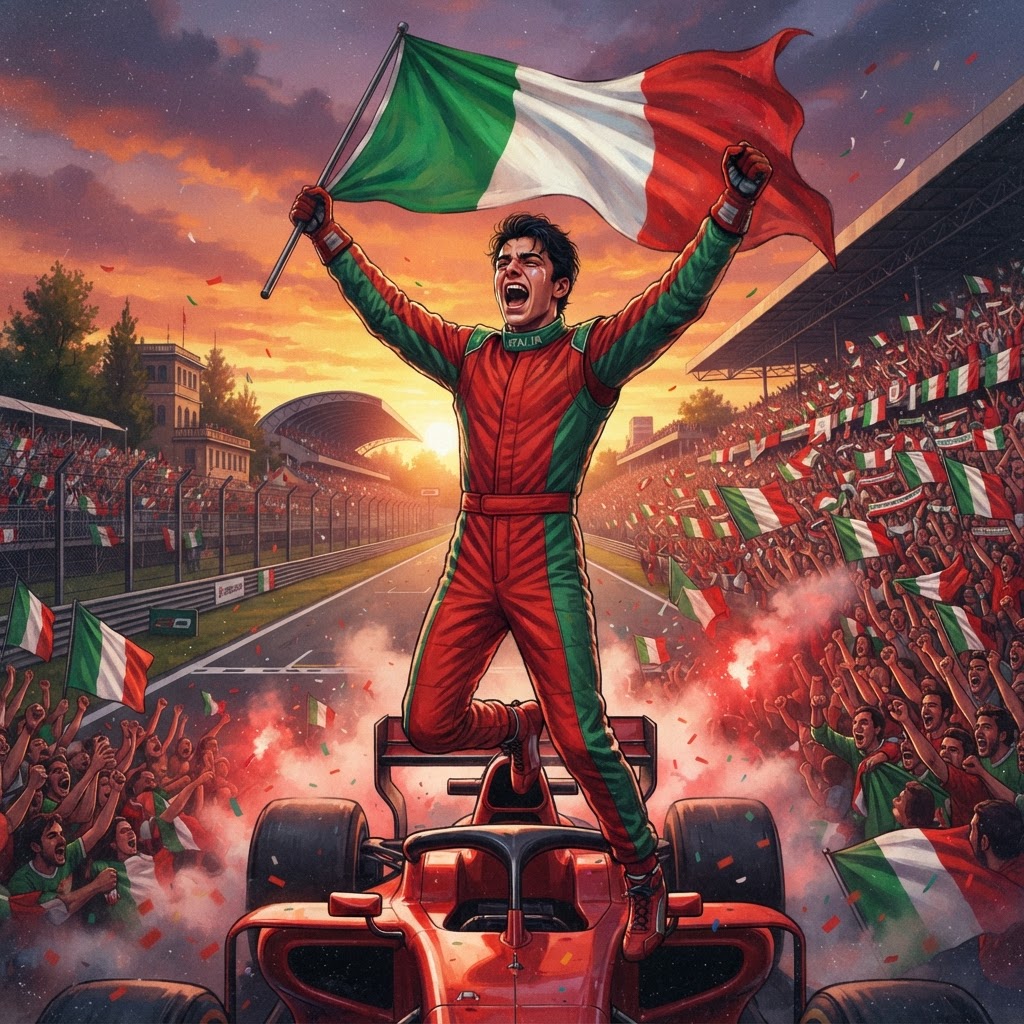
Kimi Antonelli Italian Grand Prix victory sounds like the kind of headline a screenwriter would reject for being too dramatic. A teenager starts his home race from 19th place, spends the afternoon hunting down experienced champions, and crosses the line first at Monza. Yet that is exactly what happened on Sunday. Andrea Kimi Antonelli won the 2026 Italian Grand Prix for Mercedes, ending Italy's 60-year wait for a home Formula 1 winner.
I have watched plenty of races that were called historic before the first corner. This one earned the word. Antonelli did not inherit a quiet win after everyone else made mistakes. He fought through traffic, managed a damaged-looking weekend, handled enormous pressure, and turned the most difficult starting position of his young career into the loudest afternoon of his life.
The result also explains why the Kimi Antonelli Italian Grand Prix story spread so quickly online. It was not just a result on a timing screen. It had a home crowd, a huge recovery drive, a famous circuit, a title race, and a young driver who had already been carrying the hopes of an entire country.
Kimi Antonelli Italian Grand Prix victory ends a 60-year wait
Italy has never lacked famous Formula 1 drivers. Alberto Ascari, Nino Farina, Michele Alboreto, and many others gave the country reasons to dream. But the modern wait for a home winner had become almost absurd. Monza had produced emotional podiums, painful retirements, and dramatic Ferrari weekends, but an Italian driver had not won the Italian Grand Prix for six decades.
Antonelli changed that in one afternoon. The 19-year-old Mercedes driver became the first Italian in 60 years to win the race at Monza. The statistic sounds clean, but it does not capture the pressure sitting behind it. Every Italian driver who appears at this track is asked about the past. Every good lap is compared with a legend. Every mistake becomes a national conversation.
Why the Monza record matters so much
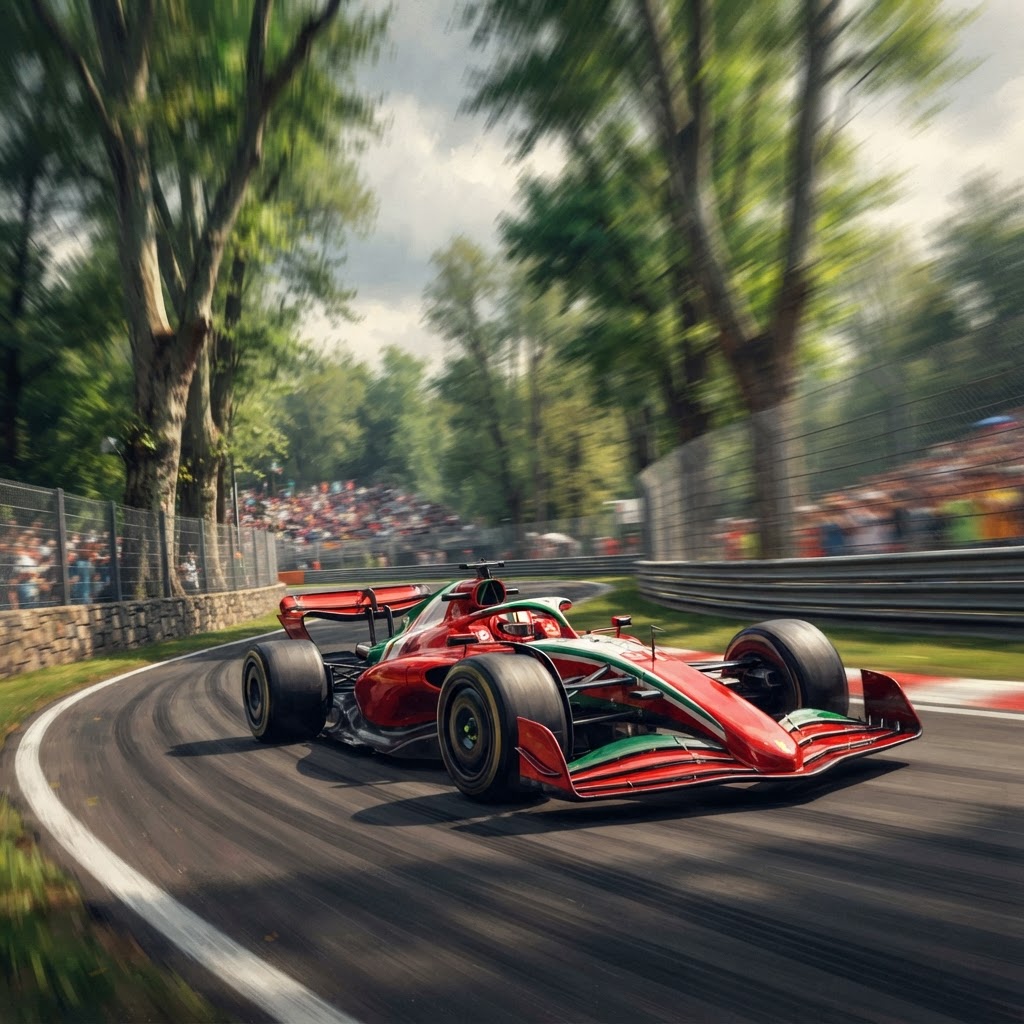
Monza is not just another stop on the Formula 1 calendar. It is one of the sport's oldest and fastest circuits, with long straights, heavy braking zones, and corners that punish even a tiny error. The track is surrounded by a huge, passionate crowd, and the sound changes when an Italian driver appears on the giant screens.
That setting makes a home win different from a normal victory. A driver is not only racing rivals. He is racing noise, expectation, family history, and the fear of disappointing people who have waited for this moment longer than he has been alive.
How Kimi Antonelli went from 19th to first at Monza
The most remarkable part of the result was the starting position. Antonelli began the Italian Grand Prix in 19th after a grid penalty and a difficult qualifying situation. At a circuit where track position usually decides the race, that looked close to a disaster. The easy prediction was that he might recover a few places and finish somewhere in the points.
Instead, Mercedes built a race around patience. Antonelli avoided the early chaos, protected his tyres, and picked off cars when the opportunity appeared. He did not try to win the race on the opening lap. That would have been exciting for television and terrible for his tyres. The comeback grew in small pieces.
The opening laps changed the shape of the race
Charles Leclerc's crash on the second lap brought a frightening moment and changed the rhythm of the event. Leclerc walked away, which was the most important news, but the incident also created a new tactical problem for the remaining field. The restart and interruptions gave drivers less room for a calm, predictable strategy.
Antonelli used the disorder better than almost anyone. He kept his Mercedes out of trouble and continued moving forward. A car that was outside the normal fight for victory suddenly became a threat. You could almost feel the race recalculating itself every few laps.
Overtaking without destroying the tyres
It is easy to describe a comeback as a list of overtakes. That misses the harder part. At Monza, passing another Formula 1 car requires a good exit, a strong slipstream, confidence under braking, and enough tyre life to repeat the move later. A driver who attacks every car like it is the final lap may gain places quickly, then lose the race before the finish.
Antonelli's drive was impressive because it mixed speed with restraint. He waited when the pass was not safe. He attacked when the rival was vulnerable. He used the long straights, but he also positioned the car early enough to avoid desperate braking. That is not the style of someone simply having a lucky day. It is the style of a driver who understood the whole race.
Why the 2026 Italian Grand Prix became a title-race thriller
Antonelli arrived at Monza as the Formula 1 championship leader. Reports before the race placed him on 242 points, with Mercedes teammate George Russell also among the main title contenders. That meant the Italian Grand Prix was not only a personal homecoming. It was a major chapter in the championship.
A poor result could have made the standings tight. A podium would have protected his advantage. A win from 19th changed the conversation completely. Suddenly, rivals were not asking whether Antonelli could survive the pressure. They were asking whether anyone could stop him.
George Russell and Max Verstappen could not hold him back
Antonelli's Mercedes teammate George Russell finished in the leading group, while Max Verstappen remained one of the drivers capable of making any race uncomfortable. Both brought more experience into the fight, but experience did not give them an answer for Antonelli's pace across the full distance.
The result was especially important for Mercedes. The team had the fastest package on a day when strategy, tyre management, and nerves mattered as much as raw speed. A one-two style performance also gave Mercedes confidence that its 2026 car could work on different circuit types, not just in a perfect qualifying window.
The youngest champion question is no longer silly
Before this weekend, talk of Antonelli becoming the youngest Formula 1 champion could sound like a fan's dream. Now it has a stronger foundation. He is winning races, leading the standings, and handling bad starting positions without panicking. The season is not finished, and one race never settles a championship, but the question has moved from “Could he?” to “What has to go wrong for him not to?”
That is a dangerous question because motorsport can punish confidence quickly. Reliability, accidents, weather, penalties, and a rival's late-season run can change everything. Still, Antonelli's Monza drive made the title conversation feel real rather than promotional.
Kimi Antonelli's home pressure was bigger than the grid penalty
Most drivers would prefer to start a home race near the front. Antonelli had the opposite. The penalty put a mountain in front of him, and every camera in Italy was pointed at the climb. The crowd wanted a miracle before the lights went out, but the same crowd would have remembered every mistake if the race went badly.
Now you might be thinking that professional racers are used to pressure. They are, but pressure is not a switch that can be turned off. A home Grand Prix adds family members, childhood friends, national media, political attention, and fans who have waited years for a local hero. The driver still has to hit every braking point at more than 300 kilometres per hour.
From junior racing to the Monza spotlight
Antonelli's rise through junior racing created huge expectations before he had a chance to build a normal Formula 1 career. He was treated as a future star almost immediately. Mercedes promoted him because the team saw speed, discipline, and technical understanding, but public attention often skips the slower parts of development.
At Monza, those earlier years suddenly made sense. The habits learned in karting and junior categories appeared in his racecraft. He was not driving like someone trying to prove that he belonged. He was driving like someone who had already accepted that difficult moments were part of the job.
Why the crowd reaction went viral
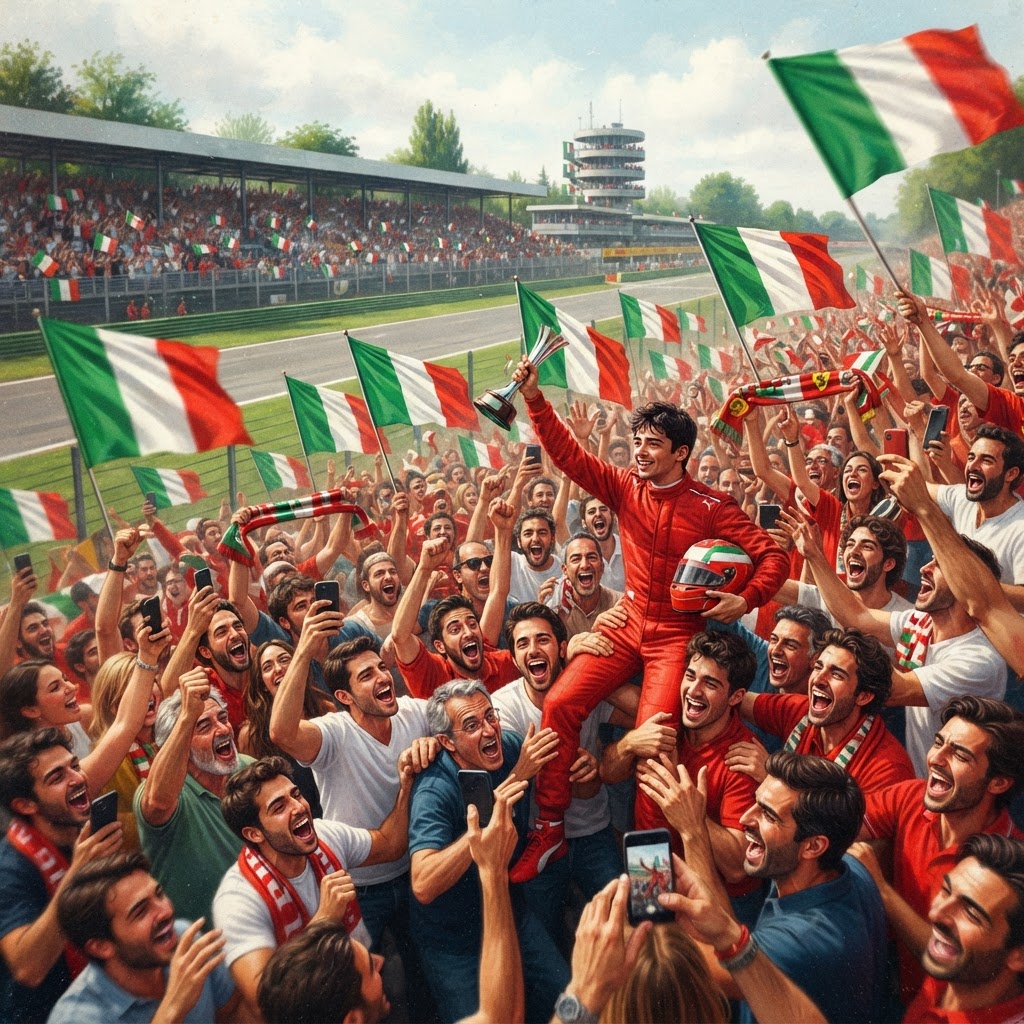
Video clips from Monza spread across social media within minutes. Fans shouted, waved Italian flags, and held phones above their heads as Antonelli completed the final laps. Giorgia Meloni's public congratulations also drew attention, adding a political voice to an already emotional sports story.
That reaction made sense because sports victories often become shared memories. Someone watching in Bologna, Karachi, London, or Melbourne could understand the basic emotion: a local driver had started almost last and won at home. You did not need to know every technical detail to feel the drama.
What made Antonelli's Mercedes so fast at Monza
Monza rewards low drag and efficient straight-line speed. Teams remove as much aerodynamic resistance as possible, then try to keep enough downforce for the braking zones and fast corners. That balance is difficult. Too much wing makes a car slow on the straights. Too little makes it nervous in the corners.
Mercedes appeared to find a useful compromise. Antonelli could attack on the straights without becoming helpless in the corners. The car also gave him confidence under braking, which mattered because most of his overtaking chances came at the end of long runs.
Power is only one part of the Formula 1 puzzle
Fans often say a driver won because his car was fastest. Sometimes that is true. It is also an incomplete explanation. A fast car still needs a driver who can place it within centimetres of another car, preserve tyres while following, and communicate clearly when the strategy changes.
Antonelli's engineers gave him a competitive machine, but the driver had to turn that potential into a completed comeback. The biggest difference between a quick lap and a winning race is usually repetition. Anyone can produce one exciting lap. Doing it for an entire Grand Prix is the hard part.
The strategy calls that kept the comeback alive
Mercedes avoided turning the race into a series of panic decisions. The team monitored tyre temperatures, traffic, and the gaps ahead. Antonelli needed clear air at the right moments, but he also needed to avoid losing too much time behind slower cars.
Good strategy is not always dramatic. Often it is the decision not to react to every radio message. The team trusted the plan, and Antonelli delivered the pace needed to make that plan work. That calmness helped him stay in the race until the leaders became reachable.
Why Kimi Antonelli is suddenly Formula 1's biggest story
Formula 1 has no shortage of famous names. Lewis Hamilton, Max Verstappen, Charles Leclerc, and George Russell already command enormous attention. Antonelli's story is different because it combines a new generation with a traditional national sporting dream.
He is young enough to represent the future, but his Monza win also connects him to old Formula 1 memories. Italian fans can celebrate a driver of their own without pretending the sport is still the same as it was in the 1950s or 1960s. That mix gives the story unusual power.
He is not just a social media sensation
Viral clips can make any athlete look like a superstar for 24 hours. Antonelli's results show something more durable. He has been collecting wins, poles, and championship points across the season. The Monza victory was not an isolated lucky afternoon dropped from the sky.
That does not mean he is perfect. Young drivers make errors. They can overdrive, misread a rival, or allow pressure to affect a qualifying lap. The difference is that Antonelli is learning in front of millions while also winning important races. That is a very public education.
The comparison with famous Italian drivers
Comparisons are unavoidable, but they should be used carefully. Antonelli does not need to become the next Ascari or imitate another champion. His driving style belongs to his era, his car, and his own personality. The best comparisons explain context; the worst ones create a standard nobody can meet.
For now, the fair comparison is simple: he is an Italian driver who won at Monza after starting 19th. That fact is already extraordinary without adding a dozen legends to his shoulders.
What the Italian Grand Prix means for Mercedes and Ferrari
Mercedes leaves Monza with more than a trophy. The team has a championship leader, a strong teammate, and proof that its car can recover from a weekend that began badly. That is the kind of result that changes how a garage feels on Monday morning.
Ferrari, meanwhile, will have a lot to discuss after the difficult home weekend and Leclerc's crash. Ferrari supporters wanted a red car at the centre of the celebration. Instead, the biggest Italian moment came from a Mercedes driver wearing the national spotlight.
Ferrari fans can still claim part of the emotion
It may sound strange, but the race was still a powerful advertisement for Italian motorsport. A home driver winning at Monza keeps young fans interested, fills karting tracks, and gives children a new person to copy when they put on a helmet. The badge on the car matters, but the identity of the driver matters too.
Italian Formula 1 fans do not have to choose between loving Ferrari and celebrating Antonelli. Sports are messy that way. A driver can create a national memory even when he is driving for a rival team.
Mercedes now carries a different kind of pressure
Before Monza, Mercedes could talk about development and potential. After Monza, the team has to manage expectations. Every poor result will be judged against the home victory. Every strategy call will be examined more closely. Success creates its own pressure, which is much nicer than failure but still real.
What happens next in the 2026 Formula 1 championship
The Italian Grand Prix does not decide the title, but it changes the mood of the championship. Antonelli has built a bigger lead and proved he can win from a terrible starting position. Rivals now need to score consistently and hope Mercedes gives them an opening.
The next races will test different skills. Some circuits reward downforce, some punish tyre wear, and some make overtaking nearly impossible. A driver who wins at Monza still has to adapt. This is where a young champion's education becomes interesting.
Can Antonelli handle the favourite's role?
Being the surprise driver is comfortable in one way. Nobody expects perfection. Being the championship leader is different. Fans expect a podium, journalists expect an explanation, and competitors study every weakness.
I think Antonelli's biggest task is not finding more speed. It is protecting his judgement. He does not need to win every weekend. He needs to avoid turning a second-place opportunity into a zero-point gamble. The Monza comeback was brave, but repeating that level of risk every week would be a mistake.
The rivals still have a path to the title
Formula 1 championships are long. A 60-point advantage can disappear after a few bad weekends, especially if a rival starts collecting wins. Russell, Verstappen, and the other leading drivers will keep applying pressure. One mechanical failure can make the standings look very different.
That uncertainty is good for the sport. The title race feels alive, and Antonelli's home victory gives it a clear human centre. Viewers are not just watching a points table. They are watching a young driver learn what it means to be hunted.
Kimi Antonelli Italian Grand Prix FAQ
Who won the 2026 Italian Grand Prix?
Kimi Antonelli won the 2026 Italian Grand Prix for Mercedes at Monza. He came from 19th on the starting grid to take victory in front of the Italian crowd.
Why was Kimi Antonelli's win historic?
Antonelli became the first Italian driver in 60 years to win the Italian Grand Prix at Monza. The long gap made the victory especially important for Italian motorsport fans.
Where did Kimi Antonelli start the race?
Antonelli started from 19th after a difficult qualifying weekend and a grid penalty. He recovered place by place through the race before reaching the lead.
Did Charles Leclerc finish the Italian Grand Prix?
Leclerc was involved in a serious-looking crash early in the race but walked away from the incident. The crash affected the early rhythm of the Grand Prix and brought attention to safety at the circuit.
Can Antonelli win the 2026 Formula 1 championship?
Yes, he is now a serious championship favourite because he leads the standings and has shown race-winning pace. The season is still open, however, and reliability, strategy, and rival performances will decide the final result.
Why did Giorgia Meloni's message go viral?
Italy's prime minister congratulated Antonelli publicly after his historic home win. Her message spread quickly because it added national political recognition to an already emotional sporting moment.
The real lesson from Antonelli's Monza win
The easiest lesson is that never giving up can produce a miracle. That is true, but it is also a little too neat. Antonelli did not win because he simply believed harder than everyone else. He won because preparation, speed, communication, patience, and courage met at the same time.
Starting 19th did not make the task impossible. It made every decision matter more. One bad overtake could have ended the comeback. One damaged tyre could have left him trapped. One nervous radio call could have changed the strategy. He kept making useful decisions until the impossible result became the result on the screen.
That is why the Kimi Antonelli Italian Grand Prix victory will stay with fans. It was spectacular, but it was not magic. It was a young driver proving that a difficult beginning does not have to decide the ending.
If you watched the race, the best way to remember it is not only to replay the final lap. Watch the first half again. Notice the patience, the small overtakes, and the moments when Antonelli chose not to force the issue. The victory was built long before the champagne appeared.
Monza now has a new Italian memory. Antonelli has a new level of expectation. And Formula 1 has a championship leader who has learned, in front of his home crowd, exactly how loud history can be.


Comments
Post a Comment