Saudi Oil Pipeline Shutdown Sends Brent Crude Above $108: What It Means for Petrol Prices
Target keywords: Saudi oil pipeline shutdown, Brent crude above $108, oil prices September 2026, Pakistan petrol prices, global oil supply
Why oil prices jumped on September 14
Crude oil prices are back in the headlines, and this time the reason is not a tiny move on a trading screen. Reports that Saudi Arabia shut a key oil pipeline sent Brent crude above $108 a barrel on Monday, September 14, 2026. That number matters because oil is not just another commodity. It is hidden inside transport, food, electricity, plastic packaging, and almost every delivery system people rely on.
The first thing I want to make clear is that a headline about a pipeline shutdown does not automatically mean every petrol station will raise prices by the same amount tomorrow. Oil markets move on fear, expectations, shipping costs, and spare capacity. Still, the oil price jump is a real warning: traders are worried that a disruption could last, spread, or expose a weakness in the routes that carry fuel around the world.
Here is the crazy part. A pipeline can be only one piece of the supply chain, yet its closure can change how traders value millions of barrels that have not even been produced. That is why the Saudi oil pipeline news has grabbed attention so quickly. The market is pricing risk before shoppers feel the full effect at the pump.
What the Saudi oil pipeline shutdown means
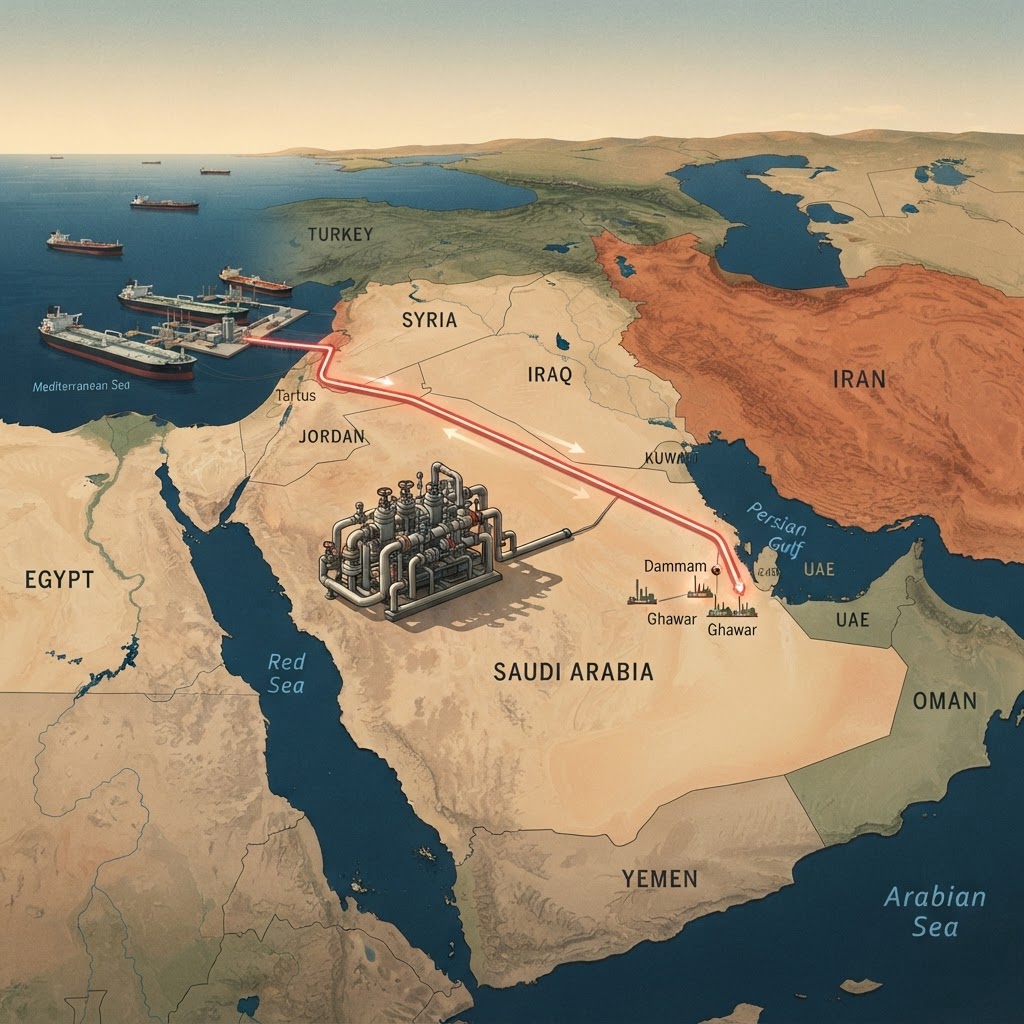
A pipeline is usually the quiet, efficient way to move crude from an oil field or processing area to a port, refinery, or another pipeline. It does not need a convoy of trucks, and it is less exposed to weather than a tanker route. When a major line stops, companies must find another path.
That alternative might be a longer pipeline, a different export terminal, rail, trucks, or ships. Each option adds time or cost. A tanker can carry a huge amount of oil, but it needs a working port, available vessels, insurance, and a clear route. A refinery designed for one grade of crude may also struggle if it suddenly receives a different blend.
The shutdown reported today is therefore important for two reasons. It can reduce the amount of oil reaching a particular destination, and it can force a reshuffle across the wider market. Even if global production does not instantly collapse, the system has less breathing room.
Why Brent crude reached $108
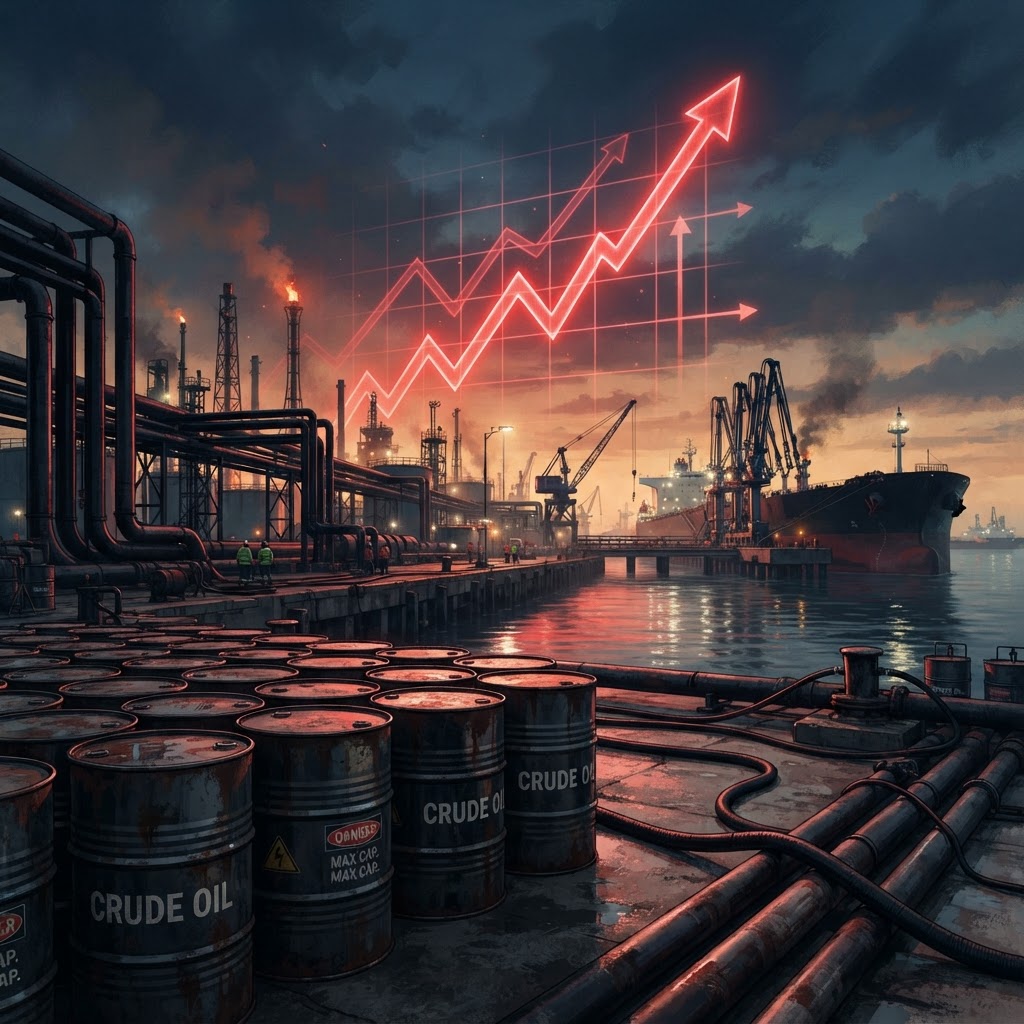
Brent crude is a reference price used for a large share of the world's oil trade. When Brent rises, people watch because it influences contracts, refinery decisions, fuel prices, and inflation forecasts. The move above $108 is not a promise that petrol will cost a certain amount in every country. It is a signal about how traders see the next few weeks.
Three forces appear to be pushing the market today: the reported Saudi pipeline disruption, concern about other supply routes, and a broader fear that energy shortages could arrive at the wrong time. Markets hate uncertainty. Traders often pay more for immediate cargoes when they are unsure whether the next shipment will leave on time.
The price also reflects the balance between physical oil and financial bets. Some buyers need barrels for refineries. Others trade futures contracts based on what they think the market will look like later. When both groups become nervous, prices can move sharply even before official production figures change.
How the oil price shock could reach Pakistan
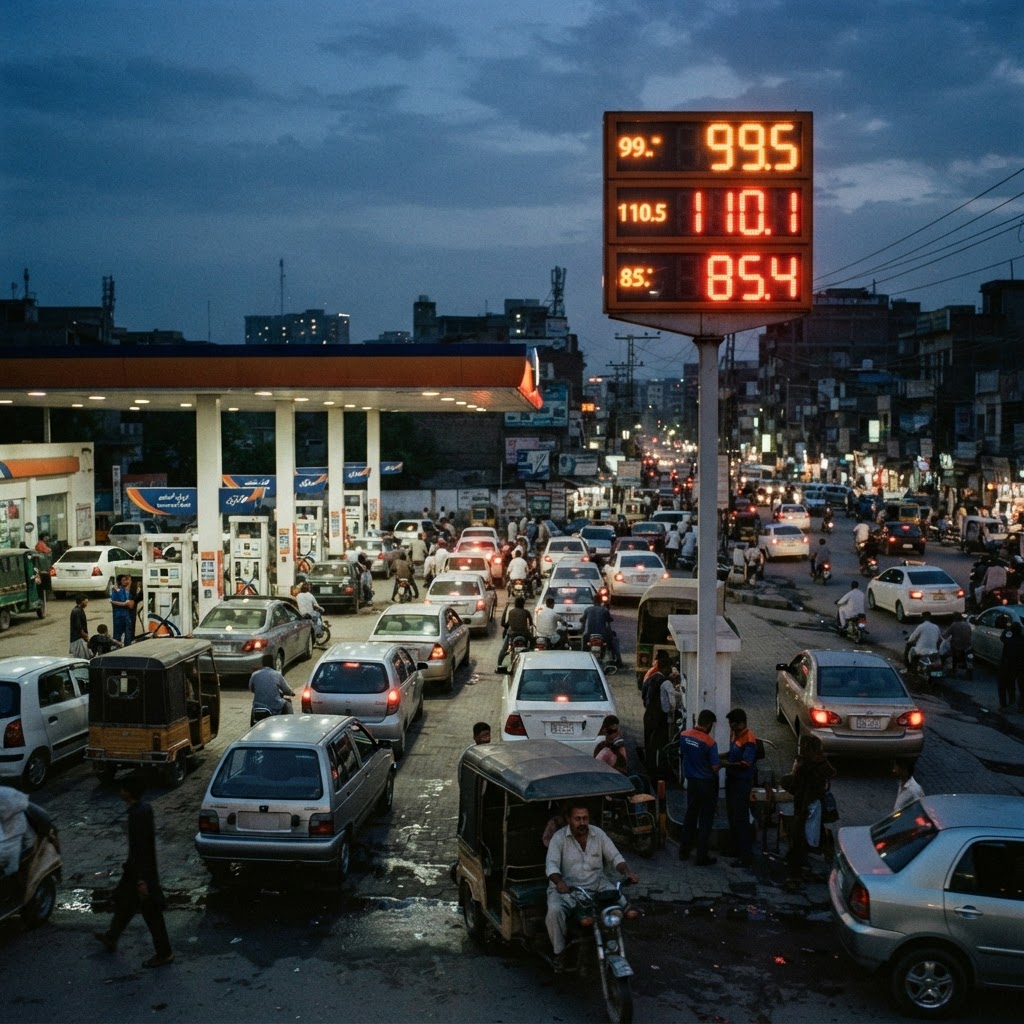
Pakistan watches international oil prices closely because the country imports a large share of its petroleum needs. A higher Brent price can raise the cost of imported crude and refined products. The effect on local petrol and diesel prices depends on exchange rates, taxes, government decisions, freight costs, and the timing of the pricing review.
For drivers, the most visible result is a possible increase at the pump. For families, the bigger issue may be indirect. Diesel is used by trucks, buses, farm machinery, generators, and construction equipment. If diesel becomes more expensive, the cost of moving food and goods can rise before people understand why their weekly shopping bill changed.
Small businesses feel this quickly. A bakery paying more for delivery, a farmer running a water pump, and a shop using a backup generator all face the same problem from different directions. Fuel is not always the largest expense, but it touches many expenses at once.
There is also a timing gap. Global crude prices can jump on Monday, while local prices may be adjusted days later. That delay can create confusion. People may see one price online, another at a station, and a third in a government announcement. The cleanest way to judge the impact is to follow official local pricing notices rather than social media graphics.
Saudi Arabia oil supply and spare capacity
Saudi Arabia is watched more closely than most producers because it has large production capacity and a central role in global oil trade. The phrase spare capacity means production that can be brought online relatively quickly. In theory, spare capacity can calm a market during a disruption. In practice, traders also ask whether the extra oil can reach the right refinery by the right date.
That distinction is easy to miss. A country may have oil underground and still face a transport bottleneck. The problem might be a damaged line, a closed loading point, a maintenance issue, or an insurance concern. Supply is not useful to a buyer until it can be produced, moved, loaded, delivered, and refined.
Investors will be looking for updates on the cause of the shutdown, the expected repair time, and whether other export routes are operating normally. A short technical stoppage could fade from the market within days. A longer disruption would keep pressure on prices and increase competition for tankers.
Why one route can matter so much
Energy networks are built for efficiency, not endless surprises. A pipeline usually moves large volumes at a steady cost, so refineries and exporters plan around it. When that assumption breaks, everyone has to improvise at once. The replacement cargo may exist, but it may already be promised to another buyer. That is why a transport problem can become a price problem before any oil field changes its output.
There is a human side to this that charts do not show. A truck operator who pays more for diesel may shorten a route or charge a higher delivery fee. A family that spends more on commuting has less money for school supplies or a medical bill. These small choices multiply across millions of people, which is how an energy headline becomes an inflation story.
Why the first headline may change
Early reports are often incomplete. A line described as shut may later be found to be running at reduced pressure, or a temporary safety halt may last only a few hours. That does not make the first report useless. It means readers should separate the confirmed event from the guesses about its final impact. Look for a company statement, a government update, or a second independent report before treating a forecast as fact.
What traders will watch next
The next headlines will probably focus on facts that seem boring but matter enormously. Is the pipeline fully closed or running at reduced capacity? Which oil fields feed it? Can nearby terminals handle extra cargoes? Are repairs already underway? How much storage is available at the destination?
Traders will also watch shipping rates and insurance premiums. If ships need to take a longer route, freight costs can rise. If insurers see a route as risky, the cargo may become expensive even when the oil itself has not changed in quality.
Weekly inventory data will offer another clue. Falling stocks can make a supply problem feel urgent. Stable or rising stocks can soften the panic. Currency markets matter too. A stronger dollar often makes dollar-priced commodities more expensive for buyers using other currencies.
My own view is that the first reaction may be bigger than the final damage, but that is not a reason to ignore it. Energy markets can calm quickly when repairs are confirmed. They can also become much worse when one disruption arrives on top of another.
Will petrol prices rise immediately?
Not necessarily. Petrol prices are built from more than the headline crude price. Refineries pay for crude, then fuel passes through processing, transport, storage, taxes, dealer margins, and sometimes a government price formula. A one-day jump in Brent does not travel through every layer instantly.
The risk is higher if Brent stays above $100 for several trading sessions. Sustained prices give importers a more expensive average cost, and that average is what many pricing systems eventually reflect. Diesel can be especially sensitive because it powers freight and industry.
Consumers should avoid panic buying. Filling every container at home creates safety risks and does not protect a household from a longer price trend. A better response is to combine trips, check tyre pressure, use public transport when practical, and plan fuel spending without assuming the worst-case headline will last forever.
What higher oil prices mean for food and inflation
Oil affects food in several ways. Tractors and irrigation pumps use fuel. Trucks carry crops to markets. Factories use energy to process, cool, and package products. Even plastic bags and bottles are linked to petrochemical supply chains. The final price of a loaf of bread does not rise one-for-one with Brent, but repeated energy costs can spread through the system.
Inflation officials will be watching whether the oil move is temporary. A short spike may be absorbed by companies or reversed before it reaches consumers. A long period of expensive crude can push transport and production costs higher, making it harder for central banks to lower interest rates.
This is why a Saudi oil pipeline story can matter to someone who never drives. It can affect bus fares, courier charges, grocery logistics, and the cost of running a small business. Energy is a background expense until the background suddenly becomes visible.
- Review your fuel-heavy routes before the next pricing update.
- Track the Saudi oil pipeline shutdown through official announcements.
- Keep a small buffer for transport and delivery costs.
How businesses can prepare for an oil shock
Companies do not need to predict the exact Brent price to prepare. They need to understand how many parts of their operation depend on fuel and how quickly they can adjust. A transport company might review routes and maintenance. A restaurant might check delivery fees and backup power costs. A manufacturer might compare energy suppliers.
Useful questions include:
The goal is not to scare customers or lock in an expensive contract too quickly. The goal is to see the weak points before a crisis forces a rushed decision.
What households should do today
Most households do not need a dramatic response to one oil market headline. A calm checklist is more useful. Look at the next two weeks of driving, remove unnecessary trips, and combine errands. If you use a generator, check its condition and fuel safety rules. If your budget is tight, leave a little room for transport costs rather than spending every rupee before the next pricing update.
Do not trust viral posts that claim a specific petrol price without naming the source and date. Oil updates move quickly, and old graphics are often reposted as if they are new. Check an official energy ministry, a recognised fuel retailer, or a reliable financial news service.
And please do not pour fuel into unsafe bottles. A small saving is not worth a fire. That sounds obvious, yet panic buying has a way of making obvious safety rules disappear.
Three possible outcomes for Brent crude
The first outcome is a quick repair. If the Saudi pipeline resumes normal operation and no second disruption appears, Brent could give back part of its jump. Traders who bought on fear may sell, and shipping concerns could ease.
The second outcome is a long repair with limited replacement capacity. In that case, prices may remain high while buyers compete for alternative routes. The market would pay more attention to inventory levels and refinery demand.
The third outcome is escalation. A second pipeline, port, tanker route, or regional facility could face trouble. That would create a much more serious supply shock and could push crude well above today's level. Nobody should treat this scenario as certain, but it explains why traders react so fast to early warnings.
The most reasonable reading right now is caution rather than panic. The headline is serious, yet the final market effect depends on details that are still developing.
Why this oil story matters beyond Monday
The Saudi oil pipeline shutdown is a reminder that energy security depends on routes as much as reserves. A country can produce plenty of crude and still face trouble if its export network is concentrated in a few important lines and ports.
It also shows why clean energy investment and efficiency get discussed during price shocks. Solar panels, public transport, efficient engines, and local power systems do not remove every oil need, but they can reduce the damage from the next disruption. That is a practical argument, not a slogan.
For ordinary readers, the lesson is simple: follow the repair news, watch local fuel announcements, and do not let one dramatic number push you into a bad financial decision. Oil markets move fast. Household budgets move more slowly.
FAQ about the Saudi oil pipeline and Brent crude
What happened to oil prices on September 14, 2026? Reports of a Saudi oil pipeline shutdown helped push Brent crude above $108 a barrel, while traders assessed the possible effect on supply and transport routes.
Will petrol prices rise in Pakistan immediately? Not always. Local prices depend on the crude average, exchange rates, taxes, freight, and the official pricing schedule. A sustained rise is more likely to affect the next review than a single trading session.
Why is Brent crude important? Brent is a major international benchmark. Many oil contracts, refinery decisions, and fuel calculations use it as a reference point.
Does a pipeline shutdown mean the world is running out of oil? No. It means a transport route may be unavailable or limited. The market then studies replacement routes, storage, spare capacity, and repair time.
What should consumers do? Avoid panic buying, plan trips, check official prices, and keep a small budget buffer for transport. Safety matters more than trying to guess the exact next price.
The practical takeaway
The oil price jump is worth watching, but it is not a reason to panic. The key questions are how long the Saudi pipeline remains disrupted, whether alternative routes can handle the flow, and whether another supply problem appears.
I would treat today as an alert, not a forecast. Check the next official update, keep your household fuel use sensible, and be careful with dramatic claims online. If the route is repaired quickly, the market may cool. If the disruption lasts, the pressure will show up in freight, diesel, inflation, and eventually household budgets.
Share this post with someone who is worried about petrol prices, then check the latest official announcement before making a purchase. The best protection in a fast-moving oil story is accurate information and a calm plan.


Comments
Post a Comment