Lash Clusters: The Viral DIY Lash Trend Changing Beauty in 2026
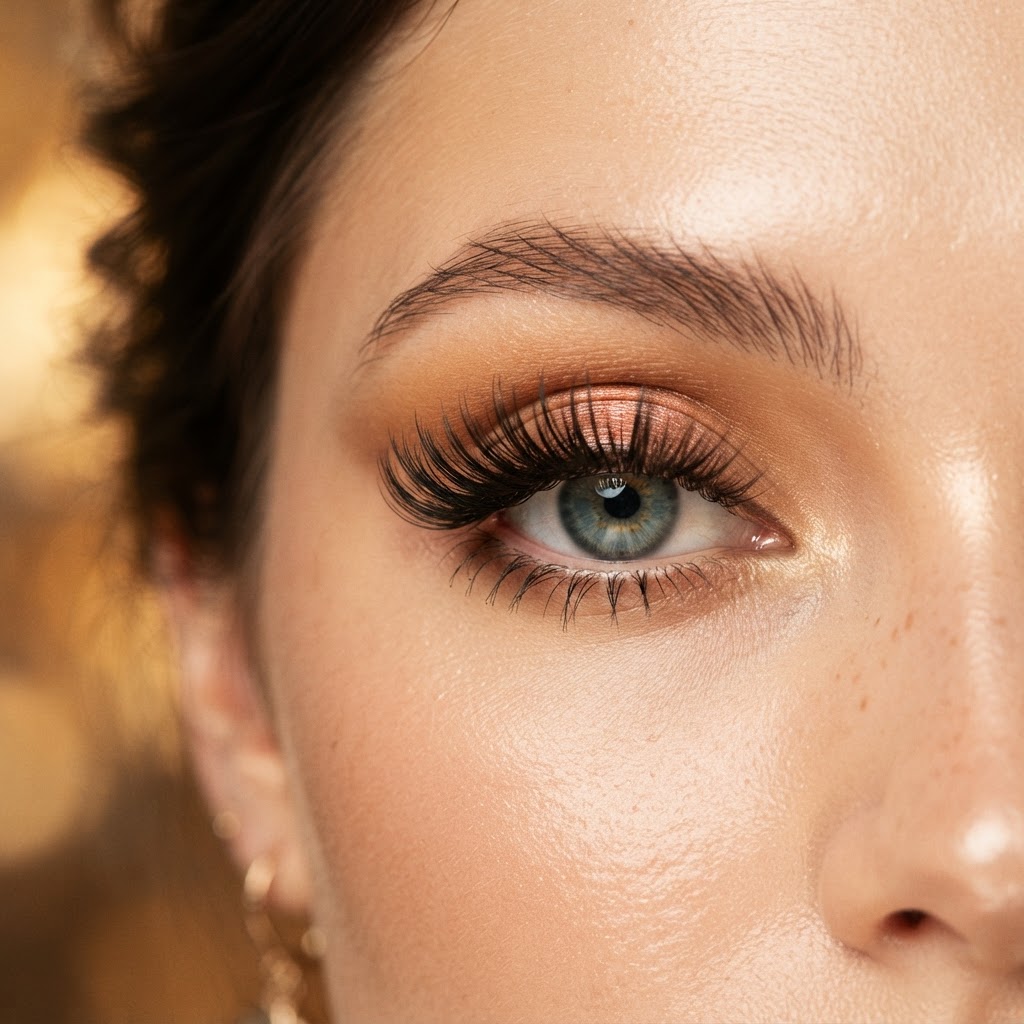
Ever wished you could wake up with full, fluttery lashes without paying $200 at a salon? You're not alone. Millions of people are searching for lash clusters right now. Monthly searches jumped from about 70,000 in late 2024 to nearly 246,000 by August 2026, according to Exploding Topics. That's a 250% spike in under two years. Lash clusters are small bundles of lashes you glue under your natural lashes at home. They give you the salon look for the price of a lunch. But are they safe? And can a total beginner actually pull them off? Let's break it all down.
Why Lash Clusters Blew Up in 2026
Think about the last time you priced out salon lashes. A full set of eyelash extensions usually runs $150 to $250. Then you need fills every two to three weeks, which add another $80 to $150 each time. Over a full year, that's easily $2,000 or more. That's a used car payment, spent on fluffy lashes.
Now compare that to a lash cluster kit. Most kits cost between $6 and $35. One box can give you five or more full wears. That's the whole story of this trend in one sentence: the same look, at roughly one-tenth of the price.
The price problem
Salons got expensive. Rent went up, supplies got pricier, and lash techs raised their rates to keep up. At the same time, household budgets got tighter for a lot of families. People didn't stop wanting pretty lashes. They just started hunting for cheaper ways to get them. Beauty fans call this the "dupe" culture, where people find affordable versions of pricey services. Lashes were simply the next domino to fall.
There's a time cost too. A salon appointment means booking ahead, driving there, and sitting still for two hours. Clusters mean fifteen minutes at your own mirror, on your own schedule. For busy parents and shift workers, that matters as much as the money.
TikTok did the rest
Price alone doesn't make a trend. Video does. TikTok creators started filming their cluster applications, and viewers found them oddly satisfying to watch. Some lash trends passed a billion views this year, and the "manga" lash look, with its spiky doll-like fans, became one of the most requested styles in salons too. When a trend shows up in both the drugstore aisle and the salon menu, you know it has gone fully mainstream. It's part of a bigger shift in how beauty products get discovered, the same way AI is rewriting search rules for shoppers.
The timing helps. The classic salon lash boom happened when people had cash to burn on self care. Today, people want that same polished look but need it to cost less. Clusters sit right in that sweet spot between luxury and bargain.
What Are Lash Clusters, Exactly?
Lash clusters are tiny bundles of lashes, usually three to eight strands per bundle, attached to a small knot at the base. You place them under your natural lashes using a special bond and seal system. Think of them as stickers for your lash line, except they follow your eye's natural curve and blend in much better. The result looks like salon extensions, because each cluster sits close to the root instead of floating on top like a strip.
A typical kit comes with clusters in a few different lengths, a bond (the sticky base coat), a seal (the locking top coat), and a pair of fine tweezers. Some kits add a comfort flex band or pre-glued clusters that skip the bond step entirely. That variety is part of the fun. You're not stuck with one look per box.
Clusters vs. strip lashes
A strip lash is one long band that covers your whole eye at once. It's fast, but it can look obviously fake, and one lifted corner can ruin the whole thing by Friday night. Clusters let you build your look piece by piece. You can load up fullness on the outer corner and keep the inner corner soft. They also sit closer to the lash line, so they blend with your real lashes instead of sitting above them.
The learning curve is real, though. Strips take one try to learn. Clusters take two or three attempts before your hands stop shaking. Most people say the switch is worth it, because the final look reads as "born with it" rather than "glued on."
Clusters vs. salon extensions
Salon extensions are single lashes, glued one at a time to your natural lashes by a trained technician. A full set takes two hours or more and lasts three to four weeks. Clusters are chunkier bundles that sit under the lash instead of beside it. You can apply a full set in about 15 minutes at home, and it lasts around a week.
The trade-off is simple. Extensions look the most custom and last longest, but cost the most. Clusters look nearly as good, cost a fraction of the price, and let you change your style every week. Many people actually end up with both: extensions for big events, clusters for everyday.
The styles everyone wants this year
Three looks dominate 2026. The manga lash uses short, dense sections mixed with long spikes for a doll-eye effect inspired by Japanese comics. The wet look uses glossy clusters that catch the light for a fresh, dewy finish. And the natural "clean girl" set uses brown clusters for a soft, barely-there effect that works at the office.
Brown lashes deserve a special mention. They've grown fast with people who found black too harsh for everyday wear. Brown reads softer on lighter hair and skin tones, and it photographs beautifully without looking heavy. If you've never tried lashes before, brown clusters are the gentlest entry point.
The Numbers Behind the Lash Cluster Boom
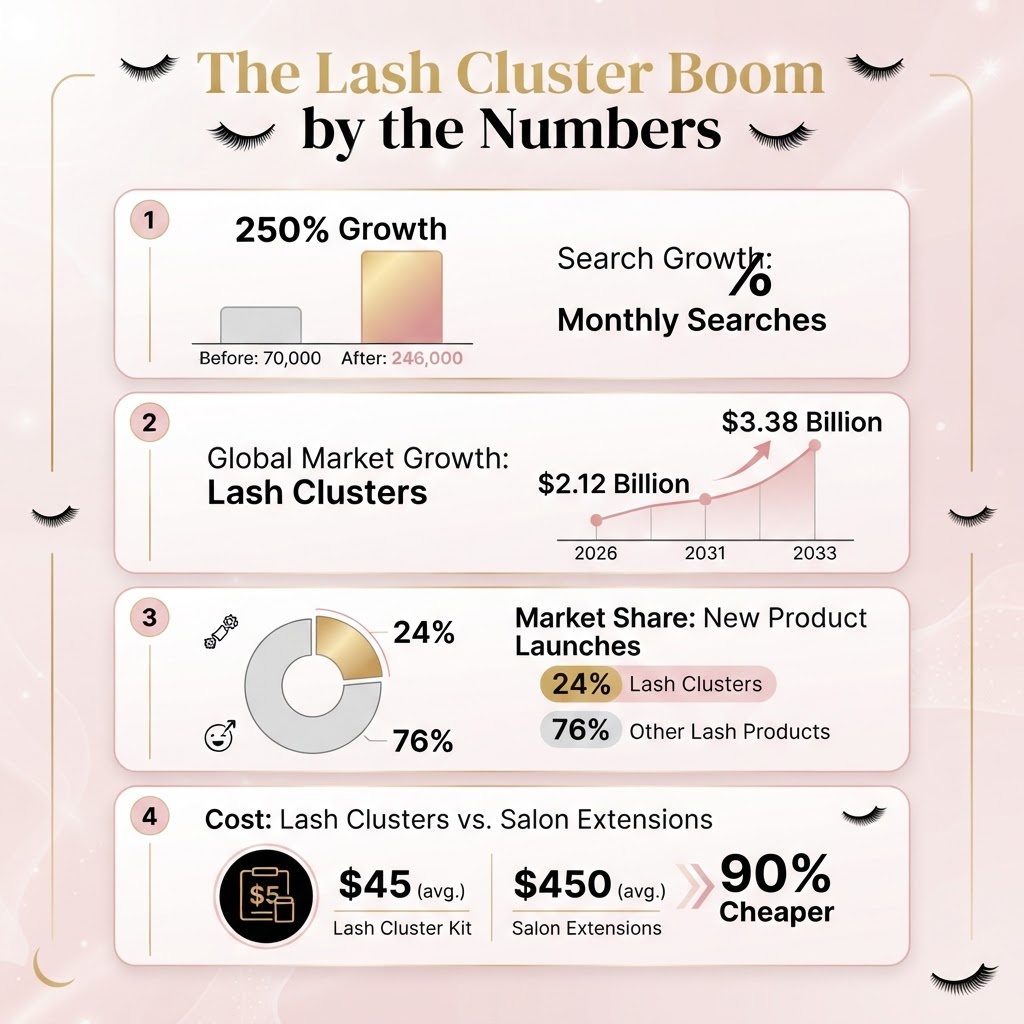
Numbers tell this story better than hype does. Here's what the data actually shows about lash clusters and the wider false lash market.
Search interest exploded. Monthly searches for lash clusters grew from about 70,000 in September 2024 to roughly 246,000 by August 2026. That's about 3.5 times more interest in just two years. Very few beauty trends hold that kind of curve without burning out.
The market is climbing too. Grand View Research valued the global false eyelashes market at $2.0 billion in 2025 and projects it will reach $3.38 billion by 2033. Mordor Intelligence puts the 2026 market even higher, at about $2.49 billion, growing roughly 6.2% per year through 2031. Even when two research firms disagree on the exact figure, both point the same direction: up.
Clusters are taking over shelves. Industry trackers report that cluster lashes now make up about 24% of new product launches in the false lash category. The DIY cluster share grew 41% year over year. When a quarter of all new products are one format, that format isn't a niche anymore. It's the main event.
And the price gap keeps people hooked. A year of salon extensions can cost $2,000 or more. A year of clusters, even with good glue and tools, stays under $200 for most people. That's a saving of about 90%. No coupon in beauty history comes close.
How to Apply Lash Clusters at Home
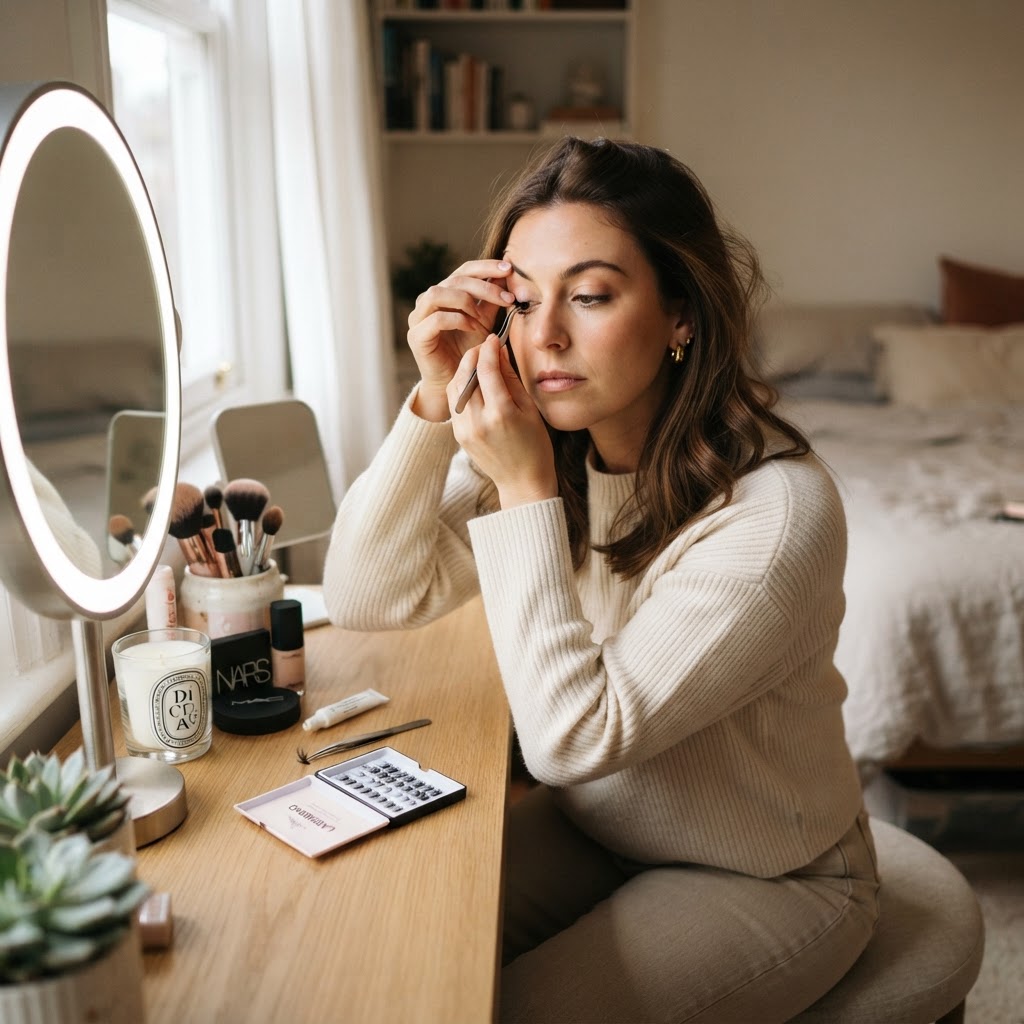
The first try takes patience. The second takes half the time. By the third, you'll wonder why you ever paid someone else. Here's the process that works for most beginners.
What you need
You need four things: cluster lashes, a bond (the sticky base), a seal (the topcoat that locks them on), and applicator tweezers. Most kits include all four. Add a clean mascara wand for fluffing and micellar water for prep, and you're fully equipped. Total setup cost for a good starter kit: under $35.
Step by step
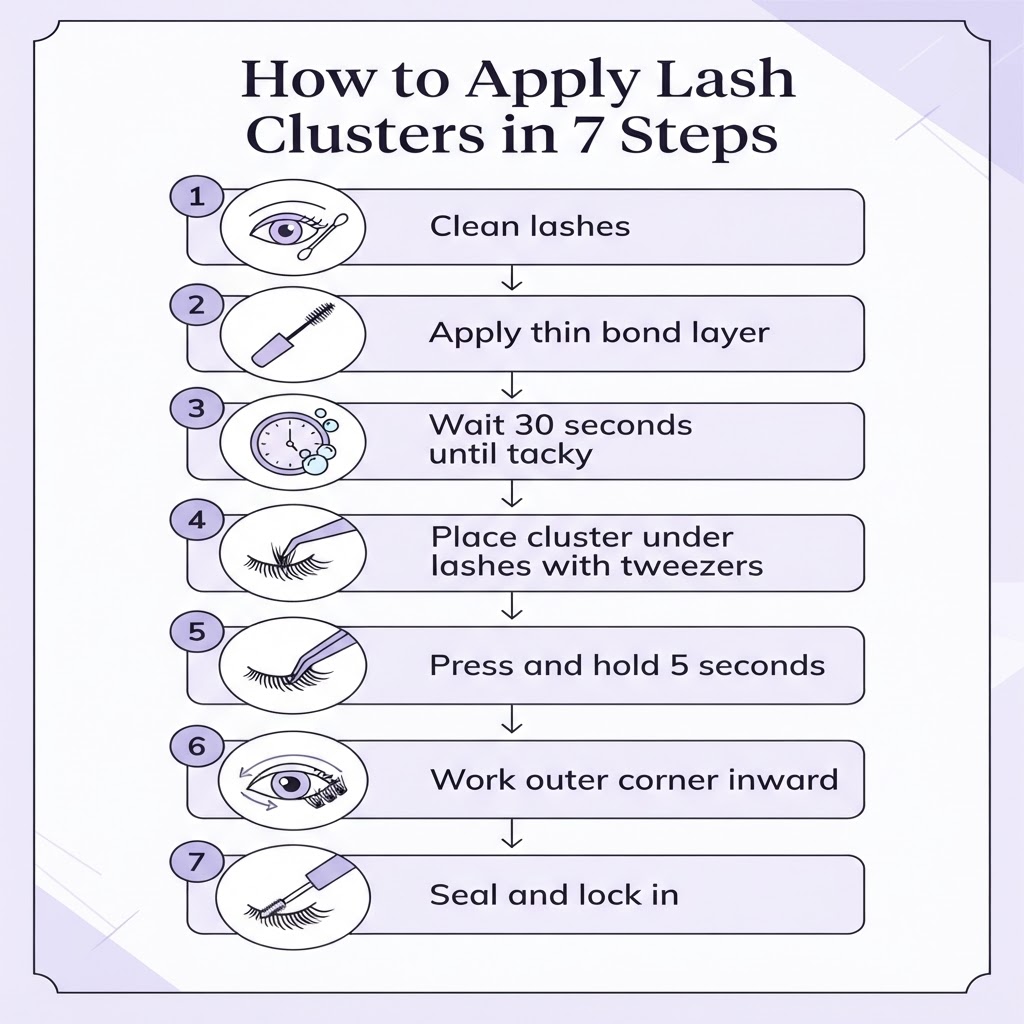
First, start with clean lashes. Remove every trace of makeup and oil. Oil is the number one reason clusters pop off by day two. Wash your eye area, pat it dry, and give it a minute to fully dry.
Second, apply a thin layer of bond under your natural lashes, close to the roots. Think of it like a mini coat of mascara applied underneath. Don't touch the skin or the waterline.
Third, wait about 30 seconds until the bond turns tacky. Rushing this step is the single biggest beginner mistake. Tacky bond grabs. Wet bond slides.
Fourth, pick up a cluster with your tweezers, holding it by the knot. Place it under your natural lash, resting against the roots but never touching the skin.
Fifth, press and hold for three to five seconds. Give it a gentle squeeze through the lashes, not just on the tips.
Sixth, work from the outer corner inward. Use longer clusters at the outer edge and shorter ones toward the inner corner. Most kits label lengths as short, medium, and long, so you can't go far wrong.
Seventh, finish with the seal. Swipe it under and over the lash line to lock everything in place and remove any stickiness. The seal is also your daily refresher for the rest of the week.
Common beginner mistakes
Placing clusters too close to the waterline is the most common error. It irritates the eye, looks lumpy, and shortens wear time. Keep a millimeter of space from the wet part of your eye. Using too much bond is the second mistake. More glue doesn't mean more hold. It means smudged lashes and clumpy vision. A thin layer beats a thick one every time.
Skipping the seal is the third. The seal is what keeps clusters from shedding by day two, and it takes ten seconds to apply. The fourth mistake is expecting perfect symmetry on day one. Even seasoned pros accept small differences between eyes. Lashes are sisters, not twins.
Choosing the Best Lash Cluster Kit of 2026
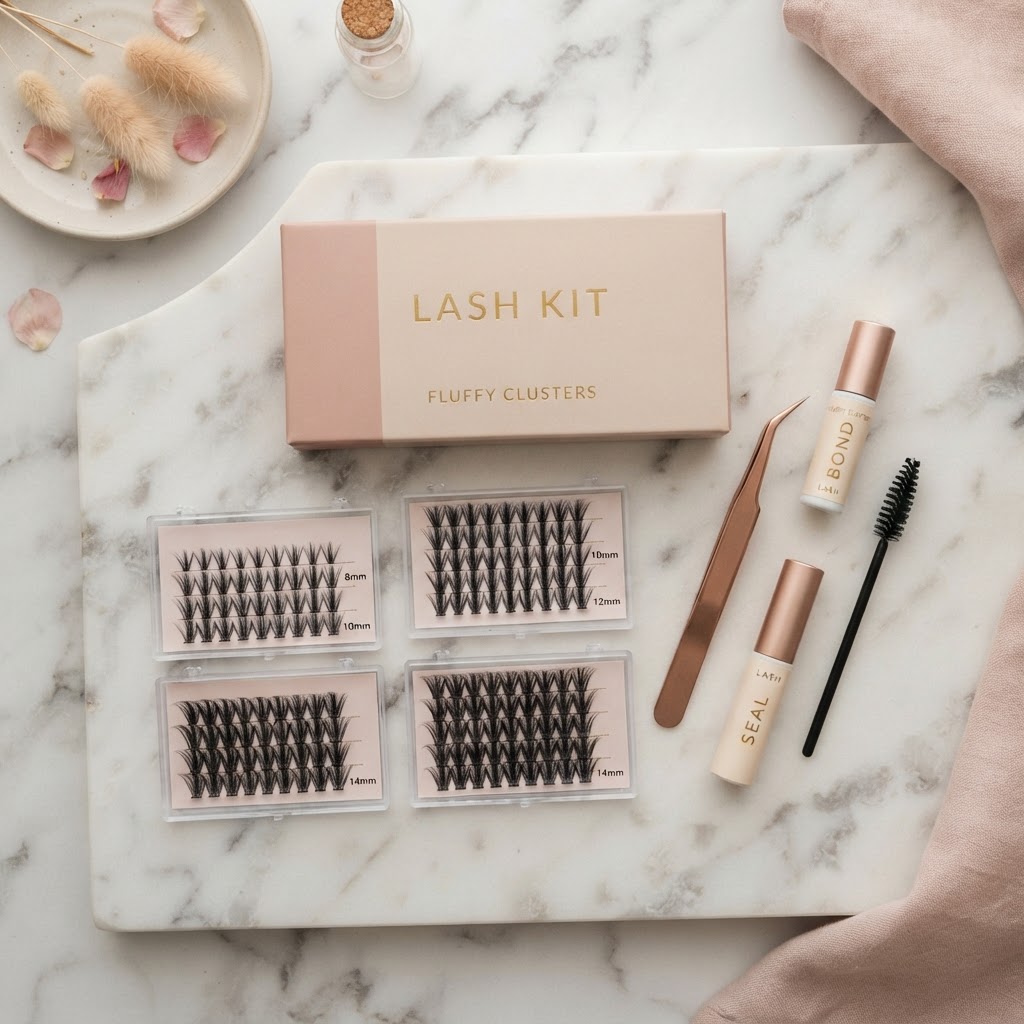
You don't need to hunt obscure brands. Drugstore names now make excellent kits, and premium players have raised the bar on wear time.
Budget pick: Ardell
Ardell has made false lashes for decades, and its Demi Wispies are a cult classic for good reason. Its cluster and individual lines, like the Naked Extensions packs, start at about $6. The strands are soft, the knots are small, and the glue is easy to find at any drugstore. If you want to try clusters without commitment, start here.
Middle lane: Kiss
Kiss built its Falscara line specifically for the under-lash cluster method. The trial kit includes multiple lash styles plus bond and adhesive, valued around $33. Many reviewers call Falscara the easiest entry point for true beginners, because the clusters come pre-arranged and the bond is very forgiving. This is the kit most people should buy first.
The splurge: Lashify
Lashify invented the DIY under-lash system and still owns the premium end. Its Control Kit includes bond, seal, tweezers, and multiple "gossamer" lash styles, usually priced under $150. Fans say the gossamers wear longer and look more custom than anything else on the market. It costs more upfront, but refills keep the long-term cost well below salon prices. If clusters become your everyday routine, this is the upgrade path.
Are Lash Clusters Safe? What Eye Doctors Say
Here's the part most TikTok tutorials skip. Anything that goes near your eye deserves respect. The American Academy of Ophthalmology warns that lash procedures can cause trauma or infection of the eyelid or cornea, allergic reactions to glue, and even permanent damage to your natural lashes. None of that means clusters are off limits. It means safe habits matter.
The glue problem
Most extension and cluster bonds contain cyanoacrylate, the same chemical family as super glue. It's safe when used correctly on the lash line. It is not made for the inside of your eye. Poison control centers warn that glue in the eye can scratch the cornea and possibly lead to scarring. Some glues also release small amounts of formaldehyde as they cure, which can trigger burning, stinging, and allergic reactions in sensitive people.
That's why professional-grade formulas matter more than the price tag here. Established brands test their bonds and list their ingredients. Random online sellers may not. With eye products, "cheap and unknown" is a bad combination.
How to protect your eyes
First, never apply bond while distracted, driving, or on a moving bus. It sounds obvious, but emergency rooms see eye glue injuries every year, and most happen when people rush. Second, apply clusters under the natural lashes, never touching the waterline. Third, keep the bond on the lashes only.
If glue does get in your eye, don't force your eye open and don't rub. Rinse with warm water and let it flush naturally. See a doctor if pain, redness, or blurry vision lasts more than a few hours. Fourth, never pull clusters off dry. Soak them off instead.
When to skip clusters
Skip them if you have an eye infection, recent eye surgery, or highly sensitive eyes. If you've reacted badly to lash glue before, ask a doctor before trying again. And give your natural lashes a rest week every month or so. Constant glue and added weight can thin your real lashes over time, which defeats the whole purpose.
Make Them Last: Practical Tips
Clusters typically last five to seven days. With good prep, some people stretch it to ten. Here's how to land on the longer end of that range.
Clean lashes hold longer. Oils break the bond down, so wash your eye area well before applying. Sleep on your back if you can, because rubbing your face into the pillow is what pulls clusters loose overnight. Skip oily eye products too. Oil-based removers and heavy eye creams will lift your clusters in one swipe.
Keep a seal pen in your bag for quick touch-ups after showers or workouts. And when clusters start to shed, remove the whole set and redo it. Piling new clusters onto loose old ones looks lumpy and gives you zero extra wear.
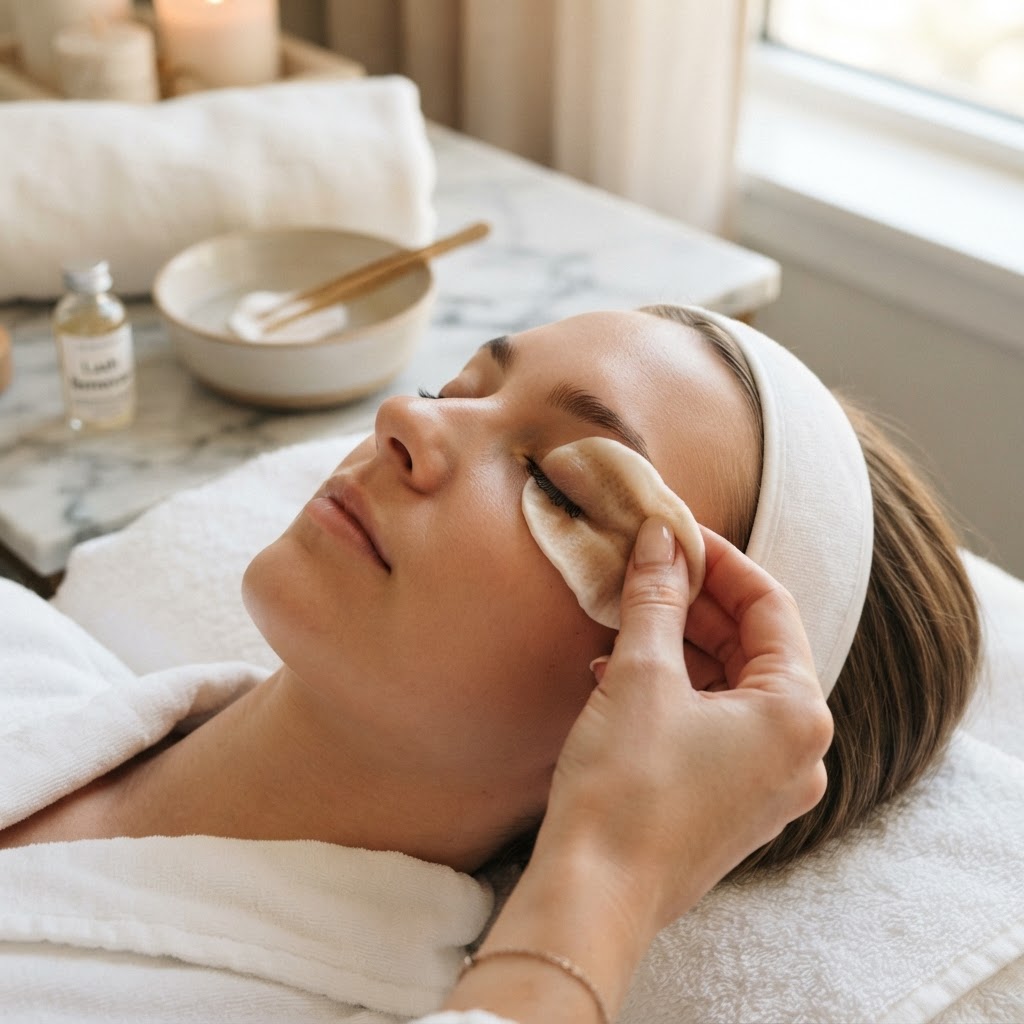
Removal is where most damage happens. Never yank dry clusters. Soak a cotton pad with warm water or a lash-safe remover, press it against your closed eye for a full minute, and slide the clusters off gently. If one resists, soak again. Patience saves your natural lashes, and your natural lashes are the whole foundation of this hobby.
Conclusion
Lash clusters turned a luxury service into a drugstore ritual. The data says they're not a fad: searches have grown 250% in two years, clusters now make up about a quarter of new lash products, and the false lash market keeps climbing toward $3.38 billion by 2033. If you've been curious, there has never been a better time to try. Start with an affordable kit, practice on a free evening, and respect the glue. Your lashes, and your wallet, will thank you. We cover rising trends of all kinds here, from silicon carbon batteries to AI-driven SEO, so stay tuned for what's next.
Frequently Asked Questions
How long do lash clusters last?
Most people get five to seven days of wear from one application. With clean prep and careful sleeping, some stretch it to ten days. Apply the seal daily to extend hold. When clusters start shedding, remove the full set and redo it instead of patching loose spots.
Can you sleep in lash clusters?
Yes, most bonds are designed for overnight wear. Sleep on your back to avoid rubbing clusters loose on the pillow. If they shift overnight, press them flat with clean fingers in the morning. A quick swipe of seal brings back the hold.
Are lash clusters safe for your eyes?
They can be, with care. Place clusters under your natural lashes and never on the waterline. Keep bond out of the eye itself. If glue touches your eye, rinse with warm water and seek care if pain, redness, or blurry vision continues. Skip clusters during infections.
What is the difference between lash clusters and extensions?
Extensions are single lashes applied one at a time by a trained technician. They last three to four weeks and cost $150 to $250 per set. Clusters are bundles you apply yourself in about 15 minutes. They last around a week and cost $6 to $35 per kit.
How do you remove lash clusters safely?
Soak a cotton pad with warm water or a lash-safe remover. Press it against your closed lash line for about a minute. Slide the clusters off gently with tweezers or fingertips. Never pull dry clusters, because that can pull out your natural lashes too.
Can beginners apply lash clusters at home?
Yes. Most people get it right by the second or third attempt. Start with a beginner-friendly kit like Kiss Falscara, which includes everything you need. Practice on a free evening when you're not rushed. Expect the first attempt to take about 30 minutes.


Comments
Post a Comment