Hillary Clinton Epstein Deposition: What the Viral Hearing Clip Shows—and What It Doesn’t
The Hillary Clinton Epstein deposition clip has all the ingredients of a political firestorm: a former secretary of state, a congressional inquiry, a leaked image, raised voices, and a sharp “I’m done” moment that travels faster than the full record. But a short video is not the same thing as a complete account. If you have seen the clip flying around today, the first useful question is not simply who looked angrier. It is what happened before the camera captured that moment, what the committee was investigating, and what the available reporting actually confirms.
Here is the careful version. News coverage on October 10 described Clinton becoming upset during questioning connected to the House Oversight Committee’s Epstein inquiry, after a confidential photo was reportedly leaked. The Economic Times said video clips were released by the committee and described a brief walkout. That gives us a reported event, not permission to fill in every gap with guesses. The distinction matters, especially in a story involving a notorious criminal case, partisan conflict, and people whose reputations can be damaged by careless claims.
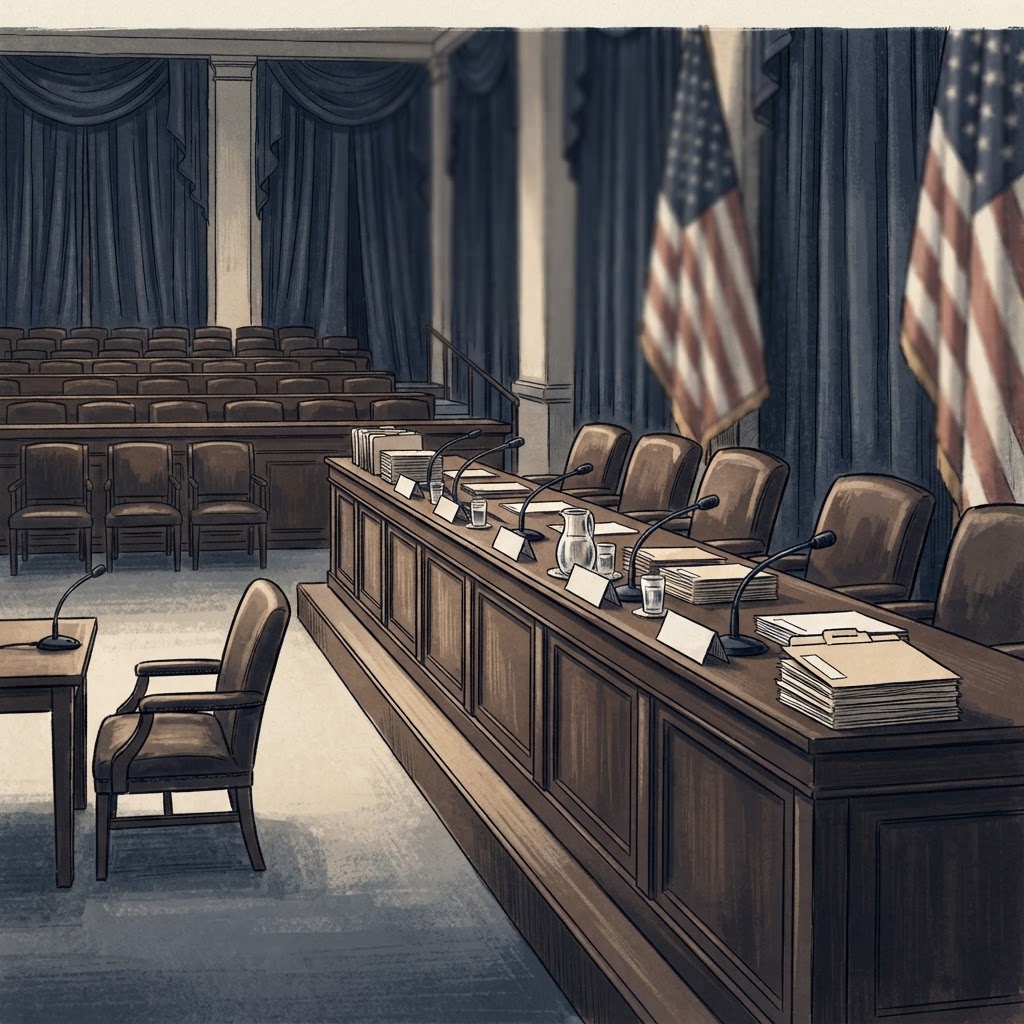
Why the Hillary Clinton Epstein deposition is drawing attention
A congressional deposition is usually a long, formal interview conducted under oath, often with lawyers present and a written transcript created. It is not a courtroom trial, and it does not decide guilt. Lawmakers can ask questions, seek records, and build a public account. They can also turn a hearing into a political spectacle. Those facts can be true at the same time.
The Epstein case remains a subject of intense public anger because it involved sexual abuse, wealthy and influential social circles, institutional failures, and years of unanswered questions. Many people want a full explanation of how Epstein operated and whether others enabled him. That demand for accountability is legitimate. But the desire for answers can be exploited when a clip is presented as proof of something it does not establish.
The headline moment is emotionally clear: Clinton appears frustrated, strikes or slaps the table according to reporting, says “I’m done,” and briefly leaves. That is the part viewers can react to. What it means is less obvious. A person can be angry about the questions, the circumstances, a leak, the conduct of the room, or some combination. A clip alone cannot reliably tell us which explanation is correct.
A deposition is not a verdict
It is worth keeping the legal and political roles separate. Testimony can provide evidence, identify disputes, and guide further investigation. It does not automatically establish wrongdoing. The fact that someone is questioned in connection with an inquiry is not evidence that they committed a crime. Nor does a heated reaction prove that a witness is hiding something.
Why a few seconds can dominate the story
Short clips reward drama. A raised voice is easy to understand without context, while a careful explanation of committee procedure is not. Social platforms can place a striking moment in front of millions before people see the transcript, the complete video, or even a reliable description of what led up to it. That is why the clip deserves attention, but also why it deserves restraint.
What reports say about the Clinton deposition and the walkout
The Economic Times report published on October 10 described Clinton as being questioned by Republican members about alleged connections to Jeffrey Epstein. It said a confidential photo was leaked by Republican lawmakers and characterized that leak as preceding the outburst. It also said committee video clips were released publicly. Those are the details the article reports. They should not be silently expanded into claims about what the photo showed, who authorized the release, or what Clinton knew about Epstein.
There is a separate, important timeline issue. Reporting earlier in 2026 described the Clintons’ depositions to the House Oversight Committee as part of its Epstein investigation. The newer video coverage appears to concern the release and circulation of moments from that process. Readers should look at publication dates and distinguish the date testimony occurred from the date a video was published or went viral. Headlines often collapse those dates into one dramatic “today.”
That may sound like a small point. It is not. When a clip resurfaces, people can mistakenly believe the underlying testimony is happening live, or that every new post contains new evidence. Sometimes the fresh development is simply that an old recording has been edited, released, or recirculated. A good report makes that clear.
What the coverage does not establish
The coverage of the viral moment does not, by itself, establish that Clinton had a personal relationship with Epstein, took part in his crimes, or knew about abuse. It reports questioning, a leaked photo, a confrontation, and a brief departure from the room. Those are not interchangeable categories. Treating them as though they were would be unfair to the people involved and unhelpful to anyone seeking the truth.
Nor does a witness’s anger demonstrate that the questions were improper. That requires looking at the questions, the committee’s rules, the context of the photo, and the testimony as a whole. A person may object for a valid reason, an invalid reason, or a mixture of reasons. The public cannot responsibly choose among those possibilities based on facial expressions alone.
Hillary Clinton Epstein deposition questions and the Epstein investigation
Why is Congress examining prominent political figures in connection with Epstein at all? The broad public interest is understandable. Epstein cultivated relationships with people in business, politics, academia, and entertainment. Investigators and journalists have spent years trying to map those networks and determine who knew what, when they knew it, and whether anyone helped him avoid consequences.
Still, association is not proof of criminal conduct. A photograph, a contact entry, a meeting, or a reference in a document may raise a question. It does not answer that question by itself. Context matters: dates, purpose, frequency, corroborating records, and testimony can all change how an item should be interpreted. This is not a defense of any particular person. It is simply how evidence should be handled.
The same standard needs to apply no matter which party benefits from a headline. If a public figure is accused, ask what the underlying record says. If a witness denies knowledge, ask whether the denial is corroborated or contradicted. If lawmakers make a claim, ask whether they have released supporting documents. Accountability without evidence becomes a contest in insinuation, and that does little for victims or the public.
Questions that investigators can ask
Investigators may reasonably ask about meetings, travel, communications, introductions, financial records, and what a witness understood at the time. They can also ask whether earlier statements match documents. Those questions can be uncomfortable. Their value depends on whether they are specific, relevant, and pursued consistently rather than used only to score a partisan point.
- What contact, if any, did a witness have with Epstein or people in his circle?
- What records support or contradict the witness’s account?
- Did the witness learn about abuse, and if so, when and from whom?
- Were any institutions warned, and what did they do with that information?
- Which records remain unavailable, and why?
Those are questions, not accusations. Careful language helps readers keep the difference visible.

How the leaked photo changed the temperature of the hearing
The report says the confrontation followed a leak of a confidential photo. That detail matters because depositions rely on ground rules, including expectations about what can be shared and when. If a witness believes an agreed restriction has been broken, frustration is hardly mysterious. At the same time, the available account does not settle who leaked the image, whether the release violated a rule, or what the photo depicted. Those points need verification rather than confident speculation.
Leaks can serve the public interest when they reveal misconduct or information that institutions are wrongly withholding. They can also be used to embarrass a witness, shape a news cycle, or expose private material without adding meaningful evidence. The label “leak” alone does not tell us which category applies. The content, source, timing, and rules governing the material all matter.
There is also a basic fairness issue. A person summoned to answer questions should not have to wonder whether confidential evidence will be published selectively while the questioning is still underway. Public oversight needs transparency, but transparency is not the same as dumping fragments without explanation. The committee has a responsibility to make its evidence understandable, not merely viral.
What a responsible release would include
A responsible release would identify the video’s date, explain whether it is complete or edited, publish the relevant transcript, and clarify any confidentiality dispute. If the committee says the material was released under its rules, it should explain those rules. If a witness disputes the release, that response should be presented accurately too. Readers should not be asked to infer procedure from a dramatic thumbnail.
What the viral Clinton hearing clip can and cannot tell us
A recording is valuable evidence of what appears on screen. It can show who was present, what words were spoken within the recorded portion, and how participants reacted. But a clip may omit the question that prompted a response, a pause, a lawyer’s objection, or an explanation immediately afterward. The shorter the excerpt, the more carefully viewers should treat conclusions about motive.
That does not mean every video is misleading. It means video has boundaries. A ten-second scene may be authentic and still incomplete. It may accurately show a person shouting while leaving out the reason. It may contain the exact words reported and still fail to show what happened before or after. Authenticity and completeness are different tests.
When a high-profile clip appears, I would check three things before sharing it. First, who published it and when? Second, is the full recording or transcript available? Third, do independent reports describe the same context? If those answers are missing, it is reasonable to wait. You do not lose anything by refusing to let an algorithm set your opinion in the first minute.
A quick checklist for viewers
- Find the original committee video, not only a repost with captions.
- Check the date of the testimony and the date the video was released.
- Read a report that identifies what is verified and what remains unknown.
- Do not treat a photograph or association as proof of a crime.
- Be cautious with captions that claim to reveal a person’s hidden motive.
Partisan politics, public trust, and the Epstein files
There is a political incentive to turn every investigative step into a team sport. If a witness belongs to the other party, some viewers assume guilt. If the witness belongs to their own party, they may assume a partisan attack. Neither reflex helps. The Epstein case deserves serious scrutiny precisely because it touches powerful networks and institutions. That scrutiny loses credibility when standards change depending on whose name is in the headline.
Congressional oversight can uncover facts that might otherwise stay hidden. It can also become theatre, especially when cameras, election campaigns, and social-media clips are part of the same environment. The difference is visible in the work: Are lawmakers pursuing records from all relevant sources? Are they asking consistent questions? Are they protecting victims’ privacy? Are they explaining what evidence supports their conclusions? Those are better measures than who won a viral exchange.
Public trust is fragile in a case like this. People have watched powerful institutions fail victims before. They may reasonably suspect that someone is holding back information. But suspicion alone cannot fill evidentiary gaps. The strongest path to accountability is a record that can be checked: documents, dates, testimony, and transparent explanations of what is still unknown.
Keep victims at the center
It is easy for the story to become a parade of famous names and political reactions. That can push the people harmed by Epstein out of view. Their experiences are not props in a partisan argument. Any discussion of released material should protect identities and avoid circulating intimate or identifying details without a compelling reason. A public debate can demand accountability while still showing care for survivors.
That is one reason I find the loudest online takes unsatisfying. They often treat the most dramatic adult in the room as the whole story. The deeper issue is whether institutions acted on warnings, whether victims were protected, and whether the public will receive a complete and credible account. A table slap cannot answer those questions. Neither can a party label.

What happens next in the House Oversight Epstein inquiry
The next useful developments would be primary materials: full video, transcripts, committee statements about the photo, and any relevant records released under the inquiry. Readers should also watch for responses from the people named in coverage. A fair account includes denials or explanations where they exist, while still checking them against evidence. Reporting should not turn an allegation into a fact simply because it is repeated often.
Committees may continue interviews, request documents, or publish findings. The public should judge those steps by their substance. A report that carefully explains dates, sources, and limits may be less thrilling than a clip, but it is much more useful. If lawmakers make a serious allegation, they should identify the evidence behind it. If the evidence is incomplete, they should say so.
There may also be more videos circulating. Before reposting one, check whether it is new, whether it has been cut, and whether it reveals something beyond the moment already reported. A viral replay can look like a fresh development even when nothing about the underlying inquiry has changed. That small pause helps prevent recycled footage from becoming recycled misinformation.
FAQ: Hillary Clinton Epstein deposition and viral video
Did Hillary Clinton walk out of an Epstein-related deposition?
October 10 coverage by The Economic Times described Clinton becoming upset during questioning connected to the House Oversight Committee’s Epstein inquiry and briefly walking out after a confidential photo was reportedly leaked. The report describes a brief departure, not a final finding about why it happened.
Does the viral clip prove Clinton was involved in Epstein’s crimes?
No. A clip of a tense exchange does not prove criminal involvement. The reporting cited here describes questioning and a reaction. Claims about wrongdoing require reliable evidence, not assumptions based on a person’s presence in an inquiry or their emotional response.
Why was Clinton questioned by Congress?
The House Oversight Committee has been examining matters connected to Jeffrey Epstein. The committee’s questions and any conclusions should be evaluated through the testimony, records, and official findings, not inferred from a short video.
Was the leaked photo confidential?
The Economic Times report characterized the photo as confidential and said it was leaked by Republican lawmakers. The available coverage does not fully establish what the image showed, who authorized its release, or whether a formal rule was violated. Those details need further confirmation.
Where can I see the full testimony?
Look for original House Oversight Committee materials, including full video and transcripts if they have been published. Compare those primary sources with established news reporting. Avoid relying only on cropped clips or posts that do not link to the original material.
My take: demand the full record, not just the loudest moment
The Hillary Clinton Epstein deposition clip is worth discussing because it raises real questions about oversight, confidentiality, and how evidence reaches the public. But the loudest seconds are not the whole inquiry. We should ask what the committee was trying to establish, what records support each claim, and whether the same standards are being applied to everyone involved.
That is not fence-sitting. It is how you keep accountability from turning into rumor. A fair investigation should follow evidence wherever it leads, protect survivors, and give the public enough context to evaluate the conclusions. If you share this story, share the context too. The full record matters more than a perfect viral moment.


Comments
Post a Comment