Midterm Elections 2026: Why the Trump Tariff Backlash Could Decide Who Controls Congress
The midterm elections 2026 are now less than three weeks away, and if you believe the polls, one issue is doing more damage than any scandal, gaffe, or campaign ad combined: tariffs. And honestly, that surprises a lot of people in Washington. Trade policy is supposed to be boring. It is supposed to be the topic you skip past to get to the sports section. Not this year. This year, the price of your groceries, your tools, your kid's school supplies, and maybe even your job is tied directly to a fight over import taxes, and voters have noticed.
Here is the number that should scare every campaign strategist in both parties: 64 percent of American adults now say President Trump has gone too far with his tariffs. That is not a fringe poll from some partisan shop. That is the Associated Press-NORC Center for Public Affairs Research, one of the most respected polling operations in the country. Six months ago that number was 58 percent. The trend line is not subtle.
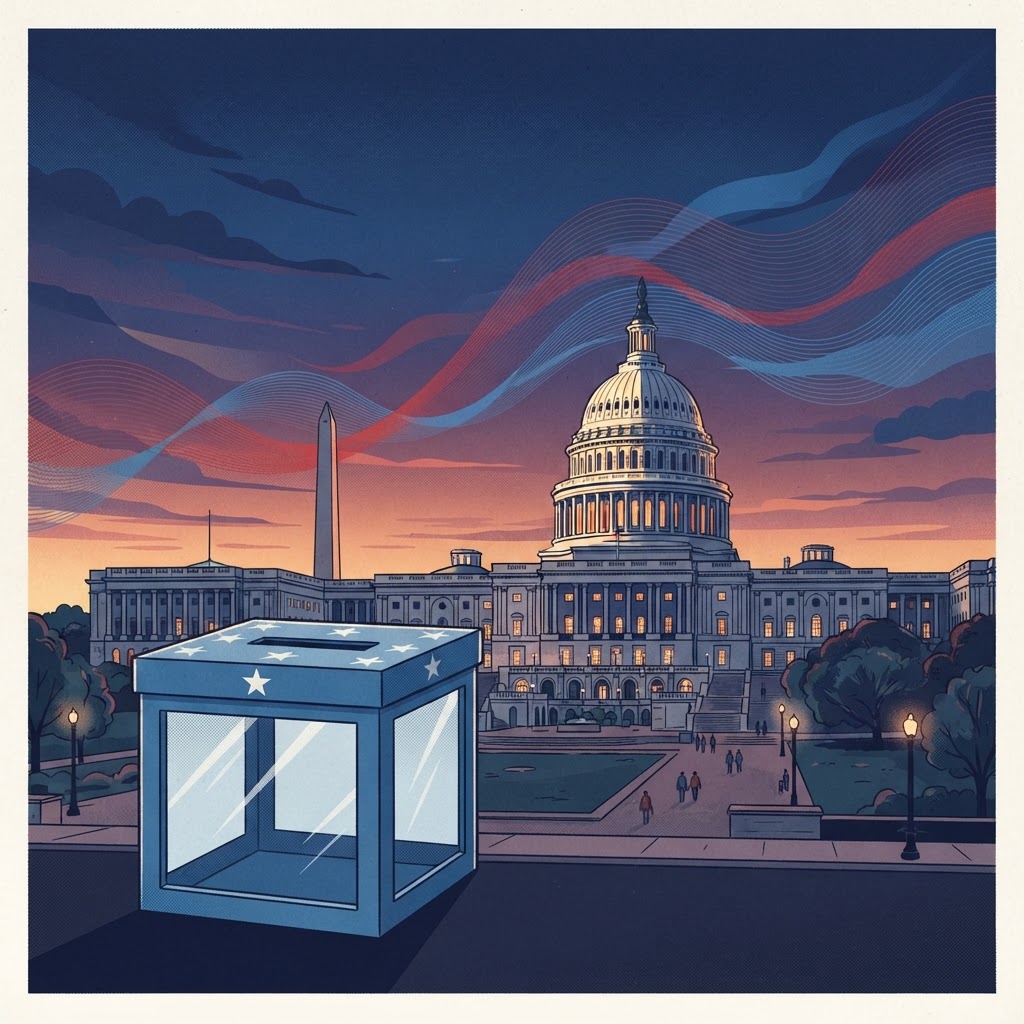
What Exactly Are the Midterm Elections 2026?
Let me back up for a second, because I have talked to plenty of smart people who still mix up midterms and presidential elections. So, quick refresher.
Midterms happen exactly halfway through a president's four-year term. That makes them, in theory, a national report card on the guy in the Oval Office. Except the president himself is never on the ballot. You are not voting for or against Trump directly on November 3, 2026. You are voting for the people who will either back him up or hold his feet to the fire for the final two years of his term.
What is on the ballot this time:
- All 435 seats in the House of Representatives. Every single one. House members serve two-year terms, so their job security depends entirely on this cycle.
- More than 30 Senate seats. About a third of the 100-seat Senate is up for grabs in any given midterm. The exact count shifts a bit depending on vacancies and special elections.
- 36 governorships and thousands of state and local offices. School boards, judges, state legislators, mayors. The stuff that actually touches your daily life, even though the cable news channels barely mention it.
Why does control of Congress matter so much? Because whoever runs the House and the Senate decides what gets a vote, what gets investigated, what judges get confirmed, and what bills die quietly in a drawer. If Trump's allies keep both chambers, he can keep governing as he has. If the opposition takes even one chamber, expect subpoenas, stalls, and a very loud two years.
The Tariff Backlash by the Numbers
Now for the part that makes this particular midterm different from the ones before it. Polls on midterms 2026 are not just measuring generic Republican-versus-Democrat feelings. They are measuring something very specific: anger and anxiety over tariffs and prices.
The AP-NORC finding I mentioned above is not alone. Other surveys show roughly 58 percent of Americans opposing the tariffs outright, against about 36 percent who support them. Blue-collar workers, a group that voted heavily for Trump in past cycles, have cooled noticeably. Reporting from PBS NewsHour found factory workers worried that import taxes could cost their own jobs, since factories depend on parts and materials that cross borders every single day.
A Swing This Big in Under a Year Is Rare
Think about what a six-point jump in ten months actually means. Polls move slowly. Fashions in politics, like everywhere else, usually creep. A jump from 58 percent to 64 percent in the share of adults saying the president's signature economic policy went too far? That is not a rounding error. That is a shift in the room's temperature.
And here is the crazy part: most Americans also told pollsters they blame the president for higher prices generally, and they are not thrilled with how the economy is being handled. In politics, the pocketbook beats everything. Abortion, immigration, scandals, celebrity endorsements, all of it matters less than what people see when they open their wallet.
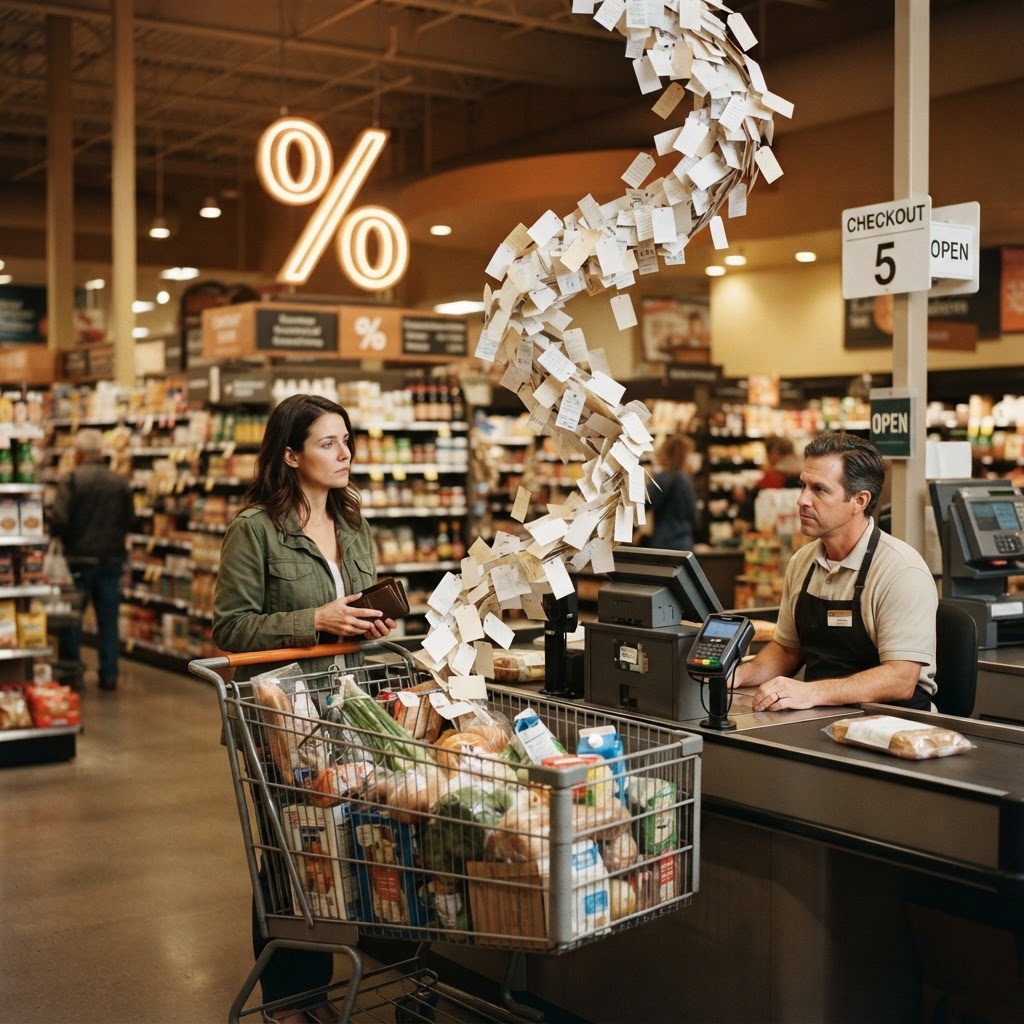
Who Really Pays Tariffs? The Question Half of America Gets Wrong
Before the election decides anything, let us clear up a fact that keeps tripping people up, because politicians on both sides have muddied it on purpose.
A tariff is a tax charged at the border when goods enter the United States. And here is the sentence worth remembering: the tax is legally paid by the American company importing the goods. Not the foreign factory. Not the foreign government. The importer in Ohio or Texas or New Jersey writes the check to the U.S. Treasury.
Now, does the importer just swallow that cost out of patriotism? No. They pass most of it along, either to the stores that buy from them, or straight to shoppers like you. Sometimes foreign suppliers cut their own prices a bit to stay competitive, which eats a slice of the tariff. But the bulk lands on American businesses and American consumers. That is not a partisan opinion. That is the consensus of economists across the spectrum, and it is exactly what Federal Reserve researchers keep finding in the data.
Why Surveys Show People Are Confused
Pew Research Center asked Americans who ends up paying these duties. About 52 percent of Republicans said foreigners pay them. About 51 percent of Democrats said Americans pay them. In other words, the two parties' voters cannot even agree on a basic mechanic of the policy, and that is not an accident. If your side has spent years saying that some other country is paying, you get voters who believe it. But your receipt does not care about talking points. It cares about math.
Tariffs and Prices: What the Federal Reserve Actually Found
This is where the story moves from opinion polls into cold, hard evidence, and it is the reason I think the tariff backlash is going to be the defining force of the midterm elections 2026.
Researchers at the Federal Reserve Bank of New York published an analysis in October 2026 that got attention for a blunt reason. They tracked what happened to prices across 67 categories of consumer goods, and estimated that tariffs added roughly 2.9 percentage points to inflation in those categories by early 2026. Read that again. Not 2.9 percent of the price of one item. Up to about three extra points of inflation spread across dozens of the everyday things people buy.
The New York Fed team also found something renters and shoppers intuitively know: the damage arrives in slow motion. It can take months, and in some cases up to about a year, for the full price effect to work through supply chains, because companies burn through cheaper inventory first. Meaning some of the tariffs' price tags have not even shown up at your store yet, even though the policies were announced long ago.
- School supplies: analysts at the Peterson Institute found many back-to-school items cost more this year, partially because of import duties.
- Tools, electronics, kitchen goods: categories heavily exposed to imported components saw some of the steepest pass-through.
- Small businesses: one analysis from the Center for American Progress estimated small importers in every state took a hit, while tariff refunds flowed disproportionately to large corporations able to navigate the process.
Why the Damage Shows Up Late
Imagine you own a hardware store. You ordered shelves of hammers back when they were cheap. Tariffs land. For a while, nothing changes, because you are still selling the old stock at the old price. Then you reorder, and the invoice jumps. You raise prices. Shoppers grumble. Multiply that by hundreds of thousands of businesses and you get inflation with a delay fuse, timed fairly unfortunately, from the White House's point of view, to hit right around the midterm elections 2026.
Why Factory Workers Are Suddenly Nervous
The political logic behind tariffs was simple, and I think it was sincere: protect American factories from cheap foreign competition, and jobs come home. The uncomfortable wrinkle is that American factories buy parts from everywhere. Tariffs raise their input costs too.
PBS NewsHour spent time in factory country and found workers who once cheered the trade crackdown now wondering whether it will cost them their shifts. Steel might cost more, so anything built with steel costs more to make, so orders might shrink, so shifts might get cut. It is a chain, and every link is a paycheck. When Democratic and Republican strategists both say the same working-class neighborhoods are in play this November, this is the reason why.
Trump's "Pretend I Am on the Ballot" Problem
President Trump has a habit of cutting through the fog with one honest sentence, and he did it again this cycle. He told rally crowds, in effect, pretend, please, that I am on the ballot. Normally a president facing a rough midterm would distance himself from the whole exercise. Instead, President Trump is doing the exact opposite, flying to places presidents rarely bother with, including an unusual campaign swing to Alaska, where the Senate race has tightened enough that a sitting president going there in October tells you the GOP thinks every seat matters.
That Alaska trip is genuinely remarkable when you think about it. Incumbent presidents rarely spend precious October days that far from the big battlegrounds. It signals two things: the map has expanded beyond the usual ten or so swing states, and Republicans believe Trump himself is the only messenger who can hold the coalition together while the tariff backlash eats into their numbers.
The risk is obvious. If you make the election about you, and your signature policy is polling at 36 percent approval, you have handed the other side a target. But there is a flip side that keeps GOP strategists up at night in a good way and a bad way: midterm turnout historically favors the party out of power, the opposition is fired up, and yet Trump's own supporters are the most reliable voters in American politics. Nobody knows whether passion or anger wins the turnout war this time.
The Senate Map and the House Math
Polls and vibes do not elect anybody. Seats do. So let us talk about the actual battlefield for controlling Congress after the midterm elections 2026.
The Senate: Republicans are defending more turf than usual this cycle, including open seats and veteran incumbents in states that could swing either way according to recent averages. Polls in big states like Texas and Michigan are closer than partisans on both sides expected. Senator Susan Collins of Maine is getting grilled back home over tariffs, according to national reporting, a sign that even long-surviving incumbents feel the heat. Control of the chamber plausibly comes down to a handful of races, some in states nobody circled on the map a year ago.
The House: Democrats need to pick up a modest number of seats to flip it. The Cook Political Report's latest ratings list 21 races as pure toss-ups. Flip even 13 of those, a realistic scenario in a strong opposition year, and the speaker's gavel changes hands. Mid single-digit leads in national generic-ballot polling have historically produced exactly that kind of wave.
One more wrinkle that deserves more attention than it gets: Reuters surveyed candidates in the most competitive Senate races and found that only a little over half would clearly commit to accepting the November 3 results no matter what. Some hedged. That number should give anyone who cares about stability a shiver, whichever party you back, because contested outcomes in even one razor-thin race could drag the country through the same kind of post-election trench war we have seen before, only this time with no presidential recount to focus it.
Money: Democrats Have Candidate Cash, Republicans Have Elon
CNBC pulled together the fundraising picture this week and found something interesting. Democratic candidates hold the direct-money edge in key Senate races and in 13 of the 21 House toss-up districts. Campaign accounts pay for field offices, ads, and staff, and they are the fuel gauge of a campaign's ground game.
But wait, you might ask, doesn't the party with more money usually win? Not necessarily, because of what sits on the other side of the ledger. Republican-aligned outside groups enjoy a fortune in super PAC spending, and coverage of the midterms 2026 money race has made much of the sums flowing in from Elon Musk's network, traffic that can paper over weak candidate fundraising with a wave of negative ads in the final two weeks. Candidate cash versus outside money is an uneven fight, though: outside groups cannot coordinate with campaigns, and split-message ads have backfired before.
My honest read: money closes gaps, but it rarely reverses a fundamental. If the tariff backlash stays anywhere near its current temperature through November 3, no checkbook flips that tide.
What History Says About Midterm Elections and the President's Party
Humans are bad at learning from history, and campaigns are worse, so let me do the annoying thing and bring up the past anyway.
Since the Second World War, the president's party has lost House seats in almost every midterm. The exceptions are rare and revealing. In 1998, voters punished the impeachment push against Bill Clinton and his party actually gained seats. In 2002, George W. Bush's party gained in the emotional aftermath of 9/11. Those are the only two bright spots for a White House party in eight decades. Every other midterm, the president's side bled seats, sometimes catastrophically. 1994, 2010, 2018 each flipped at least one chamber and reshaped the rest of that presidency.
The average loss hovers around two dozen House seats. That is defeat by default. Add in the polls narrowing toward the opposition, and history is not whispering this year, it is shouting.
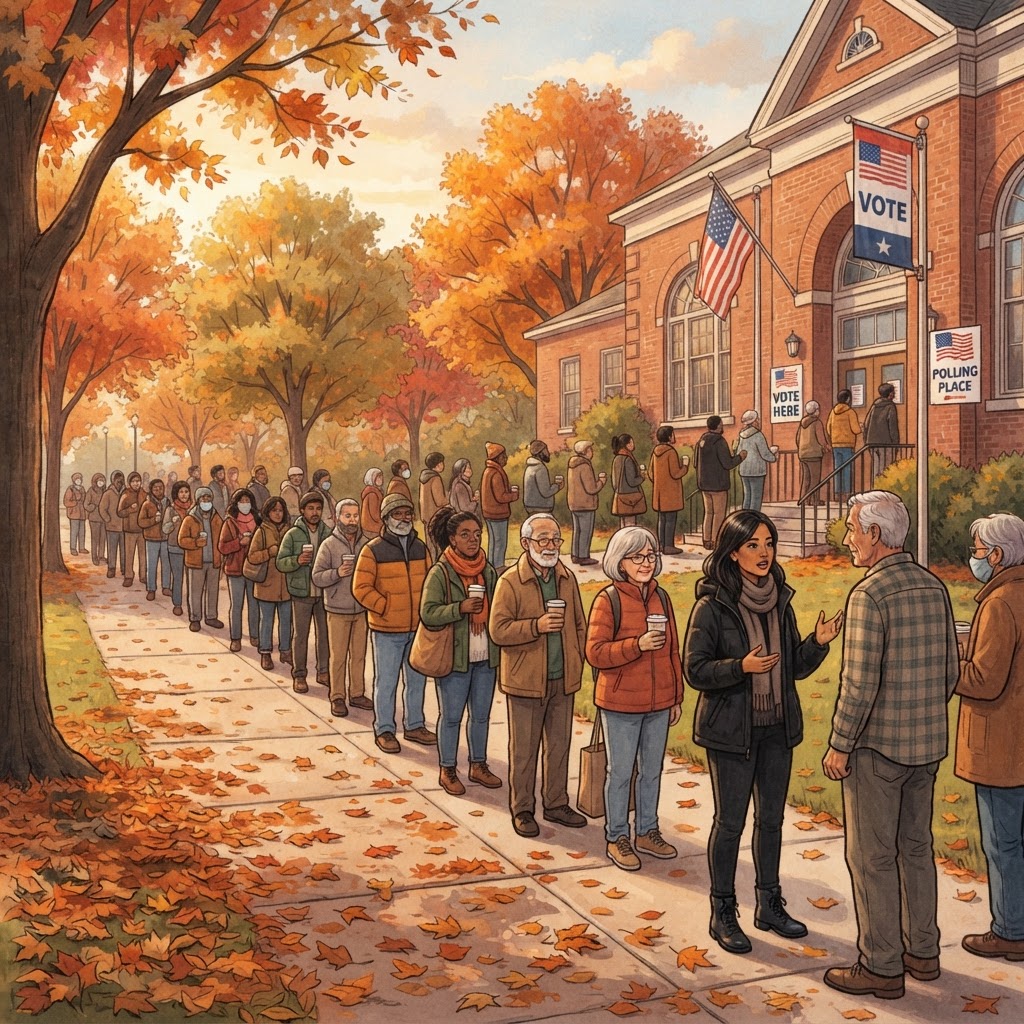
How to Watch Election Night Like a Pro
If you plan to stay up on Tuesday, November 3, here is how to read the night instead of just letting it wash over you.
- Early poll closings in the East tell you the mood. Competitive races in Virginia, Kentucky, and Indiana close first. If expected-losers on either side keep it surprisingly close, the whole night's script gets rewritten.
- Watch the toss-up districts with rural and small-town precincts. The tariff backlash, if it is real, will show up there first, among working-class voters who crossed party lines for Trump before but are wobbly now on prices.
- Ignore early vote party registration totals. They mislead because party registration does not equal party voting, and independents decide everything.
- Senate math is a coin stack. Each competitive race that falls to the Democrats makes control mathematically harder for the GOP, regardless of the national mood stories TV hosts are pushing.
How to Make Sure Your Vote Actually Counts
Since you are reading a blog about the midterms 2026 instead of doomscrolling, let me arm you with the boring-but-important stuff. Registration deadlines in many states fall two to four weeks before the election, which means some deadlines are passing right now. Check your registration today; millions of voters discover every cycle that a move, a purged roll, or a clerical error knocked them off the list. Use your state's official election website or vote.gov. Decide early whether you are voting by mail, voting early in person, or braving Election Day lines. And if you get a call, text, or ad telling you the election is rigged so stay home, remember that the people loudest about your vote not mattering are often the ones most worried about how you will use it.
My Honest Take on the Tariff Backlash
You have read the data. Now the one vote that matters least: mine. I have covered enough political cycles to distrust confidence, mine included, so take this with salt.
The tariff policy was a gamble that anger at globalization outweighed fear of price hikes. In 2016 and 2024, that bet mostly paid off. In 2026, the bill for the gamble has arrived at the cash register at the same moment millions of voters are being asked for a verdict, and that is brutal political luck, self-inflicted or not. Prices are sticky, memories are long, and three extra points of inflation on 67 product categories is the kind of fact that does not care about your preferred narrative.
And yet. Polls measured enthusiasm wrong before. Trump's coalition has a habit of showing up precisely when analysts write it off, and opposition parties have a habit of doing something clumsy in the final stretch that re-rallies the other side. If the Democrats underperform on November 3, the autopsy will say the tariff backlash was real but the messenger was flawed. If they sweep, the autopsy will say the tariff backlash was the whole story.
So do not treat this as a prediction. Treat it as a weather report. The barometer is falling, the wind is coming from the direction of your grocery bill, and everyone from Alaska to Maine is deciding whether to bring an umbrella to the polls.
Frequently Asked Questions About the Midterm Elections 2026
When are the midterm elections 2026 held?
Election Day is Tuesday, November 3, 2026. Most states also offer early in-person voting and mail voting in the weeks before. Registration deadlines vary by state, some as soon as early-to-mid October, so check now, not later.
Can midterm results remove the president from office?
No. President Trump's term runs through January 2029 regardless of the outcome. What changes is Congress: a hostile House or Senate can block his agenda, launch investigations, and complicate appointments for his final two years.
Do tariffs really make prices go up for regular Americans?
According to Federal Reserve research and most economists, yes, mostly. Importers pay the tax at the border, and much of it gets passed into retail prices. The New York Fed estimated nearly three extra points of inflation by early 2026 in affected goods categories, with the full effect arriving over months.
Which party is favored to win the midterms 2026?
Opposition parties usually gain in midterms, and current polling on the tariff issue tilts further that way, with 64 percent of adults saying the president's tariff push went too far. But individual races, money, turnout, and late surprises make any prediction a guess with footnotes.
Where can I check if I am registered to vote?
Your state's official election website has a registration lookup tool, and vote.gov links to every state's system. It takes about three minutes and it is the single highest-value three minutes you can spend on your own democracy.
Final Thoughts Before November 3
The midterm elections 2026 will be read one of two ways by Wednesday morning, November 4. Either the tariff backlash was the story of the cycle, a rare case of pure kitchen-table economics deciding control of Congress, or it will be the smooth-sounding storyline that collapsed on contact with actual voters. Either way, the underlying facts will not have changed: prices rose, people noticed, and 64 percent of the country said so out loud.
If you take one thing from all this, take this: check your registration today, decide how you are voting, and do it. Wave, ripple, or ripple fizzle, the only poll that counts on November 3 is the one with your name on it. Then grab a snack, find a live results tracker you trust, and enjoy history doing its thing in real time. It always does.


Comments
Post a Comment