Orionid Meteor Shower 2026: How to Watch Halley's Comet Burn Up Over Your Head (Plus the Hunter's Moon)
Orionid meteor shower 2026 is almost here, and honestly, it's one of my favorite sky events of the whole year. Every October, without asking anyone's permission, tiny crumbs from Halley's Comet slam into our atmosphere at incredible speed and burn up as streaks of light. You don't need a telescope. You don't need money. You just need to be awake at a slightly antisocial hour and look up.
This year the Orionids peak on the night of October 21 into the early morning of October 22, 2026, and the show runs alongside another October classic: the Hunter's Moon, which fills out completely on October 26, 2026. If you play your cards right, you could catch both in one week. Let me walk you through what's actually happening up there, when to go outside, and how to see the Orionids without freezing yourself miserable.
What Is the Orionid Meteor Shower and Why Should You Care?
Here's the part that gets me every single time. The Orionid meteor shower happens because of Halley's Comet. Yes, the famous one. The one that swings past Earth roughly every 76 years and won't return until mid-2061. Most of us get exactly one chance in our lifetime to see that comet with our own eyes.
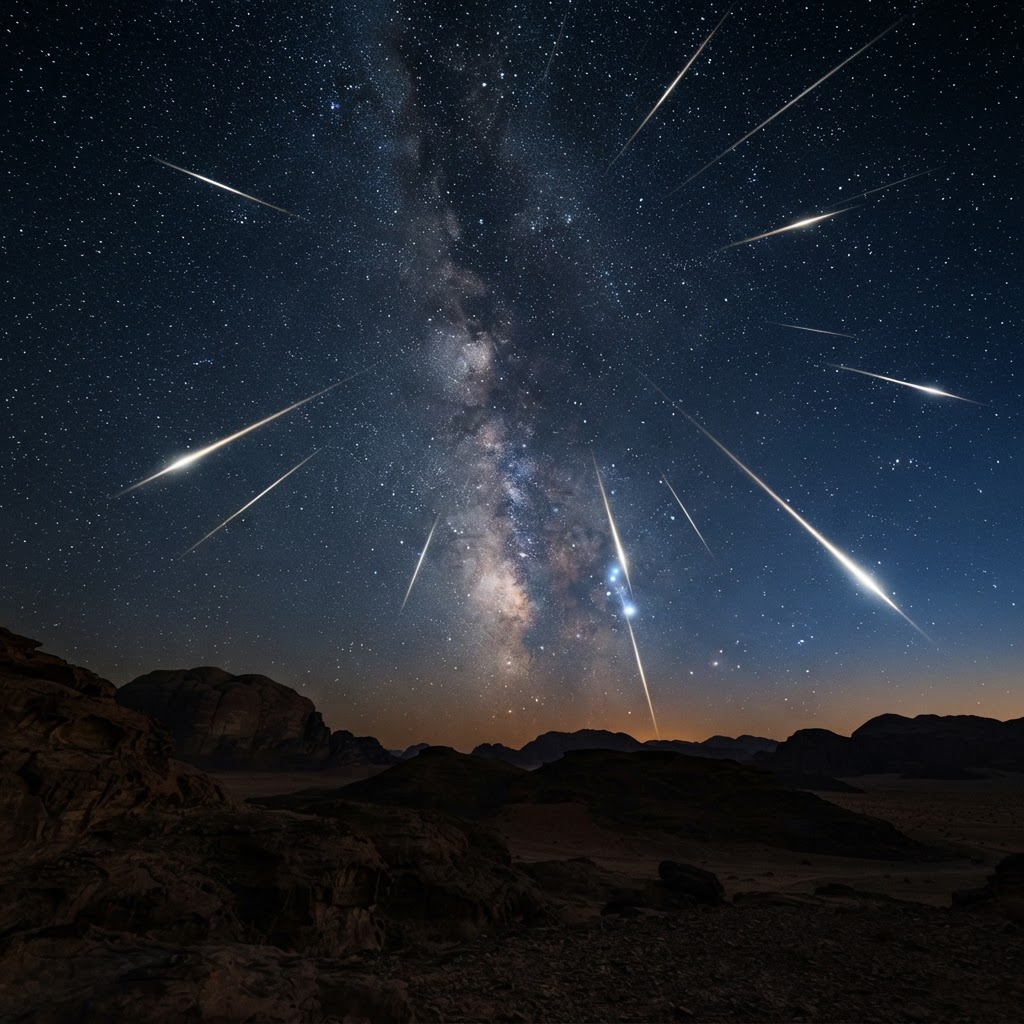
The comet is sloppy, though. As it loops around the sun it sheds dust and tiny bits of rock, leaving a trail of garbage across space like a cosmic kitchen floor nobody swept. Earth crosses through that trail every October. When we plow into it, those little dust grains hit our atmosphere at around 66 kilometers per second, and the air in front of them glows white hot. That streak you see? A piece of comet debris smaller than a grain of rice, dying in a flash of light about 80 kilometers above your head.
A grain of rice. Lighting up the sky. If that doesn't make you want to step outside at 3 a.m., I don't know what will.
Why "Orionid"? Blame the Constellation
Meteor showers get named after the point in the sky they appear to come from. For this one, that point sits near the constellation Orion, close to the bright orange star Betelgeuse. Astronomers call that spot the "radiant." The meteors don't actually come from Orion, it's just where their paths seem to converge, kind of like how train tracks look like they meet in the distance even though they never do.
Fun detail: you don't need to find Orion to enjoy the show. Meteors can show up anywhere in the sky. If a streak appears to fly backward toward Orion, congratulations, you've almost certainly spotted an Orionid.
Orionids 2026 Dates: When the Shower Peaks This Year
The Orionid meteor shower runs for well over a month in 2026, roughly from the start of October through November 12. But nobody watches a meteor shower on its opening night. The smart play is the peak, and this year it lands on the night of October 21-22, 2026. Circle that date. Write it on your hand if you have to.
- October 2 to November 12, 2026: the full window when Orionid meteors can appear
- October 21 into the morning of October 22: expected peak, your best single night
- A few nights either side: still worth watching, rates drop off gradually, not instantly
- Midnight to about 4:30 a.m. local time: the prime window, with the best action usually in the hours just before dawn
Why so late at night? Two reasons. First, the radiant near Orion climbs higher as the night goes on, and the higher it sits, the more meteors you catch. Second, and this is the bit people forget: in the early morning hours, your side of Earth faces the direction we're traveling around the sun. Meteors hit the windshield of the planet, so to speak. More bugs hit the front of a moving car than the back. Same deal with Earth and comet dust.
How Many Meteors Will You Actually See?
Under ideal conditions, meaning a pitch-black rural sky with zero light pollution, the Orionids can produce roughly 15 to 20 visible meteors per hour at peak. Some years they surge higher, the shower has a history of surprise outbursts, but I'd plan for 15 to 20 so you're not disappointed.
Most of those will be faint. The Orionids are known for speed, not volume, and fast meteors sometimes leave glowing trains behind them, little smoke trails that hang in the sky for a few seconds after the meteor is gone. Those trains are the reason I rate the Orionids above some "bigger" showers. Watching a fireball draw a line across the stars and leave its signature fading behind? Nothing else in the sky does that.
How to See the Orionids in 2026: A Practical Guide
Alright, let's get practical. Your meteor shower October 2026 experience depends almost entirely on three things: darkness, patience, and the moon. Here's my checklist.
Step 1: Get Away From City Lights
Light pollution is the meteor watcher's worst enemy. Sky glow from streetlights and billboards drowns out all but the brightest meteors, so from a bright urban backyard you might see two or three in an hour and think the whole event was hyped nonsense.
Drive even 20 to 30 minutes out of town, somewhere the Milky Way is visible on a clear night, and your count can multiply several times over. Open fields, hilltops, lakeshores away from towns, anywhere with a wide open view. Safety first: bring a friend, tell someone where you're going, and don't trespass on a farmer's land at 2 a.m. Farmers wake up early. They will not be amused.
Step 2: Time It Right and Let Your Eyes Adapt
Wait until after midnight, with roughly 1 a.m. to 5 a.m. local time the sweet spot. Conditions are usually best before dawn, so if you only have one shot, set the alarm for about 2 a.m. and commit to at least a full hour.
Then give your eyes 20 to 30 minutes in darkness to switch to full night mode. Here's the killer detail: one glance at your phone screen resets that clock. One. Glance. Every text you check re-blinds you for another half hour. Dim the screen or use a red light filter, find Orion early if you need an app, then lock the phone away.
Step 3: Lie Back, Dress Warm, and Watch Everything
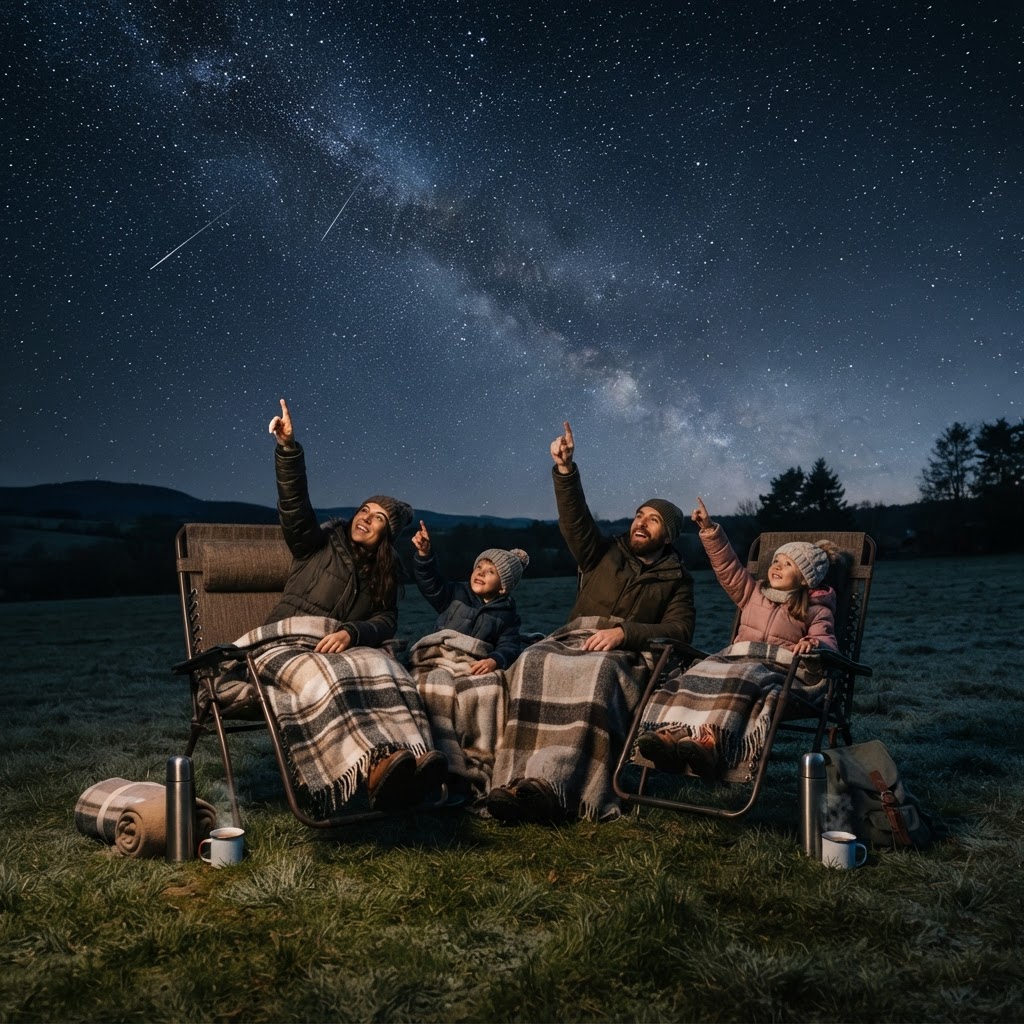
Don't stare at Orion all night. Meteors near the radiant have short tails because they're coming at you; the longer streaks tend to show up away from it. The best method is the laziest method: lie on your back in a reclining chair or on a blanket and watch as much sky as your eyes can hold.
And dress warmer than you think you need. I promise you'll underestimate this. October nights get cold fast when you're lying still. Blankets, a hat, and something hot in a thermos. Hot chocolate has kept more meteor watchers outside than any telescope ever built.
The Moon Problem: How the Hunter's Moon Affects the Orionids
Now for the slightly annoying news. The full moon, this year's Hunter's Moon, arrives on October 26, 2026, just a few nights after the Orionid peak. That means the moon is already big and bright on peak night, and moonlight will wash out the fainter meteors. Blame the moon. It's always up to something.
Don't panic, though. Position yourself so the moon is at your back or blocked by trees and buildings, and keep watching the darker part of the sky. And remember: the bright ones punch straight through moonlight. Some of my most memorable Orionid sightings happened on nights the moon was supposedly "ruining" everything.
What Is the Hunter's Moon and When Is It in 2026?
Since we're talking about it, let's give the Hunter's Moon its moment. The October full moon earned that name from old farming tradition. The Harvest Moon near the September equinox lit the fields long enough to bring in the crops, and the next full moon gave extra evening light for hunters tracking animals across the cleared, stubbly fields, stocking up meat before winter. The name stuck around long after most of us stopped needing moonlight to hunt dinner.
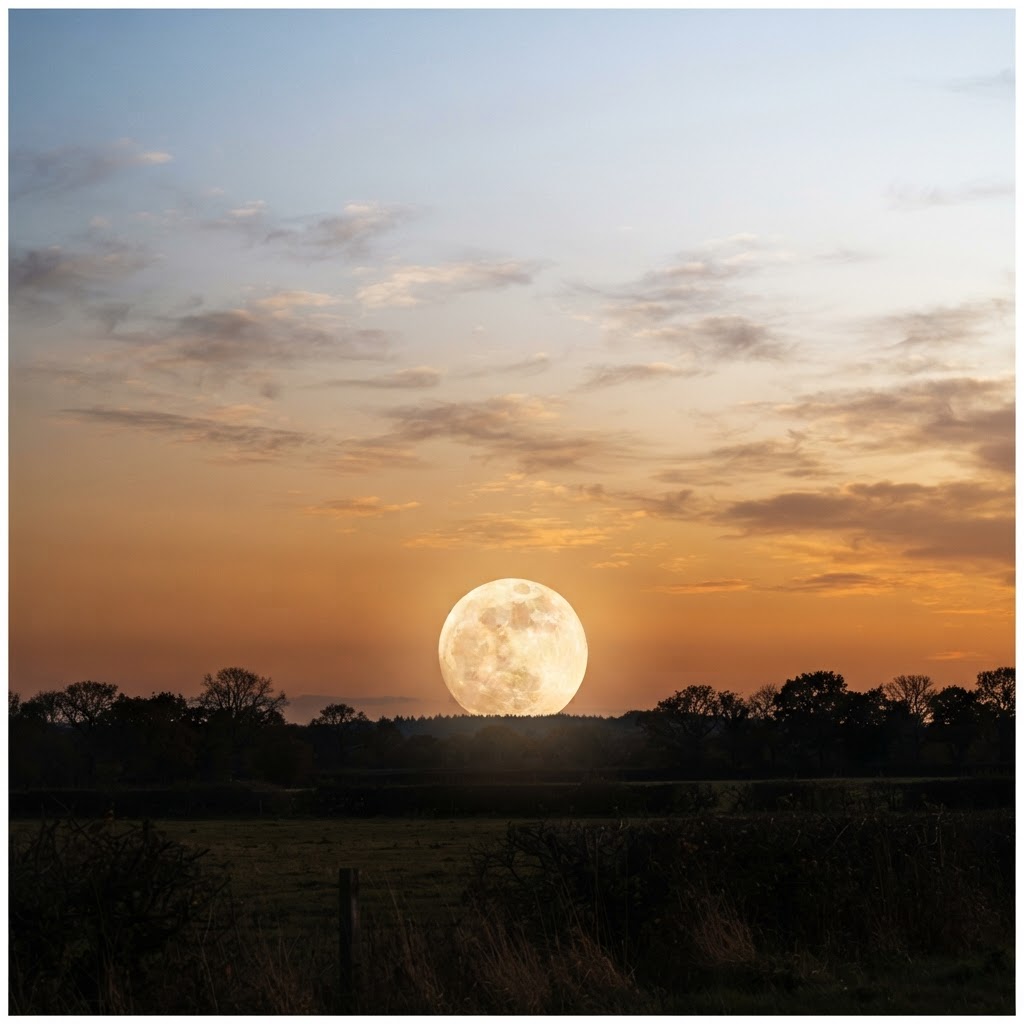
In 2026, the Hunter's Moon turns technically full at 4:12 GMT on Monday, October 26. But the exact moment of "full" doesn't matter for you. What matters is moonrise. Go out on the evening of Sunday, October 25, just after sunset, and watch the eastern horizon. The moon will come up big and low, probably glowing a soft yellow-orange.
Why the Moon Looks Orange at Moonrise (It's Not Actually Bigger)
That fat orange pumpkin moon is an atmosphere trick. Near the horizon, moonlight passes through much more air than when the moon is high up, and air scatters away the cooler blue tones while letting warmer ones through. Same reason sunsets are red.
The "huge" part is your brain playing games. When the moon sits near trees and buildings, your brain compares it to those objects and decides it must be enormous. Hours later it climbs higher, there's nothing to compare it to, and it shrinks back to normal. Measure it with your thumb at arm's length at moonrise and again three hours later: same size on your thumbnail both times. Wild, right?
Where the Orionids Look Best in 2026
The Orionids favor the Northern Hemisphere, where October nights are comfortably dark, but the shower is visible from both hemispheres. Quick regional pointers:
- Northern Hemisphere (US, Europe, Pakistan, India): best seats in the house. Orion rises in the east before midnight and climbs high by early morning, so open southern-to-eastern sky views away from city glow will serve you well.
- Southern Hemisphere: the radiant sits lower so you'll catch fewer meteors, but the ones you get often skim horizontally across the sky, producing what skywatchers charmingly call "earthgrazers." One good earthgrazer can make a whole night worth it.
- Tropics and deserts: often the darkest, clearest skies on Earth, so you're getting the deluxe version of this shower.
Stuck in a bright city? Turn off every light around your house, find the darkest corner of your roof or backyard, and aim for the hours before dawn. You might catch only the brightest few meteors, but one bright Orionid with a glowing tail beats a starless urban dome and nothing at all.
Halley's Comet: The Main Character of October Skies
Here's a fact I love sharing. Halley's debris trail is so huge that Earth crosses through it twice a year: the May Eta Aquariids are one crossing, and the October Orionids are the other. Every single Orionid meteor is Halley's Comet saying hello from a distance.
When you watch an Orionid burn up, you're watching dust the comet dropped centuries ago. Halley last visited in 1986, when people with mullets and boomboxes looked up and saw it. Our great-grandparents panicked over it in 1910, genuinely believing its tail might poison the air. The next pass comes in mid-2061, so a child watching the Orionids tonight could see the actual comet as an adult. A sky event connecting three different centuries of people. That's the good stuff.
Famous Meteor Showers to Watch After the Orionids
If the Orionids hook you, the meteor calendar is generous:
- Leonids (mid-November): fast, bright meteors that occasionally erupt into historic storms of thousands per hour. Ask an old skywatcher about 1966. Their eyes will glaze over.
- Geminids (December 13-14): in my opinion the best all-around shower of the year. Bright, colorful, reliable, and friendly hours for kids. If you watch only one per year, make it this one.
- Perseids (mid-August): the warm summer classic and the most-watched shower on the planet's calendar.
Common Meteor-Watching Mistakes (I've Made All of Them)
Learn from my failures, please. I have wasted perfectly good meteor nights so you don't have to.
- Expecting instant fireworks: meteors arrive irregularly. You might see nothing for 15 minutes, then a fireball. Short visits fail; commit at least an hour.
- Checking your phone every few minutes: destroys your night vision. This is the number one amateur killer of meteor showers.
- Using binoculars or a telescope: they narrow your view to a tiny patch of sky. Meteor showers are naked-eye events.
- Underestimating the cold: lying still outdoors in October freezes you fast. Blankets are not optional.
- Giving up at 2 a.m.: the best window is usually the hour or two before dawn, when the persistent few get the show everyone else sleeps through.
Can You Photograph the Orionids With a Normal Phone?
Sort of, and it's fun to try. Prop the phone somewhere solid, angled at a wide patch of dark sky away from Orion, use night mode, and take long-exposure shots for 20 to 30 minutes. Most frames will be empty, and that's normal even for professionals. If you capture one blurred streak on a starfield, you've won the night. Frame it. Nobody needs to know it was slightly out of focus.
If you own a real camera, the game changes: wide lens, focus at infinity, long exposures, shot after shot for an hour. You'll likely walk away with several meteors and a smug expression I fully endorse.
Why People Keep Watching the Same Shower Every Year
There's no new content in an annual meteor shower. No plot twists. Same comet debris, same constellation, same glowing streaks. Yet people set alarms every October and come back inside freezing, smiling, and already planning for December.
I think I know why. Nobody else on Earth saw the exact meteor you saw at the exact angle you saw it, from your exact dark field. For one second, the biggest show in the sky was yours alone. You can't stream it, you can't screenshot it, you just see it, and it's gone, and you either showed up or you didn't. The Hunter's Moon works the same way: people stood under that same slow orange climb a century ago, and people will stand under it a century from now. That's not a firework you consume. That's a tradition you join.
Your Complete Night-by-Night Plan for Late October 2026
Here's the whole sky plan in one place, so you have zero excuses:
- Night of October 21-22: Orionid peak. Get out between 1 a.m. and 5 a.m. local time and give it at least an hour. Plan for 15 to 20 meteors per hour under dark skies, fewer if the moon is in your face.
- Evening of October 25, just after sunset: watch the nearly-full Hunter's Moon rise huge and orange in the east. This is the whole-family-can-come version of the week.
- Early hours of October 26: the moon reaches exact fullness at 4:12 GMT. Bragging rights only, but it pairs nicely with one last coffee.
- Any clear night in between: the Orionids stay active off-peak too. Step outside, look up, repeat until winter.
FAQ About the Orionid Meteor Shower 2026
When exactly is the Orionid meteor shower 2026 peak?
The expected peak is the night of Tuesday, October 21 into the early morning of Wednesday, October 22, 2026. The best viewing window is between about 1 a.m. and 5 a.m. local time, with rates usually highest just before dawn. Nights on either side of the peak still produce meteors.
Do I need a telescope or binoculars to see the Orionids?
No, and please don't use one. Meteor showers span the whole sky, and binoculars narrow your view to a tiny patch. This is a naked-eye event. Lie back somewhere dark and let your eyes roam.
Where do the Orionids appear in the sky?
They can appear anywhere, but they seem to radiate from a point near the constellation Orion, close to the bright star Betelgeuse. Meteors far from Orion often show longer, more dramatic streaks than the ones near the radiant.
Will the bright moon ruin the 2026 Orionids?
Partially, yes. The full Hunter's Moon arrives October 26, so the moon will be bright around the peak and will wash out fainter meteors. Watch the darker sky away from the moon, favor the hours before dawn, and remember the bright fireballs cut straight through moonlight.
When is the Hunter's Moon in October 2026?
The Hunter's Moon is technically full at 4:12 GMT on Monday, October 26, 2026. For actual enjoyment, skip the exact minute and watch it rise on the evening of October 25, just after sunset, when it comes up low, fat, and orange in the east.
Final Thoughts: Set Two Reminders and Thank Yourself Later
Here's my honest closing pitch. Set two reminders right now: one for the late hours of October 21, and one for sunset on October 25. Two tiny calendar entries that could give you one of the best memories of your whole season.
One night gives you comet dust from the most famous comet in history burning up over your head. The other gives you the same fat orange moon every generation before you stood under. Both are free. Both are gone by morning either way, so you might as well be there for them.
Dress warm. Put the phone away. Look up. And if you catch a fireball drawing its glowing line across the stars, do me a favor and say "there it is" out loud, even if nobody's around. That's the proper way to greet an old comet's dust after all those years of travel. See you out there.


Comments
Post a Comment